

Can Fast Charging Lithium Ion Battery Technology Truly Enable Six Minute Recharges
Six Minutes to Recharge? Battery Advance Could Rewrite What Fast Charging Means for Electric Cars
The race to achieve a six-minute recharge for lithium-ion batteries represents more than a technical milestone—it’s a paradigm shift for electric mobility. Current fast-charging systems, while impressive, still require 15 to 30 minutes to reach 80% state of charge. Achieving a six-minute full recharge would demand unprecedented control over ion transport, heat dissipation, and electrochemical stability. If realized, this breakthrough could redefine the meaning of fast charging lithium ion battery performance, shrinking downtime to the scale of conventional refueling and transforming user expectations across the EV landscape.
The Pursuit of Ultra-Fast Charging in Lithium-Ion Batteries
The idea of six-minute recharging is not just about speed but about balancing physics, chemistry, and engineering limits within lithium-ion cells. It challenges long-standing trade-offs between energy density and power capability.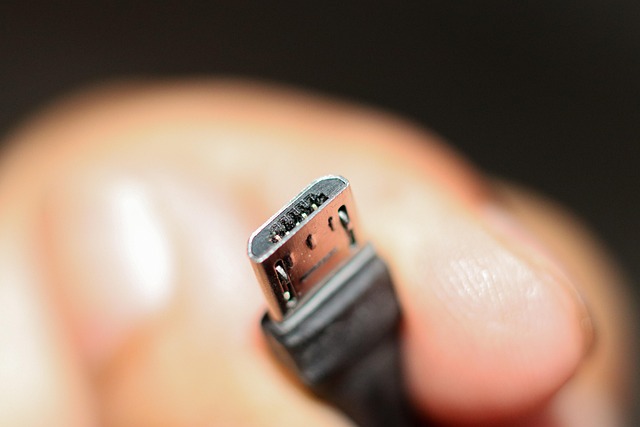
Defining the Concept of Six-Minute Recharging
In today’s commercial context, “fast charging” typically refers to achieving 80% charge within 20–30 minutes using high-power DC chargers exceeding 150 kW. A six-minute recharge implies operating at C-rates above 10C, meaning the entire cell capacity is replenished in one-tenth of an hour. This requires electrodes capable of rapid ion diffusion without structural collapse and electrolytes that maintain stability under extreme current densities. The trade-off lies in energy density: higher C-rates often demand thinner electrodes or lower-capacity materials to minimize internal resistance.
Historical Progression Toward Rapid Charging Solutions
Lithium-ion technology has evolved dramatically since Sony’s first commercial cell in 1991. Early chemistries required hours for full recharging due to limited ionic mobility and primitive thermal management. Over time, nanostructured electrodes, conductive coatings, and advanced BMS algorithms improved charge acceptance. Milestones such as Tesla’s Supercharger network or Porsche’s 800-volt architecture pushed boundaries further by integrating system-level optimizations alongside material advances.
Influence of Consumer Electronics and EV Industries on Charging Research Priorities
The push for faster charging began with smartphones but accelerated with electric vehicles (EVs). Consumer impatience for downtime reshaped R&D priorities toward high-rate tolerance and thermal resilience. Automakers now view ultra-fast charging not as luxury but necessity—critical to addressing range anxiety and enabling mass adoption.
Material Science Innovations Enabling Faster Charge Cycles
Material science remains the linchpin of ultra-fast charging progress. Every minute shaved off recharge time stems from breakthroughs at atomic or molecular scales.
Role of Electrode Materials in Accelerated Ion Transport
Electrode morphology dictates how quickly ions can move through active layers. Smaller particles shorten diffusion paths while higher surface areas allow more reaction sites. Lithium titanate (LTO) anodes are known for exceptional rate capability due to their zero-strain spinel structure but suffer from low energy density. Silicon composites promise both capacity and speed yet face volume expansion issues during cycling. Doped graphite variants aim to combine conductivity with mechanical stability under high currents.
Electrolyte Engineering for High Current Density Operation
Electrolytes must endure intense stress during six-minute cycles. Traditional carbonate-based solutions degrade under heat or voltage spikes, prompting exploration into fluorinated solvents and ionic liquids that resist decomposition. Additives like lithium bis(fluorosulfonyl)imide enhance SEI uniformity even under rapid plating conditions. Solid-state electrolytes—sulfide or oxide-based—offer higher ionic conductivity with improved safety margins but introduce manufacturing complexity.
Thermal Management Challenges During Ultra-Fast Charging
At ultra-high C-rates, heat becomes both enemy and indicator of inefficiency. Managing it is as critical as accelerating ions themselves.
Heat Generation Mechanisms at High Charge Rates
Joule heating arises from internal resistance multiplied by current squared; even minor resistive losses become significant at hundreds of amperes per cell. Non-uniform current distribution causes local hot spots where lithium plating initiates. Electrode thickness also matters: thicker layers store more energy but trap heat deeper inside the cell core.
Advanced Cooling and Temperature Regulation Strategies
Next-generation battery packs integrate liquid cooling plates directly beneath cells or embed microchannels within modules to extract heat rapidly. Phase-change materials temporarily absorb surges during peak load events before dissipating them gradually. Predictive thermal models simulate transient gradients to preempt runaway reactions—a vital safeguard when pushing toward six-minute regimes.
Battery Architecture and System-Level Design Considerations
Beyond chemistry, architecture determines how effectively fast-charging potential translates into real-world performance.
Cell Geometry and Configuration Optimization
Cell geometry affects current flow uniformity and mechanical stress distribution. Cylindrical formats handle pressure well but limit cooling surface area; pouch cells offer compactness yet require precise stacking alignment for even temperature control. Optimizing tab placement reduces resistive losses along current collectors while maintaining structural integrity under vibration or expansion cycles.
Power Electronics and Charging Infrastructure Compatibility
Ultra-fast charging demands chargers delivering megawatt-scale power through robust connectors with minimal loss. Bidirectional converters stabilize grid interaction while allowing vehicle-to-grid (V2G) functionality during idle periods. Communication between battery management systems (BMS) and chargers ensures dynamic current adjustment based on live diagnostics—a key factor in preventing degradation during aggressive sessions.
Degradation Pathways Under Rapid Charging Conditions
Speed brings risk: every second saved can accelerate wear mechanisms if not carefully mitigated.
Mechanisms Leading to Capacity Fade and Safety Risks
Lithium plating occurs when ions deposit metallically on anode surfaces instead of intercalating properly—a common failure mode during extreme fast charging. This not only reduces capacity but may pierce separators causing short circuits. Repeated high-current cycling thickens the SEI layer unevenly, increasing impedance over time while mechanical stress fractures electrode particles internally.
Diagnostic Tools for Monitoring Battery Health During Fast Charging
Electrochemical impedance spectroscopy (EIS) tracks resistance evolution in real time, offering early warnings before catastrophic failure. In-situ imaging techniques like X-ray tomography visualize structural shifts within electrodes across cycles, revealing void formation or dendrite growth patterns invisible externally. Machine-learning models trained on such data predict degradation trajectories far beyond human intuition could manage manually.
Emerging Research Directions Beyond Conventional Lithium-Ion Systems
To truly achieve six-minute recharging sustainably, researchers are venturing beyond traditional graphite-cathode frameworks into radical chemistries.
Transitioning Toward Next-Generation Chemistries for Faster Rechargeability
Lithium-metal batteries promise unparalleled energy density coupled with lightning-fast kinetics if dendrite formation can be suppressed via solid interfaces or protective coatings. Solid-state designs eliminate flammable liquids altogether while enabling thinner separators that cut internal resistance drastically. Hybrid-ion systems incorporating sodium or magnesium aim at cost reduction without sacrificing performance metrics essential for EV scaling.
Integration with Smart Energy Management Ecosystems
Artificial intelligence increasingly orchestrates fast-charging sessions by balancing thermal load against grid demand profiles in real time. Adaptive algorithms adjust current dynamically per cell health status rather than applying uniform rates across modules—a subtle yet powerful improvement in longevity control. When paired with V2G systems, these smart batteries act not just as consumers but as distributed energy assets stabilizing renewable-heavy grids during peak fluctuations.
Evaluating the Realistic Path Toward Six-Minute Recharging Feasibility
Despite optimism, several barriers remain before six-minute recharging becomes mainstream reality rather than laboratory demonstration.
Technical Barriers Remaining Before Commercial Viability
Material stability under sustained 10C operation still limits cycle life below automotive standards set by IEC 62660 testing protocols requiring thousands of stable cycles at rated capacity retention above 80%. Cost also looms large: exotic nanomaterials or solid-state fabrication lines remain economically prohibitive at scale compared with mature wet-slurry processes used today.
Potential Industry Impact if Six-Minute Charging Becomes Achievable
If achieved commercially, six-minute recharging would erase range anxiety overnight by matching gasoline refueling timescales while reducing infrastructure footprint per station due to higher turnover rates per charger unit hour. Automakers might redesign packs prioritizing power throughput over sheer kilowatt-hour size since rapid top-ups render oversizing redundant—a profound shift in design philosophy influencing supply chains from cathode mining to grid planning worldwide.
FAQ
Q1: What defines a “six-minute” fast charging lithium ion battery?
A: It refers to a cell capable of full recharge within roughly six minutes at C-rates above 10C without exceeding safe temperature or voltage thresholds.
Q2: Why is heat management so critical during ultra-fast charging?
A: Excessive localized heating accelerates degradation mechanisms like lithium plating and uneven SEI growth that compromise both safety and lifespan.
Q3: Can solid-state batteries realistically achieve six-minute recharges?
A: They hold strong potential due to superior ionic conductivity and thermal tolerance though large-scale manufacturing challenges persist today.
Q4: How does fast charging affect long-term battery health?
A: Repeated high-current cycling increases internal resistance over time leading to reduced capacity retention unless mitigated by advanced control algorithms.
Q5: What industry sectors benefit most from achieving this milestone?
A: Electric vehicles stand foremost followed by grid storage applications requiring rapid cycling such as frequency regulation or emergency backup systems where downtime costs are high.