
Power tool recall guide from recent CPSC notices
A power tool recall means a manufacturer, often working with the U.S. Consumer Product Safety Commission, has identified a safety risk and announced a remedy. That remedy may be a repair, replacement, refund, updated instructions, or disposal guidance. For contractors, maintenance teams, retailers, rental shops, and homeowners, the practical point is the same: do not judge a recall by brand name or product photo alone. Match the model number, serial number, date code, battery type, and sold date before using, lending, reselling, or returning the tool to a jobsite.
Recent official notices through September 4, 2026 show why that level of checking matters. Battery-powered tools and outdoor power equipment may be recalled for fire hazards, while saws, mowers, nailers, and steam tools may be recalled for laceration or burn hazards.
Why a power tool recall is not the same as a product complaint
A normal product complaint may involve poor performance, early wear, missing parts, or a disappointing user experience. A recall is different. It is tied to a safety defect, noncompliance issue, or hazard that can create unreasonable risk during ordinary use or foreseeable misuse. In the United States, the CPSC publishes recall notices for many consumer products, including power tools, batteries, chargers, lawn and garden machines, generators, pressure washers, and workshop equipment.
Most recall notices include the same core details: product name, hazard, remedy, recall date, number of affected units, identifying marks, incidents or injuries, where the product was sold, and manufacturer or importer contact instructions. For tool owners, the model and serial identification details are usually the most important sections. A recall may affect only one production run, one battery format, one date code, or one accessory configuration.
This distinction matters in professional settings. A contractor may own ten tools from the same brand, while only one date range is affected. A retailer may have older inventory that looks identical to newer corrected inventory. A rental shop may have a recalled tool that has moved between customers, batteries, chargers, and accessories. Recall handling needs a clear process, not a quick visual check.
Selected recent U.S. recall examples for tool users
The examples below are based on official CPSC recall notices and show the types of hazards tool users should look for. This is not a complete recall database. Readers should check current official notices before making a final safety decision.
| Recall date | Product | Reported hazard | Units noted in the U.S. | Remedy type |
|---|---|---|---|---|
| July 9, 2026 | Kobalt 24V and 48V yard power tools with USB-C batteries, imported by Greenworks Tools | Charging lithium-ion batteries through the USB-C port while inserted in the tool could cause short-circuiting and a fire hazard | About 554,780 | Replacement battery and related materials |
| March 19, 2026 | Wagner 900 Series power steamers | Hose and nozzle issues could expose users to excessive heat or expelled hot water, creating a burn hazard | About 700,000 | Repair kit |
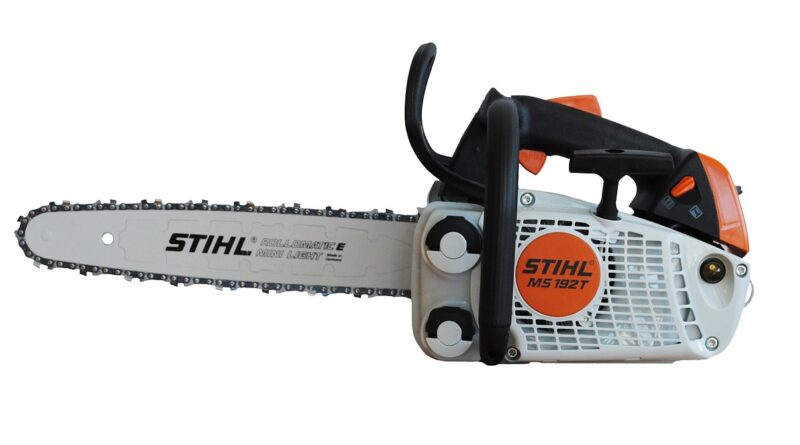
| October 30, 2025 | Milwaukee M18 FUEL 12-inch and 14-inch top handle chainsaws | The chain brake may not activate, creating a laceration hazard | About 90,860 | Free repair |
| July 31, 2025 | RIDGID 18V brushless 21-degree and 30-degree framing nailers, recalled by TTI Consumer Power Tools | The dual-action engagement system could malfunction and discharge a nail by trigger pull alone | About 64,000 | Software update and repair process |
| August 15, 2024 | DeWALT 2024 battery walk-behind push and self-propelled mowers | If water entered the handle support while the battery was installed, the mower could fail to shut off or start without a key | About 46,200 | Free repair |
These recalls cover different product categories, but they point to a useful pattern. The hazard is rarely described as simply “the tool is bad.” The notice identifies a specific failure mode: a battery charging condition, a brake mechanism, a trigger and contact sequence, water intrusion, or a hot-water release. That detail is what makes a recall actionable for owners and fleet managers.
What recent recall notices suggest about modern tool risk
Recent notices do not prove that all cordless tools are unsafe. They do show that modern tool design depends more heavily on electronics, batteries, safety interlocks, and software-controlled behavior. That changes how buyers, supervisors, and jobsite managers should approach inspection.
Battery systems need more than voltage checks
Lithium-ion platforms are now common across drills, saws, mowers, blowers, trimmers, lighting, vacuums, and cleaning tools. The Kobalt recall is a useful example because the issue was tied to a charging behavior involving USB-C batteries while they were inserted in yard power tools. The affected products included multiple tool types and battery capacities, not just one handheld device.
For users, the battery pack should not be treated as a generic accessory. Check the battery model, charging port, capacity, date code, and whether the recall applies to the tool, the battery, or the combination of both. Avoid mixing unofficial chargers, questionable adapters, or batteries from unknown sellers. Even when a recall remedy is available, the safest first step is to stop the recalled charging or use condition described in the notice.
Mechanical safety systems still matter
Chainsaws, mowers, and nailers depend on physical or electronic safety systems that must work at the exact moment they are needed. A chain brake that may not activate, a mower blade system that may not stop as expected, or a nailer that can fire without the intended contact sequence can create a hazard even when the motor, battery, and housing appear normal.
Visual inspection alone is not enough. A clean tool can still be recalled. A tool that “worked yesterday” can still fall inside a defective date range. If a recall notice instructs owners to stop using a product, testing it to see whether the problem occurs is not a safe substitute for following the stated remedy.
Heat and water deserve closer attention
Several recent tool and equipment notices involve heat, hot water, fire, or moisture-related failure. Steamers and batteries have different hazards, but both show how thermal risk can escalate quickly. Battery tools stored in trucks, charged in garages, or used in damp outdoor conditions need more care than a simple corded hand tool.
Good practice includes charging on a stable, nonflammable surface, keeping batteries away from standing water, removing packs before storage when the manual recommends it, and checking for swelling, odor, discoloration, melting, unusual heat, or sparking. Those observations do not replace official recall checks, but they can help users identify dangerous conditions early. See also: Tool Categories.
How to check whether a tool is included in a recall
The fastest way to mishandle a power tool recall is to rely only on a product photo. Many recalled tools look identical to unaffected versions. Use a step-by-step process instead.
- Find the exact product name. Check the label on the tool, battery, charger, handle, rear door, or nameplate.
- Record the model number. Do not rely on the retail name alone. A kit number and a bare-tool number may be different.
- Record the serial number and date code. Many recalls apply only to a serial range, date code, factory code, or production period.
- Identify included accessories. Some recalls involve batteries, chargers, hoses, guards, blades, or software rather than the entire tool body.
- Compare the hazard description. A recall may apply only when the tool is wet, charging, assembled a certain way, or missing a safety mark.
- Follow the stated remedy. Remedies may include repair, replacement, refund, updated instructions, or a manufacturer-provided return label.
- Tag and isolate the tool. In a shop, rental fleet, or jobsite trailer, label the item so another user does not unknowingly put it back into service.
For more industry updates and safety explainers, visit the Tool News section.
What contractors, retailers, and rental shops should do differently
Individual homeowners may only need to check a few tools. Businesses need a repeatable recall process. A small contractor can have dozens of cordless tools and batteries spread across trucks. A retailer may have boxed stock in a back room. A rental shop may receive units that return dirty, missing labels, or paired with the wrong battery.
A practical business process should include a quarterly recall check, a log of model and serial numbers for higher-risk equipment, and a quarantine area for tools awaiting repair or verification. Batteries should be tracked separately from tool bodies when possible, especially on shared platforms where the same pack moves between saws, blowers, mowers, and lights.
Resale requires extra care. CPSC recall notices commonly state that federal law prohibits selling products subject to a Commission-ordered recall or a voluntary recall undertaken in consultation with the agency. That warning matters for used-tool sellers, auction buyers, pawn shops, online marketplaces, and contractors clearing old inventory. Before selling a tool, check whether it is affected and whether the remedy has been completed.
Frequently asked questions
Does a recall mean every tool from that brand is unsafe?
No. A recall usually applies to a specific product, model, production range, battery type, or date code. Do not assume all tools from a brand are affected, but do not assume your tool is safe just because it looks normal.
Can I keep using a recalled power tool until the repair is available?
Follow the recall notice. Many notices tell consumers to stop using the product immediately, while others identify a specific condition to stop, such as a particular charging method. If the notice says to stop using it, remove it from service and wait for the official remedy.
What if I bought the tool used and do not have a receipt?
Many recall remedies are based on product identification rather than proof of purchase, but the exact process depends on the manufacturer and recall. Check the model, serial number, and date code, then follow the manufacturer’s recall instructions.
Are batteries and chargers covered by the same recall as the tool?
Not always. Some recalls apply to the tool body, some to the battery, some to the charger, and some to a specific combination. Treat the battery pack as its own component and check its model number, capacity, port type, and production information.
What should I do if a recalled lithium-ion battery looks damaged?
Do not charge it, use it, ship it casually, or throw it into ordinary trash unless the recall instructions specifically say to do so. Isolate it away from combustible materials and follow the manufacturer’s recall and local hazardous-waste guidance for damaged or recalled batteries.
The bottom line for tool owners
A power tool recall is more than a customer-service notice. It is a safety instruction tied to a specific hazard and a specific remedy. The most useful habit is documentation: know what tools and batteries you own, where the serial numbers are, how they are charged, and whether any unit falls within a recall range. As tools become more connected, battery-powered, and electronically controlled, recall awareness should be part of routine tool maintenance rather than an afterthought.