Is Li Ion NMC Battery Safer Than Sodium Ion and Solid State Technologies
Comparing Safety Profiles of Lithium-Ion, Sodium-Ion and Solid-State Batteries
Battery technology safety determines not only product reliability but also public trust in electrification. Among the major chemistries, Li-ion NMC batteries deliver high energy density but face greater thermal risks, sodium-ion cells show moderate stability with lower fire intensity, and solid-state systems provide the strongest containment potential yet depend on precise manufacturing. The comparison reveals that while all three have distinct safety advantages, system-level control and material innovation remain decisive for next-generation energy storage.
Understanding Battery Safety Fundamentals
Safety in electrochemical storage begins with how energy is stored and released at the material level. Each chemistry has its own thresholds for heat tolerance, reaction kinetics, and failure propagation pathways that influence overall risk.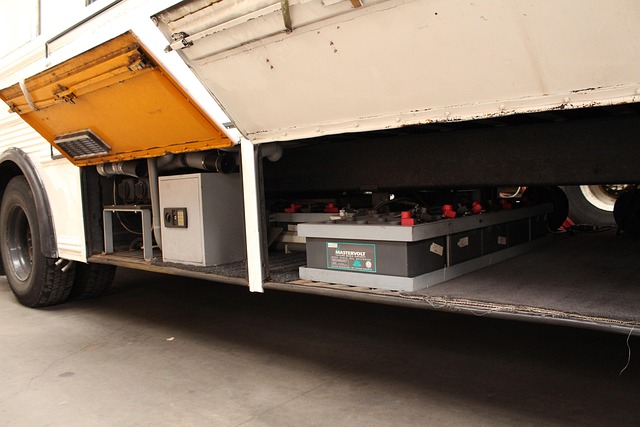
Defining Key Safety Parameters in Battery Systems
Thermal stability defines how well a cell resists temperature rise before decomposition. Electrolyte composition affects flammability, while electrode reactivity dictates how exothermic reactions unfold during abuse. Internal short circuits often initiate from separator failure or dendrite formation. Overcharging pushes voltage beyond safe limits, causing oxygen release from cathodes. Mechanical stress—like puncture or vibration—can trigger localized heating. A battery management system (BMS) monitors voltage, current, and temperature to prevent unsafe operation by balancing cells and cutting off charge when anomalies appear.
Mechanisms of Thermal Runaway and Its Implications
Thermal runaway begins when internal heat generation exceeds dissipation capacity. Localized heating accelerates electrolyte decomposition and gas buildup until pressure ruptures the casing. Cathode materials such as NMC start exothermic reactions around 180–220 °C depending on nickel content. Once initiated, neighboring cells can ignite through heat transfer. Containment strategies include flame-retardant venting paths, thermal barriers between cells, and use of non-flammable electrolytes to slow propagation.
Li-ion NMC Battery Safety Characteristics
Li-ion NMC batteries dominate electric mobility due to their high specific energy, yet their layered oxide structure makes them sensitive to overcharge and high temperature exposure.
Chemical Composition and Stability Aspects
Nickel-manganese-cobalt cathodes offer high capacity but moderate thermal resilience because nickel increases reactivity with electrolytes at elevated temperatures. Solvent molecules like ethylene carbonate decompose rapidly when catalyzed by transition metals released from the cathode surface. Particle morphology influences heat distribution; spherical secondary particles coated with alumina or zirconia improve stability by limiting direct contact between electrolyte and active material.
Advances in Li-ion Fast Charging and Associated Risks
Li-ion fast charging technology shortens downtime but introduces new safety pressures. High current densities raise internal temperature gradients that accelerate lithium plating on the anode surface. Plated lithium can pierce separators during subsequent cycles leading to internal shorts. Adaptive charging protocols now adjust current dynamically based on cell impedance feedback from advanced BMS algorithms to maintain uniform ion flow and reduce localized heating.
Safety Enhancements in Modern NMC Designs
Recent designs employ electrolyte additives such as vinylene carbonate or lithium difluorophosphate to stabilize the solid–electrolyte interphase (SEI) layer and suppress gas evolution under stress conditions. Ceramic-coated separators enhance thermal resistance above 200 °C without losing ionic conductivity. Predictive diagnostics using impedance spectroscopy or acoustic sensors detect early-stage degradation long before failure manifests externally.
Sodium-Ion Battery Safety Considerations
Sodium-ion technology has gained traction as a safer alternative for stationary storage where energy density is less critical than cost or thermal robustness.
Electrochemical Differences Affecting Safety Profile
Sodium’s larger ionic radius slows diffusion within electrode lattices but reduces strain accumulation during cycling. The lower energy density means less stored energy per unit mass, mitigating explosion severity during fault events. Electrolyte formulations optimized for sodium systems often use less volatile solvents such as propylene carbonate which burn less intensely than those in Li-ion cells.
Thermal Behavior Under Abuse Conditions
Under abusive charge or crush tests, sodium-ion cells exhibit delayed onset of self-heating compared with NMC cells because their cathode chemistries—like Prussian blue analogues—release minimal oxygen upon decomposition. Gas evolution is slower and composed mainly of CO₂ rather than flammable hydrocarbons, lowering ignition probability even when vented into air.
Solid-State Battery Safety Attributes
Solid-state batteries promise transformative safety gains by replacing liquid electrolytes with inorganic or polymer solids that are inherently non-flammable.
Inherent Benefits from Solid Electrolytes
The absence of volatile liquids nearly eliminates fire risk even under puncture or overcharge conditions. Solid interfaces restrict dendritic penetration since lithium must diffuse through a rigid lattice rather than a fluid medium. Additionally, dense ceramic electrolytes provide mechanical reinforcement improving crash resistance in automotive modules.
Challenges Impacting Real-world Safety Performance
Despite intrinsic advantages, practical safety depends on interface quality between electrodes and solid electrolytes. Poor contact zones may create current constriction leading to hotspots that initiate local breakdowns. Microcracks introduced during lamination can evolve into conductive bridges causing internal short circuits over time. Pressure uniformity across stacked layers remains crucial; uneven compression can delaminate interfaces compromising both performance and safety margins.
Comparative Analysis: Li-ion NMC vs Sodium-Ion vs Solid-State Technologies
Comparative evaluation across chemistries highlights how design trade-offs shape real-world safety outcomes more than any single material property alone.
Evaluating Thermal Stability Across Chemistries
NMC-based Li-ion cells typically begin exothermic activity near 180 °C while sodium-ion counterparts may exceed 250 °C before noticeable reaction onset due to lower oxygen release potential. Solid-state systems surpass both since their inorganic electrolytes remain stable beyond 400 °C without combustion risk under open air testing conditions reported by IEC standards.
Fire Propagation and Containment Potential
Li-ion NMC packs require reinforced enclosures equipped with venting channels to manage rapid gas discharge during runaway events. Sodium-ion modules show weaker flame propagation allowing simpler containment strategies using standard aluminum casings. Solid-state prototypes demonstrate negligible fire spread; however, manufacturing consistency is vital because microscopic defects could negate these benefits if unchecked by quality control protocols like ISO 9001 audits.
Long-term Operational Safety Factors
Over repeated cycling, NMC degradation releases small quantities of CO₂ and H₂ gases increasing internal pressure inside cylindrical formats after thousands of cycles. Sodium systems maintain more stable pressure profiles due to slower side reactions at moderate voltages around 3 V per cell. Dendrite suppression remains a shared challenge though solid-state electrolytes physically block growth pathways extending life expectancy beyond 1 000 cycles under controlled compression settings validated in IEEE test series.
Emerging Research Directions for Safer Energy Storage Systems
Future research increasingly focuses on coupling material innovation with system-level intelligence rather than relying solely on chemistry substitution for safety gains.
Material Innovations Enhancing Intrinsic Stability
Scientists are developing non-flammable ionic liquid electrolytes compatible with high-voltage cathodes exceeding 4.5 V operation range while maintaining low viscosity at room temperature. Another promising route involves flexible solid polymer electrolytes achieving over 10⁻³ S/cm conductivity enabling safer large-format pouch designs without external heating elements.
System-level Approaches to Risk Mitigation
Next-generation packs integrate distributed sensor arrays measuring acoustic emissions, strain variations, and gas traces within each module for real-time diagnostics linked via AI-driven analytics platforms compliant with IEC 62619 guidelines for industrial batteries. Computational modeling simulates cascading failures allowing engineers to design more resilient pack architectures before field deployment reducing costly recalls observed in earlier generations of li ion fast charging products.
FAQ
Q1: What makes Li-ion NMC batteries more prone to thermal runaway?
A: Their high nickel content increases reactivity with electrolyte solvents at elevated temperatures leading to rapid heat generation once decomposition starts.
Q2: Are sodium-ion batteries completely safe from fire?
A: No battery is entirely risk-free; however, sodium systems produce less flammable gases making fires less intense compared with lithium-based chemistries.
Q3: Why are solid-state batteries considered safer?
A: They contain no liquid electrolyte so cannot leak or ignite easily even when physically damaged under crash scenarios tested by automotive regulators.
Q4: How does fast charging affect battery safety?
A: High currents can cause uneven ion deposition creating hot spots or metallic lithium buildup which may lead to short circuits if unmanaged by smart BMS controls.
Q5: What role do international standards play in battery safety?
A: Standards from IEC or IEEE define testing protocols for abuse resistance ensuring consistent evaluation across manufacturers before commercialization approval.