
How Can Power Tool Safety Enhance Workplace Productivity and Protection
The Strategic Importance of Power Tool Safety in the Workplace
Safety with power tools is more than just compliance with laws and regulations. Effective safety measures are key to sustainable productivity and safe employees. The majority of accidents occur in an instant. Therefore, a thoughtful safety management system can be more than effective. It can promote efficiency and safety at the same time. If you treat safety seriously and integrate it into your company strategy, it will also be a valuable asset for other business objectives. Safety promotes high team spirit and protects your finances as well.
Understanding the Relationship Between Safety and Productivity
When using power tools safely it makes for more efficient operation and less stops for accidents and/or for damaged equipment. For example by proper use and maintenance of an angle grinder it will not over heat as fast and by that reduce the chance of a break down while in use. And also safe usage of tools will get to the root of creating a disciplined operation and that in turn will make for efficient operation. By for example checking tools prior to use and by adhering to lockout procedures you will get into a routine and that will lead to efficient operation.
A strong safety culture with power tools gives employees using these tools confidence. Employees who work with tools and in a work environment they trust, work better. A good team that works productively also reinforces safe work practices and behavior.
The Economic Implications of Power Tool Safety
In addition to avoiding fines and claims power tool safety can have significant financial implications. Fewer accidents means lower insurance premiums and less exposure to legal action. By completing recommended preventative maintenance such as checking the cords of your tools for signs of wear and tear or replacing worn out bits you can extend the life of expensive tools preventing the need for early replacement which can save you a lot of money in the long run.
Implementing safety management can also have a positive effect on profitability by preventing unplanned stoppages. Every hour that is lost due to an accident investigation or for example a medical response is lost and can have a big impact on the output of a company. Systematic safety management can have a tangible return on investment by for example increasing the amount of time that a machine or process is in operation and by reducing losses. So in short, safety is not only good, it is also smart!
Core Principles of Power Tool Safety Management
A power tool safety program that is truly robust will have engineering excellence and administrative precision. It must have a great tool as well as a great process to get consistent results on all shifts and at all job sites.
Engineering Controls and Equipment Design Standards
Firstly, engineering controls can protect against mechanical hazards. For example, certain tools have been designed with comfort in mind, with long handles to prevent tiredness when using them over long periods of time. Other tools are fitted with guards which are automatically in place to protect against any accidental contact with moving parts. Some tools even have vibration controls, especially important for users of impact wrenches for example, to combat hand-arm vibration syndrome, a serious occupational disease.
Designing tools to meet international design standards such as ISO 11148 helps tools to be reliable and consistent in performance and ensures safe usage by manufacturers and end users alike. Such design enables users to rely on tools performing as required even under stress.
Administrative Controls and Operational Protocols
Administrative controls transform technical safeguards into practices that are implemented on a daily basis. Structured policies outline how to best use a particular tool and how it should be stored and maintained. For example, by assigning someone responsibility for the inspection logs used by all departments, one can ensure that there is someone accountable for their proper use.
On an ongoing basis, wear and damage on power tools can be detected before they can potentially fail. Traceability of all maintenance actions is recorded via documentation, and any incidents are processed via continuous improvement initiatives. In the long term, all records of incidents become valuable data that can be used for further development of the overall safety strategy for power tools.
Training and Competency Development for Power Tool Operators
Even the best tools can become hazards in the wrong hands. The core of any safety system for power tools is continuing education.
Building a Skilled Workforce Through Continuous Learning
Comprehensive training programs should align with specific categories of tools—rotary vs reciprocating—and their associated hazards. Simulation-based learning allows operators to practice responses to real-world scenarios without risk, improving muscle memory under pressure.
Follow-up refresher courses on current standards and technology enable employees to keep up-to-date with the developments in the company and in their profession. This is part of the ongoing learning process and is therefore no longer a one-off measure, but rather a standard feature of professional development.
Leadership’s Role in Reinforcing Safety Awareness
By leading by example with supervisors adhering to recommended PPE and proper handling of products and materials, employees follow their supervisor’s example. Also, there is strong support of a culture of training by peer mentoring between very experienced operators and new employees. New employees with little knowledge of proper procedures to use are mentored by more experienced co-workers.
Recognition programs matter more than most realize. Recognizing employees for having perfect inspection records for the last quarter for example, will more likely to motivate employees than a penalty system ever will.
Integrating Technology into Power Tool Safety Systems
Modern workplaces can use technology to monitor a range of power tool-related risks. The monitoring can be of equipment and operators in real time.
Smart Tools and Digital Monitoring Solutions
Automate the tracking of how your power tools are being used. IoT enabled tools can push information such as how long you have used a tool and how hard you have been using it to your maintenance team. With this information you can see when a tool is nearing the end of its life or is being used incorrectly. Also tools can be set to automatically turn off when sensors in the tool detect an abnormal load being placed on it to prevent damage due to overheating or over use.
By gathering data from various systems, we can analyze trends across different departments, see which tasks are causing the most stress, and which models are failing the most. We can make proactive decisions to prevent problems from occurring instead of waiting until it’s too late to fix.
Wearable Technology for Operator Protection
Wearables can provide additional layer of intelligence to personal protection. For example, smart helmets with motion sensors can detect when a worker’s head movement indicates fatigue, while gloves with vibration sensors can inform the worker of excessive exposure levels and provide alerts when safe thresholds are exceeded.
Some systems can also include environmental monitoring such as noise monitoring or proximity to a hazardous area and send instant alerts via the connected network. In such cases, the supervisor will be able to react quickly and efficiently in case of a problem.
Risk Assessment and Hazard Mitigation Strategies in Power Tool Use
Identify potential hazards before the work starts so that you can prevent accidents instead of dealing with their aftermath.
Identifying Common Hazards Associated with Power Tools
Common hazards are the risk of electrical shock due to damage of power cables or cord entanglement with clothing whilst using equipment with moving parts. Flying particles during sawing are a hazard, as well as long term health effects due to vibration. This is further affected by environmental issues, i.e. lack of visibility in poor light and restricted space in small areas.
Not storing battery packs away from heat sources, and not using the correct tools for jobs also increases operational risks that could have been avoided by proper planning.
Implementing Effective Mitigation Measures
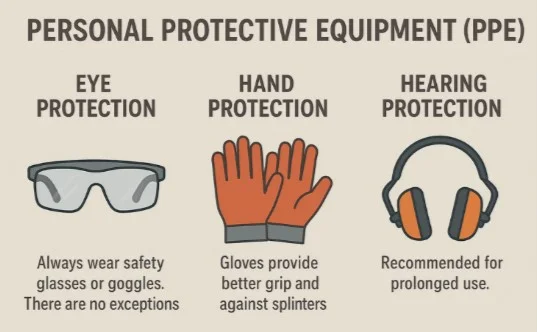
While the best way to keep something from accidentally turning on during service is with a lockout/tagout procedure, the lockout/tagout alone is not enough. Also required is the proper use of personal protective equipment, such as goggles, gloves, ear protection, and dust masks, on top of the above-mentioned engineering controls.
Routine audits also serve to check whether you are meeting all the terms of occupational health regulations, and highlight where further new technology and training are required to get the best results.
Enhancing Organizational Culture Through Safety Integration
Power tool safety becomes an integral part of a company’s culture and way of working. It moves from being something that people tick off a list, to becoming an aspect of a company’s values and a badge of professionalism for every level of employee.
Embedding Safety into Corporate Values and Practices
Being open about risks helps to build trust between the management team and staff on the ground. Cross-functional working also ensures that all teams adhere to a set of protocols, even when they are working on different projects at different sites.
Whether through a reporting tool or a simple meeting after the shift, feedback loops allow for fine-tuning of what works in reality as opposed to theory.
Measuring the Impact of Safety on Productivity Outcomes
As a result of employees feeling safe and secure at work the levels of absenteeism can decrease due to the reduced number of injuries and as a result fewer days lost through recovery periods. Also morale improves due to employees feeling that their employer is genuinely concerned for their well being and not just paying lip service.
The quantitative results largely support our qualitative findings, i.e. few incidents in production and high levels of output consistency in subsequent cycles of production as a result of the invested hours for safety improvements.
FAQ
Q1: What is the main goal of power tool safety? A. The main goal of power tool safety is to keep workers safe from injury and maintain a consistent level of productivity. To that end, the safe operation of tools and regular maintenance of tools are paramount.
Q2: How does technology improve power tool safety? A: Smart sensors in power tools enable real time monitoring of tool usage. The tool alerts the operator before a potential accident can occur when it detects unsafe usage such as tool overheating or excessive vibration.
Q3. Why are regular inspections critical? A. Regular equipment inspections can identify early signs of wear or malfunction which could cause breakdowns and possibly injuries if not recognized during normal operation.
Q4: How do leadership actions influence workplace safety? A: When supervisors model proper behavior consistently—wearing PPE or following lockout rules—they reinforce those habits among team members naturally through example rather than enforcement alone.
Q5: What are the economic benefits of investing in the safety of power tools? A: Reduced insurance costs, fewer claims for compensation, extended life of power tools, and higher productivity, all translating into stronger profit margins over time.