
How Lithium Polymer Battery Performance Defines Drone Flight Efficiency
The Relationship Between Lithium Polymer Battery Design and Drone Flight Efficiency
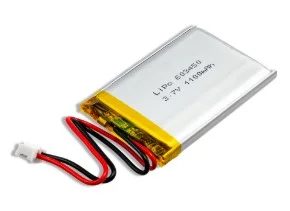
Drones today are often powered by Lithium polymer battery technology. In order to carry ever heavier payloads, fly for longer and to steer more effectively in every situation, drones need to be powered by batteries that provide the maximum amount of energy in the smallest possible space while at the same time being safe. The design of Lithium polymer batteries has a major influence on the drone as a whole. In the following, we explain in more detail how the energy of the battery is used, how the battery is cooled and how the battery is cycled until it finally reaches the end of its life.
Understanding the Core Principles of Lithium Polymer Battery Chemistry
To begin with, we have to understand the work of lithium polymer (LiPo) batteries in order to evaluate their flight performance. Even though there are many types of lithium-ion batteries, lithium polymer batteries are packaged differently than the rest because they contain a polymer-based electrolyte. This design element enables higher discharge rates in LiPo batteries than in most lithium-ion batteries. It is precisely this flexibility that makes LiPo ideal for use in a drone that periodically requires a boost of power to rise or maneuver.
Examine the Electrochemical Structure and Energy Density Characteristics of LiPo Batteries
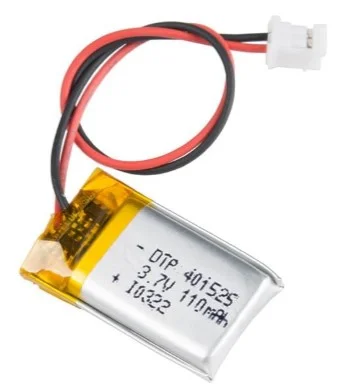
A typical LiPo cell consists of a carbon negative, Lithium metal oxide positive and a polymer electrolyte. The negative and positive electrodes are enclosed in very thin pouches which keep the weight of the case to a minimum. The pouches do not increase the weight of the battery to the same extent as other types of packaging. Therefore the high gravimetric energy density of LiPo batteries translates directly to long flight time per mass of battery in drones for instance. Achieving such high energy density requires some compromise between having adequate safety margins and having a sufficiently stable discharge.
Discuss the Impact of Polymer Electrolyte Composition on Discharge Stability
The physical properties of the polymer electrolyte are determined by the chemical composition. These physical properties influence ion mobility and the internal resistance of the electrolyte. A stiffer electrolyte provides mechanical stability; however, the conductivity is poor at low temperatures. Softer gels have good current conduction properties; however, under stress, they can swell up. To meet the demands of drones in operation under changing climate conditions, the balance of the electrolyte is adjusted to enable a constant voltage, even under sudden throttle up command.
Analyze How Internal Resistance and Cell Balancing Influence Power Delivery in Drones
The internal resistance of the cells affects the efficiency with which the energy is transmitted to the motors. High resistance leads to voltage sag under load and thus to low thrust efficiency. For multi-cell configurations so-called balancing circuits have to be implemented with great precision in order to be able to prevent uncontrolled uneven discharge of the cells. Early degradation or even a crash in flight can be the result.
Energy Density and Its Role in Flight Duration
Energy density of a battery is the amount of energy a battery can store in relation to the mass or volume of the battery. For drones, the energy density of a battery translates into additional flying time. For every additional minute of flying time, every watt-hour has to be packed into an ever decreasing mass.
Explore How Gravimetric and Volumetric Energy Densities Affect Overall Drone Endurance
Gravimetric density (Wh/kg) determines how long a drone can fly until recharge. Volumetric density (Wh/L) will determine how much energy can be carried in the airframe in terms of volume. Racers need high gravimetric power for maneuverability, while industrial survey work will prioritize volumetric efficiency to carry large payloads.
Evaluate Trade-Offs Between Capacity, Weight, and Flight Time Optimization
The double capacity doesn’t automatically double flight time. Increased weight needs to be lifted, thus increased current is drawn. Most experienced pilots would fly with a slightly smaller pack at higher C-rate than with an oversized pack that stresses the motor during takeoff.
Consider How Advanced Materials Improve Cell-Level Energy Retention During Extended Missions
New cathode materials, for example the nickel-rich NMC chemistries which are emerging now, are able to increase capacity without generating excessive heat. In conjunction, the use of graphene-doped anodes to minimize losses at high current outputs, also enables a larger portion of the battery’s total capacity to be used for long missions such as mapping and inspection flights that travel long ranges.
Power Delivery Characteristics in High-Performance Drone Systems
High-performance drones demand instant power. Batteries for such drones must be able to provide a consistent current while being able to handle transient peaks in power. Additionally, safety and efficiency must not be compromised.
Discharge Rates and Current Load Management
The C-rate of a battery pack is the capacity of a battery to be discharged safely in relation to its capacity. For example, a 20C-rated battery pack can supply 20 times the nominal capacity of the battery in amperes continuously. A powerful brushless motor on a drone will, at times, require the battery to be delivering at or near these limits and so controlling heat in such cases is critical to prevent the battery from swelling up or even being permanently damaged.
The continued high current draw quickly starts to wear down the cells’ chemicals. As cells experience high current draws the voltage can drop momentarily due to the cells’ internal impedance increasing. This feeling of throttle lag late in flight is something pilots are familiar with. The advanced ESC algorithms can combat the spikes in current by varying the PWM signal to keep the current within a sustainable range.
Voltage Stability During Dynamic Flight Operations
The voltage across cells will fluctuate due to transient loads during maneuvers such as sharp climbs and flips. The voltage from the cells must remain relatively stable to allow the flight controller to receive reliable feedback. Small drops in voltage can trigger the failsafe and perform a GPS reset to counteract drift.
Optimized cell configuration—such as parallel wiring combined with robust bus bars—reduces resistive losses between cells. Some professional drones integrate onboard capacitors near ESCs to buffer short-term current surges.
Thermal Management Strategies for Lithium Polymer Batteries in Drones
Temperature control is one of the most underappreciated aspects of designing drone batteries – but heat affects both the consistency of a drone’s performance and the long-term health of its batteries.
Heat Generation Mechanisms During Operation
Resistive heating occurs in cells throughout charge and discharge in the form of ions moving through the electrodes and separators in the battery. As cars go through high-load driving such as climbing up hills at high speed, the current demand of the individual motors goes up sharply at the same time and thus their resistive heating up increases.
Temperature variations affect internal resistance of battery: Low temperatures slow down ion movement and very high temperatures increase the risk of electrolyte to break down. Repeated exposure to such temperatures may lead to gas generation in the battery’s pouches which may trigger swelling or venting, endangering battery safety.
Cooling Techniques and Temperature Regulation Approaches
Cooling a battery pack can be done passively by having propeller wash flow over the surfaces of the batteries, open frame quadcopters work well here but enclosed designs for VTOL hybrids are less effective. Active cooling can use tiny fans or heat spreaders in the mount of the battery pack.
Compact frames require thoughtful airflow channeling; placing batteries near ventilation paths improves convective cooling without adding extra components. Some commercial drones now embed thermal sensors linked to flight computers that throttle power automatically if temperature thresholds are exceeded.
Weight-to-Power Ratio Optimization in Drone Battery Integration
The relationship between the distribution of the mass of the batteries on a drone and the aerodynamic stability of the drone determines how smooth the flight of the drone will be when it is loaded with different amounts of mass.
The Trade-Off Between Capacity, Weight, and Structural Balance
The placement of the batteries has the largest impact on the center of gravity out of all the other components on the drone. If the batteries are mounted too far up front the drone will dip its nose when it is accelerating. If the batteries are mounted too far back the drone may oscillate in the hover. The designer of the drone will try to mount the batteries in a position that is symmetrical in the pitch and roll axes while trying to use as much space as possible for other components such as electronics and cameras.
Increasing capacity is very difficult to make structurally sound because larger packs require more solid mounts and in order to do that they add weight. Modular battery trays can help to increase capacity on the fly to better serve the variety of a pilot’s mission.
Material Innovations Enhancing Energy-to-Mass Efficiency
New premium LiPo batteries are now featuring lightweight composite casings such as carbon-reinforced polymers instead of aluminum shells, saving grams without losing stiffness. As for the electrodes, new silicon-blended anodes can deliver up to 30% more specific energy than corresponding graphite-based anodes – yet to be fully tested in the field, however, for the corresponding increase in cycle life.
Battery Lifecycle Management for Sustained Drone Performance
Consistent performance over hundreds of flights can be achieved by adhering to charging procedures and employing predictive maintenance to capitalize on the inherent characteristics of LiPo chemistry.
Charge Cycles, Depth of Discharge, and Longevity Factors
Each full charge and discharge cycle erodes the active materials in each battery cell a little. Keeping a battery below 80% depth-of-discharge between charges can greatly extend its service life. Many current smart chargers are able to track the voltage of each of the cells in a battery bank through their balance leads and then go on to charge them up to 100% after particularly intense usage.
Partial discharge patterns, commonly observed when switching battery packs mid-mission, reduce memory effects, yet lead to a gradual accumulation of microstrain in the electrodes over time. Fleet managers use sophisticated analytics platforms that keep a log of the charge history of individual cells to predict time to replacement long before a failure occurs while in the air.
Storage Conditions and Safety Considerations
For storage periods of more than several weeks, operating at 3.8V per cell is suitable for minimizing chemical stress, while preventing deep self-discharge damage. Please note that storing fully charged cells promotes gas generation, while storing fully depleted cells has the risk of copper dissolution in the electrodes.
Integrated BMS circuits monitor voltage thresholds preventing overcharge incidents—a crucial safeguard especially when multiple packs are charged simultaneously in field environments with variable power sources like generators or solar arrays.
Emerging Trends Shaping Lithium Polymer Battery Development for Drones?
Research for safer solid-state batteries as well as for smarter energy management systems is progressing very fast. These systems are supposed to communicate with the onboard avionics.
Advances in Solid-State Polymer Electrolytes
Solid-state electrolytes eliminate the flammable solvents found in conventional Li-ion batteries while offering improved ionic conductivity at moderate temperatures. Thus, solid electrolytes can greatly improve safety as well as range, since thermal runaway is effectively eliminated even in a puncture scenario such as found in a crash.
These advances also make for slimmer cells, and by integrating these into an aircraft’s aerodynamic structure they can provide an additional increment of efficiency on long mapping missions, where every last bit counts.
Integration with Smart Energy Management Systems
Artificial intelligence-driven systems now analyze mission profiles—like expected altitude shifts or wind forecasts—to adjust discharge curves dynamically across multiple connected packs via CAN-bus networks. This coordination balances load sharing preventing premature depletion of any single module while extending total usable flight time by several percent per sortie cycle according to recent field data from industrial UAV fleets.
FAQ
Q1: Why Lithium polymer batteries are suitable for drones? A: Their batteries have high discharge rate capability and their lightweight flexible shape makes them perfect for the energy delivery needed for agile flight control of drones.
Q2: How does temperature affect LiPo performance? A: Extreme heat increases internal resistance causing faster degradation while cold reduces conductivity causing a drop in voltage under load.
Q3: Why is cell balancing important? A: Cell balancing prevents cells in a series connection from discharging unevenly. Uneven discharge can reduce the life of cells, or even trigger an early cutoff in flight.
Q4: How do you store LiPo batteries? A: Store LiPo batteries with about 3.8V per cell in a cool, dry place and avoid direct sunlight. Also, keep them away from metallic surfaces that can short the terminals by accident.
Q5: Are solid-state LiPos commercially available yet? A: Not yet, but prototypes are available, mass production is limited due to cost of manufacturing, but still under development in many research labs around the world and progress is steady.