
Is a Lithium Ion Battery for Solar Panels Worth It for Home and Off-Grid Power?
Why Does a Lithium Ion Battery for Solar Panels Matter?
A lithium ion battery for solar panels lets you keep solar power made in the day and use it when you need it later. In real use, that can mean lights after dark, a router during a power cut, or cordless tool batteries charging in a shed. For more practical power guides, visit the Insight guides section.
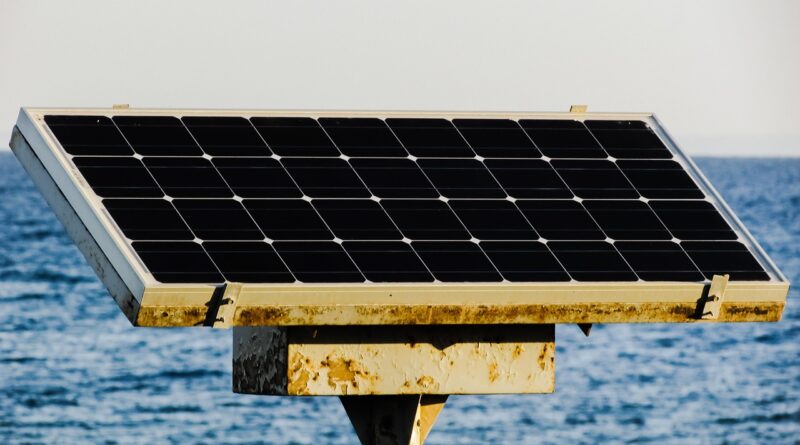
Solar panels work well when the sun is strong. The problem is timing. Panels often make the most power around noon, while many homes and small sites use more power in the evening. A battery helps cover that gap. It does not create electricity, but it makes the solar setup less tied to the exact hours of sun.
Solar Energy Rarely Matches Your Schedule
The U.S. Department of Energy explains that solar output changes with time of day, season, clouds, dust, rain, snow, and shade. It also says storage helps solar power meet demand when the sun is not shining, though no storage process is 100% efficient. Some energy loss is part of the system, and most buyers accept it when backup power is needed. (energy.gov)
Batteries Turn Midday Power into Evening Power
Take a small workshop as an example. The roof panels can charge the battery while nobody is there, and later the battery can run LED lights, a small fan, a charger, and maybe a laptop. There is no trick in it. The battery stores DC energy, and the inverter changes it into AC power for normal loads.
Market Growth Shows the Direction
This is no longer a side topic in the power market. In February 2026, the U.S. Energy Information Administration reported that developers planned 86 GW of new U.S. utility-scale capacity for 2026, with solar making up 51% and battery storage 28%. The same report said developers planned 24 GW of utility-scale battery storage in 2026. Large utility projects are different from home systems, but the buying direction is easy to see: solar and batteries are now planned together more often. (eia.gov)
How Does the System Move Power from Panel to Battery?
A solar battery system is easier to judge once you know the power path. Panels collect sunlight, then a charge controller or hybrid inverter manages the charge. The battery stores the energy, and the inverter supplies AC power for appliances, tools, pumps, or grid-tied backup loads.
Direct Current from PV Modules
Solar panels produce direct current, usually called DC. Batteries also store energy as DC, so panels and batteries fit together well. Even so, voltage still has to be controlled carefully. Too much charging voltage can shorten battery life or cause a protection shutdown, while too little voltage can leave usable capacity in the pack.
Charge Control and Battery Management
A good lithium battery is not just cells inside a box. The battery management system, or BMS, checks voltage, current, temperature, and cell balance. It may stop charging in freezing weather, limit discharge during overload, or shut the pack down if the condition is unsafe. For daily solar use, the BMS is not an extra selling point; it is part of the main product.
AC Output for Tools and Appliances
Most homes and jobsite tools run on AC power. Because of that, the inverter matters as much as the battery. A 5 kWh battery with a weak inverter may store enough energy but still fail to start a pump, compressor, or saw charger bank. Before buying, check both continuous output and surge output.
How Large Should Your Solar Battery Be?
Battery sizing starts with two numbers: kWh and kW. Kilowatt-hours show how much energy the battery can store. Kilowatts show how much power it can deliver at one time. Buyers mix these two terms up often, and some product labels make the confusion worse.
Daily Load Comes First
Write down the loads you want to run and how many hours each one will work. For example, a 60 W fan for 8 hours uses 0.48 kWh. Ten 10 W LED lights for 5 hours use 0.5 kWh, and a 1,000 W microwave used for 15 minutes uses 0.25 kWh. Add the loads first, then add some margin for inverter loss and cloudy days.
Power Rating Handles Surges
A refrigerator may use a limited amount of energy over a day, but its startup surge can be several times higher than its running watts. Pumps and some power-tool chargers can have the same issue. If the inverter cannot handle the surge, the system may trip even when the battery still shows enough charge. This is why kW matters along with kWh.
Backup Hours Need Weather Margin
If you only need one night of backup, a smaller battery may be enough. If you need two or three cloudy days, you either need more storage or you need to cut the load list. A simple home backup plan may cover lights, Wi-Fi, a fridge, and phone charging. A cabin may also need a water pump, while a workshop may need short bursts of higher power.
Which Lithium Ion Chemistry Fits Solar Storage Best?
Lithium ion is a battery family, not one battery type. For solar storage, buyers usually see two names: LFP and NMC. Both can work, but they suit different needs. You do not need a full chemistry lesson before buying; you mainly need to understand safety, space, cycle life, and cost.
LFP Is the Usual Stationary Choice
LFP stands for lithium iron phosphate. NREL’s 2024 Annual Technology Baseline uses a representative residential battery storage system of 5 kW and 12.5 kWh, and notes that LFP became the primary chemistry for stationary storage starting in 2021. For many solar homes, cabins, and commercial backup systems, LFP is common because it is stable, easy to source, and suitable for daily cycling. (atb.nrel.gov)
NMC Saves Space Where Weight Matters
NMC batteries can provide higher energy density, so they are often used where space and weight matter more. This makes sense in mobile equipment and some compact storage designs. For fixed solar storage, a slightly larger cabinet is often not a problem. A garage wall, utility room, or outdoor enclosure usually does not need the smallest possible battery pack.
The BMS Is Not a Small Detail
Two batteries with similar cell chemistry can perform very differently in the field. The BMS design, enclosure, fusing, terminals, and communication protocol all affect daily use. A lower-cost pack without proper inverter communication may cycle badly or show error codes. That becomes a real nuisance in winter, especially when nobody wants to check a battery at 10 p.m. See also: Tool Categories.
What Should You Check Before Buying?
Solar batteries may be installed in homes, garages, cabinets, sheds, vans, and commercial rooms. So the purchase is not only about capacity. Safety listings, installation location, ventilation, wiring, and inverter matching all need to be checked. A neat installation is usually safer, quieter, and easier to service.
Certifications and Local Approval
For energy storage systems, safety testing is a serious matter because lithium batteries can fail badly when they are misused or installed poorly. ANSI lists ANSI/CAN/UL 9540A:2026 as a test method for evaluating thermal runaway fire propagation in battery energy storage systems, with publication dated March 13, 2026. For buyers, the plain point is this: ask for recognized safety documents and check local code needs before installation. (webstore.ansi.org)
Temperature Range and Installation Location
Lithium batteries do not handle extreme heat well, and many cannot charge safely below freezing unless they have heating or low-temperature charge protection. A battery in a metal shed under summer sun may age faster. A battery sitting on a damp floor may also face corrosion over time. Wall clearance, shade, and a dry mounting surface sound simple, but they prevent many service problems.
Communications with the Inverter
Many modern lithium batteries communicate with inverters through CAN or RS485 communication. This lets the inverter read state of charge, limits, alarms, and charge settings. If the two devices cannot communicate, the system may still work in basic voltage mode, but the settings become more manual. Before ordering, check the inverter compatibility list, not only the voltage.
What Buying Mistakes Cost the Most Money?
The wrong battery is not always the cheapest one on the quote sheet. Sometimes it is the battery that looks strong on paper but does not match the solar array, inverter, backup loads, or permit requirements. The cost may appear later, when extra cables, another inverter, or a replacement pack are needed.
Choosing kWh and Forgetting kW
A 10 kWh battery sounds twice as useful as a 5 kWh battery, but that is not true if it has the same low output limit. If you want to run high-start loads, check the discharge power. For backup circuits, list each load and mark which ones may start at the same time. A fridge plus a well pump plus a charger bank can test a small system quickly.
Mixing Random Parts from Different Brands
DIY solar can work well when the parts are planned as a system. Random mixing, on the other hand, often creates problems that are not obvious at first. Battery voltage must match the inverter, and charge current must stay within limits. Communication protocols, breakers, fuses, and cable sizes also have to match the real current. A clear parts list is usually better than a pile of bargain components.
Paying for Capacity You Cannot Use
Some battery capacity is kept in reserve to protect cell life. Some inverters also limit usable output, and some warranties depend on cycle count, depth of discharge, or approved installation. Read the warranty before placing the order. If a datasheet says 10 kWh but the usable energy is lower, size the system from the usable number, not the headline number.
FAQ
Q1: Can a Lithium Ion Battery Run a House at Night? A: Yes, if it is sized for the loads. A small battery may cover lights, Wi-Fi, and a refrigerator. Whole-home backup needs a larger battery bank, a suitable inverter, and a careful load plan.
Q2: Is LFP Better Than NMC for Solar Panels? A: For many stationary solar systems, LFP is the common choice because it fits daily cycling and fixed installations. NMC may make sense when space and weight are tight, but the full system design matters more than chemistry alone.
Q3: How Many kWh Do You Need for Solar Backup? A: Add the watt-hours for the loads you want to run, then add margin for inverter loss and cloudy weather. Many small backup plans start with essential loads only, while off-grid homes usually need a larger battery bank.
Q4: Can You Add a Battery to Existing Solar Panels? A: Often yes, but the right method depends on the inverter. Some systems use AC-coupled batteries, while others need a hybrid inverter or DC-coupled design. Check compatibility before buying hardware.
Q5: What Is the Biggest Mistake When Buying a Solar Battery? A: The biggest mistake is buying by kWh alone. You also need the right voltage, output power, surge rating, safety listing, inverter communication, and installation plan.