
How Can a BLDC Motor Drive System Enable Adaptive Speed Control in EVs
Adaptive Speed Control of BLDC Motors for Enhanced Electric Vehicle Performance Using Fuzzy Logic
Electric vehicles increasingly rely on the BLDC motor drive system because it combines high efficiency with compact design. Adaptive speed control using fuzzy logic provides a dynamic method to regulate performance in real time, responding to variable driving conditions and load changes. This approach enhances torque smoothness, reduces energy waste, and extends component life. By integrating fuzzy logic into adaptive control loops, EVs achieve precise speed regulation and robust operation even under nonlinear conditions. The result is a more responsive, reliable, and energy-efficient propulsion system that aligns with modern electric mobility demands.
Fundamentals of BLDC Motor Drive Systems in Electric Vehicles
The BLDC motor drive system forms the foundation of modern electric propulsion. Its structural design and control strategy determine how effectively an EV converts electrical energy into motion.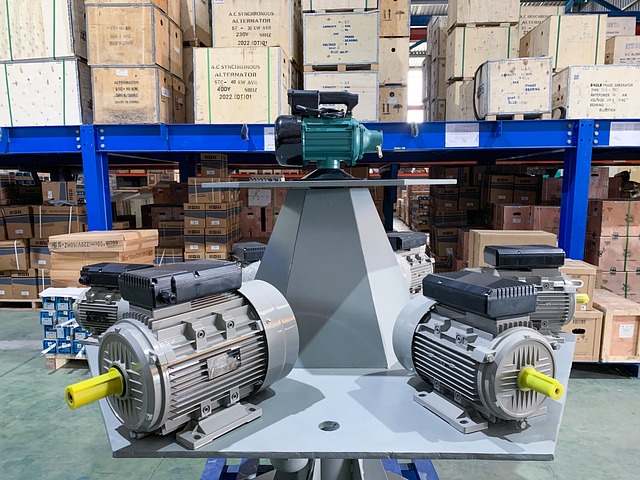
Structural and Operational Characteristics of BLDC Motors
A BLDC motor consists of a stator carrying windings and a rotor equipped with permanent magnets. The absence of brushes eliminates mechanical wear, reducing maintenance requirements. Electronic commutation replaces mechanical switching by energizing stator phases based on rotor position detected through sensors or estimators. This precise timing produces continuous torque output with minimal ripple. Compared to induction motors, BLDC units offer higher power density and better efficiency at partial loads—advantages critical for EV range optimization.
Drive System Architecture and Control Requirements
The drive architecture typically includes a three-phase inverter converting DC battery voltage into AC signals for the motor windings. Pulse-width modulation (PWM) controls switching devices such as MOSFETs or IGBTs to shape current waveforms. Key control objectives include maintaining torque smoothness, ensuring fast dynamic response during acceleration or regenerative braking, and achieving high efficiency across the operating range. In electric mobility systems, precise speed and torque regulation are vital to balance comfort, safety, and battery utilization.
Principles of Adaptive Speed Control in EV Applications
Adaptive control strategies address the nonlinearities inherent in electric vehicle dynamics. They continuously tune controller parameters according to changing road and load conditions.
Concept of Adaptive Speed Regulation
Adaptive speed regulation modifies controller gains based on feedback from sensors monitoring current, voltage, temperature, and rotor speed. This mechanism allows the system to maintain optimal performance under varying loads or terrain gradients. It enhances ride comfort by smoothing acceleration transitions while improving energy efficiency through intelligent torque distribution. Feedback loops form the backbone of this approach, adjusting motor input signals in real time to sustain target speeds despite external disturbances.
Integration with Vehicle Dynamics and Powertrain Systems
In practice, adaptive speed control operates within an integrated framework linking the motor drive system to the vehicle control unit (VCU). The VCU processes data from multiple subsystems—battery management, traction control, braking—to coordinate overall vehicle behavior. Road gradient changes or variations in passenger load directly influence torque demand; adaptive algorithms compensate instantly by adjusting inverter commands. Communication between modules often employs CAN or LIN protocols for reliable real-time data exchange critical to adaptive regulation accuracy.
Fuzzy Logic-Based Control Strategies for BLDC Motor Drives
Conventional PID controllers struggle with nonlinearities typical in BLDC systems. Fuzzy logic offers a rule-based alternative capable of handling uncertainties without requiring exact mathematical models.
Fundamentals of Fuzzy Logic Control (FLC)
A fuzzy logic controller operates through three main stages: fuzzification converts numerical inputs into linguistic variables; inference applies rule sets defining control actions; defuzzification translates results back into crisp outputs for actuator commands. Unlike linear controllers that rely on fixed gains, FLC adapts smoothly across different operating regions. It excels at managing parameter variations such as temperature-induced resistance changes or battery voltage drops—conditions common in EV environments.
Application of Fuzzy Logic to Adaptive Speed Control
Designing a fuzzy rule base begins with identifying key variables like speed error and its rate of change. Rules map these inputs to corrective actions that modify voltage or current references sent to the inverter. Membership functions define how strongly each input belongs to qualitative categories such as “low,” “medium,” or “high.” Proper tuning balances responsiveness against stability; overly aggressive settings may cause oscillations while conservative ones slow reaction time. Real-time adaptation uses sensor feedback—current spikes during hill climbing or voltage sag under heavy load—to adjust membership boundaries dynamically.
Implementation Framework for Adaptive BLDC Drive Systems
Successful deployment requires both capable hardware platforms and efficient software algorithms able to execute fuzzy computations within microseconds.
Hardware Components Supporting Adaptive Control
Modern implementations employ microcontrollers or digital signal processors (DSPs) optimized for real-time arithmetic operations. Field-programmable gate arrays (FPGAs) are also used when parallel processing is needed for high-speed inference execution. Sensors measure current flow through stator phases, rotor position via Hall sensors or encoders, and thermal states using embedded temperature probes. These inputs feed into power electronic interfaces controlling inverter switches that deliver modulated voltage pulses efficiently across wide frequency ranges.
Software Algorithms for Real-Time Adaptation
The algorithmic sequence starts with sensor data acquisition followed by preprocessing filters that remove noise before entering the fuzzification stage. Control signal generation occurs after defuzzification outputs updated duty cycles for PWM channels driving inverter transistors. Adaptive gain scheduling modifies internal parameters depending on conditions like battery state-of-charge or ambient temperature shifts. To minimize computational delay, developers apply lookup tables or simplified rule matrices so embedded processors can maintain sub-millisecond response times even under heavy computation loads.
Performance Evaluation Metrics for Adaptive BLDC Motor Drives
Evaluating adaptive fuzzy-controlled drives involves examining both transient behavior and long-term reliability across diverse operating scenarios.
Dynamic Response and Efficiency Assessment
Transient response metrics include rise time, settling time, overshoot percentage, and steady-state error following sudden torque demands or regenerative braking events. Improved dynamic tracking minimizes jerk sensations noticeable during acceleration changes—a key comfort factor in EVs. Energy efficiency measurements assess how well adaptive algorithms reduce copper losses by maintaining near-optimal current phase alignment relative to back-EMF waveforms. Comparative studies often show fuzzy-based schemes outperform conventional PI methods in both response speed and energy consumption reduction.
Reliability and Robustness Considerations
Reliability testing covers thermal endurance under prolonged high-load operation where component aging may shift electrical characteristics. Robustness evaluations verify that the drive maintains stable performance despite sensor faults or fluctuating supply voltages common in degraded batteries. Built-in diagnostic routines monitor abnormal patterns—excessive current harmonics or unexpected rotor lag—and trigger safe-mode responses before damage occurs. Such self-protective features extend service life while preserving consistent driving quality over years of use.
Emerging Trends in Intelligent BLDC Motor Control for EVs
Innovation continues toward smarter systems combining classical control theory with artificial intelligence tools that learn from operational data streams.
Integration with Machine Learning Techniques
Hybrid controllers merging fuzzy logic with neural networks create self-learning mechanisms capable of refining rule sets automatically based on historical performance logs. Machine learning models predict optimal parameter adjustments ahead of disturbances rather than reacting afterward—a shift from reactive to predictive control philosophy beneficial for smoother driving experiences and reduced wear rates across drivetrain components.
Advancements in Power Electronics and Sensor Technologies
Recent progress in silicon carbide (SiC) and gallium nitride (GaN) semiconductor devices has improved inverter efficiency at higher switching frequencies while lowering thermal stress levels on components. High-resolution optical encoders now provide sub-degree accuracy for rotor position detection enabling finer granularity in adaptive adjustments especially critical during low-speed maneuvers where torque ripple becomes more pronounced.
FAQ
Q1: What makes a BLDC motor suitable for electric vehicles?
A: Its high efficiency, compact size, low maintenance due to brushless design, and superior torque characteristics make it ideal for EV propulsion systems.
Q2: How does fuzzy logic improve adaptive speed control?
A: Fuzzy logic handles nonlinearities effectively by applying linguistic rules instead of fixed equations, allowing smoother transitions across varying load conditions.
Q3: Why is precise torque control important in EVs?
A: It ensures driver comfort by reducing vibration while optimizing power usage from the battery pack during acceleration or regenerative braking phases.
Q4: What role do modern semiconductors play in BLDC drives?
A: Devices like SiC MOSFETs enable faster switching at lower losses which enhances overall system efficiency especially under high-current operations typical in EVs.
Q5: Can machine learning replace fuzzy logic entirely?
A: Not yet; most advanced systems combine both approaches where machine learning refines fuzzy rules over time rather than substituting them completely for safety-critical applications.