Can A Welding Grinder Enhance Impact Wrench Performance And Efficiency
Impact Wrench, Torque Control, Fastener Integrity, Power Tools, Mechanical Efficiency
Precision in mechanical assembly depends on how effectively power tools interact. A welding grinder and an impact wrench serve distinct yet sequential functions that influence torque control and fastener integrity. When surfaces are properly conditioned by grinding before fastening, the torque applied by an impact wrench becomes more predictable, minimizing slippage and uneven loading. This synergy between surface preparation and torque application not only improves joint reliability but also enhances mechanical efficiency across fabrication processes.
Understanding the Relationship Between Welding Grinders and Impact Wrenches?
The relationship between these two tools is not competitive but complementary. In fabrication lines or repair workshops, they often operate in sequence—grinding first to clean or level a surface, followed by fastening operations using an impact wrench.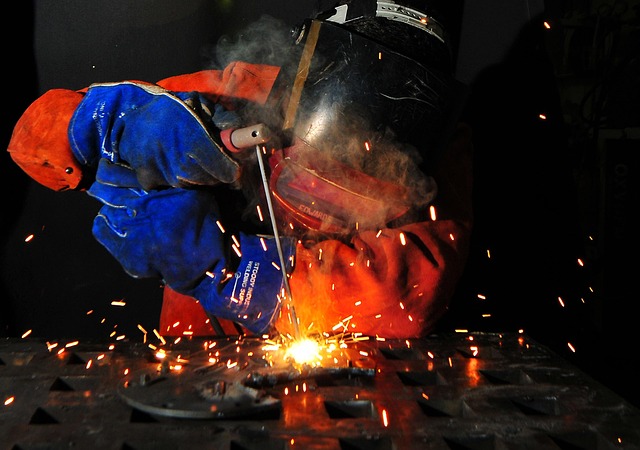
Functional Differences and Complementary Roles
A welding grinder is designed for surface preparation, finishing, and removing material irregularities. It shapes weld beads, removes spatter, and refines edges before assembly continues. The impact wrench, on the other hand, applies rotational force to tighten or loosen bolts with controlled torque. When used together, the grinder prepares surfaces that allow the wrench to perform with greater precision. The combination ensures structural alignment and minimizes residual stress at joints.
How Surface Preparation Influences Torque Application
Surface quality directly affects how torque is transmitted through fasteners. A ground surface reduces friction inconsistencies that could distort torque readings or cause over-tightening. Clean metal-to-metal contact improves energy transfer from the wrench to the fastener head. In contrast, debris or oxidation can create micro-gaps leading to uneven load distribution across bolts—an issue often overlooked in high-speed assembly environments.
The Effect of Surface Conditioning on Torque Control
Surface conditioning sets the baseline for torque accuracy. Without proper grinding, even calibrated wrenches may produce unreliable results due to variable friction coefficients at mating points.
Grinding’s Role in Achieving Consistent Torque Values
Smooth surfaces help achieve predictable torque values during tightening cycles. By reducing contamination such as oil residue or oxide layers, grinding prevents slip conditions that could skew measurements. For example, when assembling stainless-steel frames in food-grade applications, fine-grit grinding ensures consistent clamping force under repeated thermal expansion cycles. This consistency directly influences joint reliability under vibration or dynamic loads.
The Impact of Material Finish on Fastener Integrity
Material finish defines how stress distributes across bolted connections. Excessive roughness can induce micro-movements between components that lead to fatigue cracks over time. Controlled grinding maintains uniform pressure along contact areas so that no single point bears disproportionate stress. Over long-term operation—such as in heavy machinery—the result is improved structural stability and fewer maintenance interventions.
Enhancing Mechanical Efficiency Through Tool Synergy
When grinders and impact wrenches are integrated into a workflow rather than used separately, overall efficiency improves noticeably. Each tool amplifies the performance of the other by addressing different physical variables—surface texture and torque transmission.
Sequential Use of Grinder and Impact Wrench in Fabrication Processes
In fabrication shops where welds precede bolting operations, using a welding grinder before fastening eliminates spatter that might obstruct component alignment. This step improves fitment accuracy between adjoining parts and reduces rework time caused by misalignment. Operators also experience less resistance during tightening since clean interfaces promote smoother mechanical coupling.
Energy Transfer and Frictional Optimization Between Components
Energy loss during tightening largely stems from frictional inefficiencies at contact zones. A well-prepared surface minimizes these losses by allowing more energy from the impact wrench to convert into clamping force rather than heat or vibration. Consequently, less input torque is required to reach target specifications—a measurable benefit when hundreds of fasteners are installed daily on production lines.
Practical Considerations for Integrating a Welding Grinder into Assembly Workflows
Integrating grinders into assembly requires deliberate selection of equipment and abrasives suited for specific materials and operational goals.
Selecting the Appropriate Grinder Type and Abrasive Material
Choosing a grinder involves balancing speed capability with material hardness. For softer alloys like aluminum, high-speed grinders risk excessive heat buildup that can warp components; slower units with fine-grit discs maintain dimensional control. Harder metals such as carbon steel benefit from coarse-grit wheels for initial weld cleanup before finer finishing passes refine texture without compromising thickness tolerance.
Factors to Evaluate When Choosing a Grinder
Operators should match wheel composition with base material properties—aluminum oxide wheels suit ferrous metals while silicon carbide performs better on non-ferrous substrates. Additionally, maintaining consistent wheel balance prevents chatter marks that affect subsequent fastening accuracy.
Recommended Abrasive Specifications for Precision Work
Fine-grit abrasives (120–240 grit) are ideal for stainless assemblies where hygiene standards demand smooth finishes free from crevices that trap contaminants. Coarser grades (36–60 grit) handle weld bead removal efficiently before transitioning to finer polishing steps.
Safety and Maintenance Protocols in Combined Tool Operations
Combining high-speed grinders with torque tools raises both safety and maintenance requirements because vibration exposure increases cumulative wear on components.
Operational Best Practices for Efficiency and Longevity
Operators must wear proper PPE including gloves rated for rotational tools when alternating between grinding and fastening tasks. Regular inspection of grinder discs prevents imbalance-induced vibration while checking impact sockets avoids rounding effects under repeated load cycles.
Calibration and Maintenance Scheduling
Impact wrenches should undergo periodic calibration per ISO 6789 standards to maintain torque accuracy within ±4% deviation limits commonly accepted in industrial assembly lines. Lubricating bearings in both grinders and wrenches extends service life by reducing internal friction—often overlooked until performance degradation becomes evident through inconsistent results.
Evaluating Performance Gains from Combined Tool Utilization
Quantifying benefits helps justify investment in integrated tool systems within manufacturing budgets focused on throughput improvement.
Quantifying Improvements in Assembly Time and Accuracy
Pre-ground surfaces significantly cut rework rates by preventing misalignment during bolting operations. Assembly cycles become faster because each fastener reaches its target torque without repeated adjustments caused by frictional drag variations.
Long-Term Benefits on Equipment Reliability
Consistent fastening integrity lowers stress concentrations around bolt holes—a common failure zone under cyclic loads such as those found in automotive chassis or turbine housings. Over time this consistency translates into extended service intervals and reduced downtime across production assets.
FAQ
Q1: Why should grinding be done before using an impact wrench?
A: Grinding removes contaminants like spatter or rust that interfere with accurate torque transfer during fastening operations.
Q2: How does surface finish affect bolt fatigue life?
A: Rough finishes create localized stress risers where cracks initiate under cyclic loading; smoother finishes distribute stress evenly across contact zones.
Q3: What abrasive type works best for stainless steel applications?
A: Fine-grit aluminum oxide discs provide clean finishes suitable for hygienic environments while minimizing heat discoloration.
Q4: How often should an impact wrench be calibrated?
A: Calibration every six months or after 5,000 cycles maintains compliance with ISO torque accuracy standards used across industrial sectors.
Q5: Can improper grinding reduce overall assembly efficiency?
A: Yes, uneven surfaces increase friction during tightening which leads to inconsistent torque values and additional rework time later in production.