
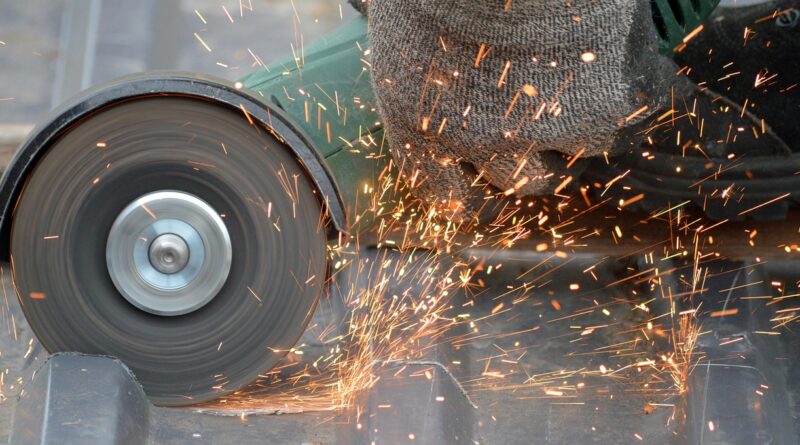
Angle grinder tool guide for uses, discs and safe setup
What an angle grinder tool does
An angle grinder tool is a handheld power tool that spins a removable disc or wheel at high speed. With the right accessory, it can cut, grind, deburr, sand, polish or clean hard materials. Its real value comes from matching the grinder body, accessory, guard and material to one defined job. In trade use, it is usually easier to think by application: cutting metal, grinding welds, removing rust, dressing masonry or preparing surfaces. This guide covers where the tool fits, which discs are commonly used, what selection features matter, and what to check before setup. You can also browse related power-tool groupings in the Tool Categories section.
The same grinder can behave like several different tools because the accessory changes the work. A thin cut-off wheel separates metal. A depressed-center grinding wheel removes weld material. A flap disc blends and finishes. A wire wheel cleans rust or scale. A diamond blade can cut masonry or tile when the grinder, guard and dust controls are suitable. That flexibility is why angle grinders are common in metal fabrication, repair work, construction, vehicle maintenance and workshop projects.
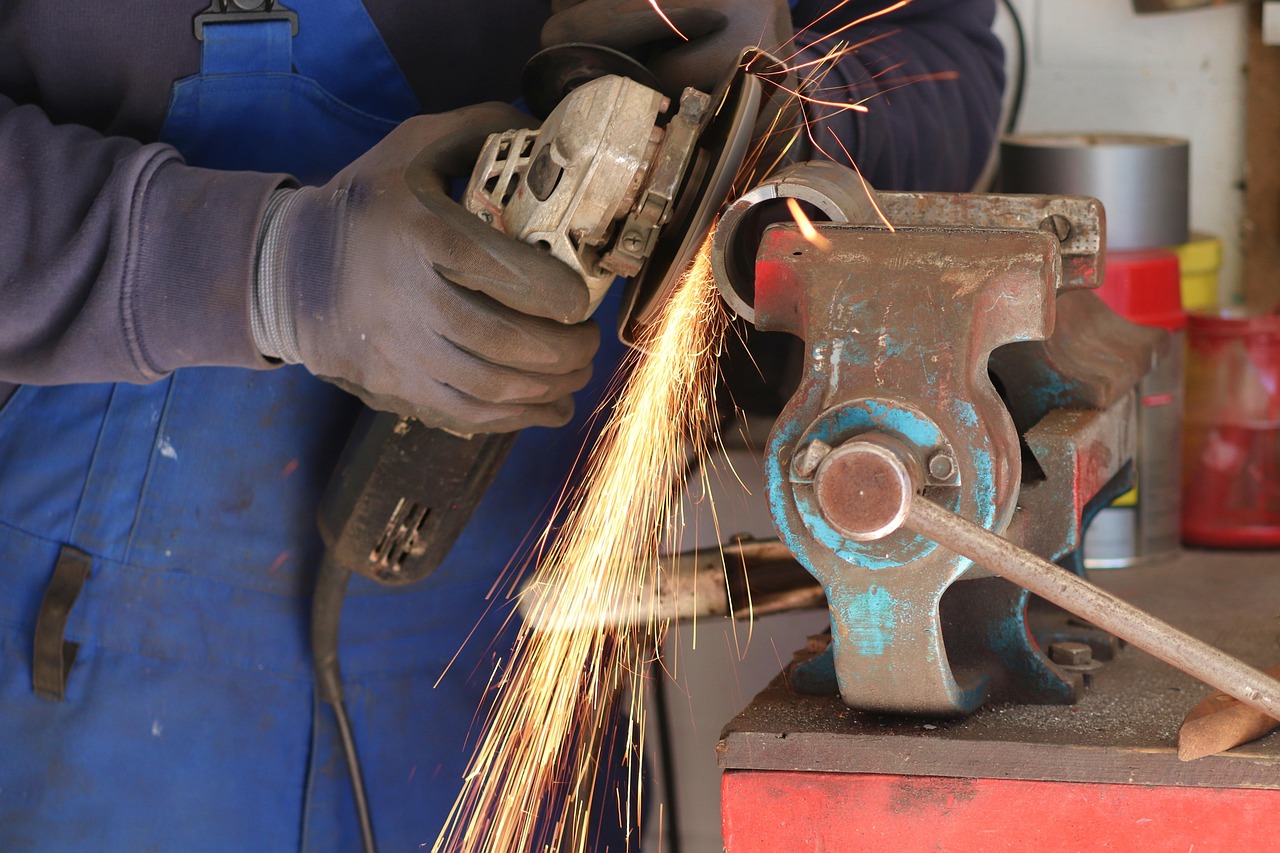
The tradeoff is that the tool does not tolerate poor setup. Public guidance from OSHA, CCOHS, SafeWork NSW, NIOSH and CPWR points to the same core controls: keep guards in place, use wheels only within their marked speed rating, secure the work, protect eyes and face, control dust and noise, and avoid forcing the disc.
Main jobs and the discs that make them possible
An angle grinder should not be treated as a general-purpose shortcut for every cutting task. It works best when the disc is designed for the material and the work can be held securely. The table below summarizes common uses and the checks that matter before starting.
| Job | Common accessory | What to check | Common limitation |
|---|---|---|---|
| Cutting steel bar, sheet or pipe | Thin metal cut-off wheel | Wheel diameter, arbor fit, RPM rating and correct guard | Cut-off wheels are not designed for side grinding pressure |
| Grinding welds or heavy edges | Depressed-center grinding wheel | Wheel condition, material compatibility and working angle | Fast stock removal can overheat the workpiece |
| Blending and deburring | Flap disc | Grit, backing type and maximum speed | Removes less material than a grinding wheel |
| Removing rust, paint or scale | Wire cup or wire wheel | Wire-wheel speed rating and face protection | Wire fragments can be thrown during use |
| Cutting masonry, concrete or tile | Diamond blade or suitable masonry wheel | Blade type, dust controls, guard and material rating | Silica-containing dust may require water or vacuum controls |
| Surface preparation | Sanding disc, non-woven disc or flap disc | Backing pad, speed range and workpiece condition | High speed can remove coating or base material too quickly |
The accessory label is not a formality. It gives the diameter, arbor size, intended material use and maximum RPM. Safety organizations such as CCOHS advise that an attachment’s maximum RPM should be equal to or higher than the grinder’s maximum speed. If the disc is rated lower than the tool, do not use it.
How to choose size, power source and controls
Small angle grinders, often in the 4 1/2-inch to 5-inch class, are popular for maintenance, automotive work and light fabrication because they are easier to control and can reach tighter spaces. Larger 7-inch and 9-inch grinders cut deeper and remove material faster, but they require more strength, clearance and discipline. A larger wheel has more stored energy, and kickback can be more severe if the disc binds.
Power source depends on duty cycle and mobility. A corded grinder is still practical for long grinding sessions because it avoids battery changes and can deliver steady power. A cordless grinder is convenient for site work, quick cuts, punch-list repairs and locations where extension cords create trip hazards or are difficult to manage. Battery voltage and amp-hour ratings help, but they do not replace proper disc selection. A powerful grinder with the wrong wheel is still the wrong setup.
Useful control features include a side handle that can mount in more than one position, a guard that adjusts without awkward disassembly, a paddle or dead-man style switch, soft start, braking, anti-restart protection and electronic kickback control. These features may reduce certain risks, but they are not permission to remove the guard, operate one-handed or stand in the path of the disc.
Ergonomics also matter. Before buying or assigning a grinder, hold it with gloves similar to the ones used during work. Check whether the switch can be released quickly, whether the side handle gives a stable two-hand grip, and whether the guard can be positioned between the operator and the wheel while still allowing the cut or grind to be completed.
Safe setup before cutting or grinding
Setup starts before the tool is plugged in or the battery is installed. Inspect the grinder body, cord or battery interface, guard, flanges, spindle and accessory. Do not mount a cracked, wet, warped, heavily worn or unmarked abrasive wheel. Do not force an accessory onto the spindle or alter the mounting hole. Use the flanges, nuts and backing components specified by the manufacturer.
- Disconnect power before changing discs or adjusting the guard.
- Match the accessory to the material and the task, not just to the grinder’s diameter.
- Confirm the disc’s maximum RPM is not lower than the grinder’s rated speed.
- Use the correct guard and position it between the operator and the wheel where the task allows.
- Secure the workpiece so the cut cannot close on the wheel.
- Keep both hands on the tool and maintain balanced footing.
- Let the wheel reach operating speed before contacting the work.
- Allow the disc to stop before setting the grinder down.
For U.S. workplaces, OSHA rules for portable abrasive wheel tools require guarding in many applications. OSHA’s construction abrasive-wheel provisions state that, when safety guards are required on portable abrasive wheels, the maximum angular exposure of the wheel periphery and sides must not exceed 180 degrees. OSHA hand and power tool guidance also emphasizes guards that cover key rotating components and help protect against fragments if a wheel breaks.
Personal protective equipment should fit the task. Impact-rated safety glasses or goggles protect the eyes; a face shield adds protection from sparks and fragments but should not be treated as a full substitute for eye protection. Gloves, hearing protection, protective footwear, flame-resistant clothing or respiratory protection may be needed depending on the work. Remove loose clothing, tie back long hair and keep jewelry away from rotating parts.
Material-specific limits, dust and noise
Metal grinding creates sparks, hot fragments and sharp edges. Keep flammable liquids, dust, paper, rags and other combustibles away from the spark stream. If work is done near finished surfaces, glass or other people, use screens or barriers. Stainless steel, aluminum and coated metals may require different abrasives or cleaning practices to avoid contamination, loading or fumes from coatings.
Masonry, concrete, brick, mortar and some tile work add another hazard: respirable crystalline silica. OSHA’s silica standard for construction includes handheld grinders in its Table 1 control methods and points to dust-control approaches such as integrated water delivery or shroud-and-dust-collection systems, depending on the specific task. For tuckpointing, OSHA materials describe commercial shrouds and dust collection as central controls. The practical point is straightforward: dry grinding silica-containing material without effective dust control can create a health exposure that may not be visible once the dust disperses. See also: Brands.
Noise is also easy to underestimate. NIOSH recommends hearing loss prevention programs for workers exposed to an 85 dBA time-weighted average, and CPWR construction guidance notes that handheld grinders frequently generate sound levels above 90 dBA. A short home repair is different from all-day work, but the lesson still applies: if conversation is difficult near the tool, hearing protection and exposure control should be considered.
Heat is another limitation. A grinder removes material by friction or abrasion, so the workpiece, disc and nearby surfaces can become hot quickly. Let the tool do the cutting. Forcing the wheel can overheat the accessory, glaze the abrasive, distort thin metal or increase the chance that the disc binds.
Common mistakes that raise risk
The most dangerous grinder habits are usually shortcuts: removing a guard for visibility, fitting an oversized wheel, grinding with a thin cut-off disc, twisting the tool in a cut, using a damaged wheel or changing discs without disconnecting power. Any one of these can turn routine work into a severe injury event.
SafeWork NSW published a 2016 safety alert after incidents involving angle grinders, including a fatal injury connected with a broken disc and another case where kickback cut a worker’s wrist. The alert highlighted contributing factors such as removed guards and cutting discs that were too large for the grinder. That incident history is why disc size and guard position are not minor details.
Another mistake is using an angle grinder as a substitute for a saw on materials or accessories not intended for it. Wood-cutting or toothed attachments can create very different grab and kickback behavior than abrasive discs. If the grinder manufacturer does not permit an accessory, and the correct guard or attachment system is not available, choose a different tool.
Finally, do not judge safety by whether a job was completed successfully once. A wheel can survive misuse several times and still fail later. Build the habit around the label, the guard, the workholding and the material, not around luck.
Frequently asked questions
Can an angle grinder tool cut concrete?
Yes, but only with a suitable masonry or diamond accessory, the correct guard and appropriate dust controls. In workplace settings, silica rules may require water delivery, shrouds, dust collection, respirators or exposure assessment depending on the task and duration.
What size angle grinder is most practical for general use?
For many workshops and repair jobs, a 4 1/2-inch or 5-inch grinder is the most manageable starting point. It is easier to control than a large grinder and supports many common metal cutting, grinding and surface-preparation accessories. Larger grinders make sense when depth of cut and production rate justify the added weight and risk.
Can I grind with a cut-off wheel?
No. Thin cut-off wheels are designed for edge cutting, not side loading. Side pressure can damage or break the wheel. Use a grinding wheel or flap disc when the task requires side contact with the work surface.
Is a cordless angle grinder powerful enough?
A cordless grinder can be powerful enough for many intermittent cutting and grinding tasks, especially where mobility matters. For long grinding sessions, heavy stock removal or repeated cuts, a corded tool may still be more efficient because it avoids battery heat and runtime limits.
Do I need both safety glasses and a face shield?
For grinding and cutting, impact-rated safety glasses or goggles should be the base layer of eye protection. A face shield adds coverage against sparks and fragments, but it is generally treated as additional face protection rather than a replacement for proper eye protection.