
Tile saw brands compared by job type, cut capacity, and dust control
How to compare tile saw brands by application
Tile saw brands are best compared by the work they are expected to handle, not by a single universal ranking. A homeowner cutting ceramic subway tile, a remodeler installing 12 x 24 in. porcelain, and a contractor trimming large-format panels all need different saw designs. A useful comparison looks at cut capacity, motor and blade format, table or bridge design, water containment, dust control, portability, calibration, and parts availability.
Brands such as DeWalt, RIDGID, RUBI, MK Diamond, QEP, iQ Power Tools, and Pearl Abrasive appear often in the tile saw market, but they do not all compete in the same part of the category. The right shortlist depends on the project type, the largest tile being cut, the jobsite conditions, and how often the saw will be used.

For more power tool brand coverage, visit the Taodili brands section.
The main types of tile saw brands buyers usually compare
Most buyers searching for tile saw brands are not just looking for names. They are trying to decide which type of brand and saw platform fits the work. The market can be grouped into several practical categories.
- General power tool and jobsite brands such as DeWalt and RIDGID are often considered by remodelers and tradespeople who want a familiar jobsite setup, rolling stands, and broad retail availability.
- Tile-specialist brands such as RUBI and MK Diamond focus more directly on tile installation, wet cutting, bridge saws, diamond blades, and professional tile workflows.
- Entry-level and homeowner-focused brands such as QEP are commonly considered for occasional bathroom, backsplash, and small floor projects where cost and simplicity matter.
- Dust-control focused brands such as iQ Power Tools approach the category differently, emphasizing dry cutting with integrated dust collection rather than a traditional water tray.
- Specialty cutting brands such as Pearl Abrasive serve users who need compact wet saws, handheld wet/dry saws, blades, and related cutting accessories.
This grouping is more useful than a top-ten list because tile saw performance depends heavily on material and format. Porcelain usually needs a suitable diamond blade and a steadier feed than soft ceramic. Stone can require more torque and water. Large-format tile exposes weaknesses in sliding tables, fence alignment, tray support, and water management. Small tile, by contrast, may not justify a heavy saw that is difficult to store or move between jobs.
Brand-by-brand comparison for common users
| Brand | Typical strength | Best-fit user | Key limitation to check |
|---|---|---|---|
| DeWalt | Jobsite wet saws, portable stands, common contractor use | Remodelers and contractors | Model weight, water containment, current capacity |
| RIDGID | Retail-available wet saws and tile blades | DIYers and light-to-medium remodel work | Large-format support and calibration |
| RUBI | Tile-specialist saws, bridge and moving-head designs | Tile setters and large-format users | Price, storage, and model-specific setup |
| MK Diamond | Durable wet cutting equipment and diamond tooling | Commercial tile and masonry users | Weight and portability |
| QEP | Affordable wet saws and tile tools | Occasional DIY projects | Power, tray precision, and long-term durability |
| iQ Power Tools | Dry cutting with integrated dust collection | Jobs where water is difficult to manage | Dust system maintenance and material suitability |
| Pearl Abrasive | Compact saws, handheld saws, blades, abrasive products | Specialty cutting and accessory-focused users | Model availability and application fit |
DeWalt
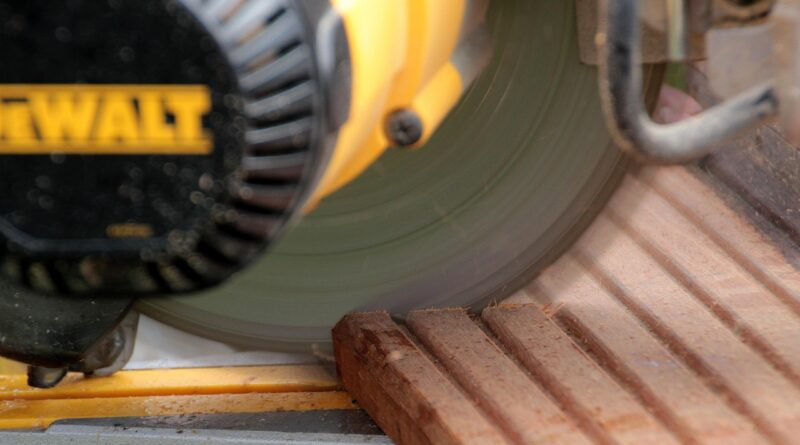
DeWalt is one of the most frequently compared tile saw names because it sits between the broader power-tool market and the tile-installation market. Its wet tile saw line includes 10 in. class saws and heavy-duty wet tile saws listed in the brand’s tile and masonry saw category. For contractors, the appeal is not only the motor. It is the jobsite package: a saw that can be transported, set up repeatedly, hold alignment, and manage water well enough for indoor remodel work.
DeWalt is a strong shortlist candidate when the buyer wants a familiar contractor-grade platform for bathrooms, kitchens, and general porcelain tile. The trade-off is that many full-size wet saws require space, cleanup time, and careful transport. Before purchase, buyers should verify the current model’s rip capacity, diagonal capacity, stand design, water containment accessories, and replacement part availability.
RIDGID
RIDGID tile saws are often considered by homeowners and remodelers because they are visible in U.S. retail channels and include 7 in. wet saw formats as well as tile blades. RIDGID can be a practical choice when the project is larger than a one-room backsplash but does not justify the cost or footprint of a higher-end bridge saw.
The main question with RIDGID is not whether the brand can cut tile. It is whether the specific model supports the tile size and accuracy level required. A compact 7 in. saw may be suitable for smaller ceramic and porcelain jobs, but long plank tile and large-format porcelain can reveal limits in table travel, support, and fence setup. Assembly, square alignment, blade quality, and water flow all need attention before judging cut quality.
RUBI
RUBI is a tile-specialist brand with a broad installation-tool ecosystem that includes manual tile cutters, electric tile saws, wet saw blades, and large-format handling systems. It is often associated with professional tile setters because the brand designs around tile workflow rather than general construction alone. RUBI’s saw categories include portable tile saws and moving-head or bridge-style saws, which can matter when the project involves porcelain, miter cuts, or longer formats.
RUBI makes sense for users who are planning beyond a single weekend job. A moving-head or bridge-style format can keep the tile more stable while the cutting head travels, which can help with larger or heavier pieces. The likely trade-offs are cost, storage space, setup complexity, and the need to match the saw with the right diamond blade.
MK Diamond
MK Diamond has a long-standing presence in tile, masonry, stone, concrete, and coring equipment. Its tile line includes wet cutting saws and diamond blades, and some models are built with commercial durability in mind. For example, MK’s 10 in. class professional wet saws emphasize metal frames, guide systems, water distribution, and high-torque motors rather than the lightest possible setup.
MK Diamond is a logical comparison point for contractors who prioritize durability, serviceability, and cutting equipment over consumer-tool styling. The downside is weight. A heavier saw can improve stability, but it is less convenient for a solo installer moving between tight residential job sites. Buyers should compare not only cut length and depth, but also total weight, stand options, pump design, and service parts.
QEP
QEP is usually discussed as a value-oriented tile tool brand. Its catalog includes wet tile saws, tabletop saws, tile cutters, and accessories, making it attractive for homeowners who need to complete a backsplash, laundry room, powder room, or one-time ceramic project without buying a commercial saw.
The realistic way to view QEP is as a cost-conscious option for limited use. It can be the right answer when the material is forgiving, the cuts are short, and the user is willing to work slowly. It is less likely to satisfy users who expect fast production cutting, large-format accuracy, or long service life under daily use. Blade upgrades, slower feed pressure, and careful support can improve results, but they cannot fully replace a more rigid saw platform.
iQ Power Tools
iQ Power Tools stands apart because it promotes dry-cut tile saws with integrated dust collection. That makes the brand relevant when water is a problem: occupied remodels, upper-floor interiors, quick service work, or spaces where slurry cleanup would be difficult. Dry cutting can be convenient, but it changes the buying questions. Instead of asking only about water trays and pumps, the user must also consider dust filtration, collection efficiency, filter maintenance, blade compatibility, and applicable workplace rules.
For professional users, dust control is not just a comfort feature. OSHA’s construction silica standard treats saw cutting of silica-containing materials as a regulated exposure issue. The standard’s Table 1 includes requirements for integrated water delivery on certain saw tasks and also addresses dust collection methods for some tools. A dry-cut saw with integrated collection may be useful, but contractors still need to evaluate the actual task, material, duration, location, and compliance obligations.
Pearl Abrasive
Pearl Abrasive is better known to many users for blades, abrasives, and cutting accessories, but its equipment range also includes tabletop wet tile saws and handheld wet/dry saw options. That makes Pearl a brand to consider when the user is building a broader cutting kit rather than buying only a large stationary saw.
Pearl can be a practical choice for specialty cuts, compact work areas, and users who value blade and abrasive selection. As with other brands, the key is matching the tool to the cut. A handheld wet/dry saw is not a direct substitute for a stable bridge saw when the goal is repeatable long rips in large-format porcelain.
What specifications matter more than the logo
Brand reputation can narrow the list, but specifications determine whether the saw fits the job. The most important numbers are rip capacity, diagonal capacity, depth of cut, blade diameter, arbor size, motor rating, table support, and saw weight. A 7 in. tabletop saw and a 10 in. bridge saw may both be called tile saws, but they solve different problems. See also: Tool Categories.
Cut capacity deserves special attention. Tile sizes have moved well beyond small ceramic squares. A saw that handles 12 in. tile may feel undersized when asked to cut 24 in. porcelain, plank tile, or a shower niche piece requiring diagonal cuts. If the saw cannot support the tile throughout the cut, chipping and wandering become more likely.
Water control is another overlooked specification. A wet saw should deliver water consistently to the blade and control overspray as much as practical. Good water flow cools the blade and helps reduce dust, while excess splash can make indoor work messy. Look at pump accessibility, tray size, side extensions, rear catch trays, and how easily the system can be cleaned after cutting porcelain slurry.
Blade quality can change the user experience as much as the brand badge on the saw. A stable saw with a poor blade may chip porcelain. A modest saw with the right continuous-rim porcelain blade, proper dressing, and slow feed can perform better than expected. For visible edges, blade selection and feed technique are part of the buying decision.
Wet cutting, dry cutting, and silica control
Tile saw decisions should include dust and slurry management. Wet cutting is common because water cools the blade, helps suppress dust, and can improve cut quality. It also creates slurry and requires cleanup. Dry cutting avoids water, but it can create respirable dust if the saw and collection system are not appropriate for the material and task.
OSHA’s respirable crystalline silica rule for construction, 29 CFR 1926.1153, is an important reference for professional work involving materials that contain silica. In simplified terms, the rule’s specified control methods often require saws to use integrated water delivery that continuously feeds water to the blade, or appropriate dust collection depending on the task. It also distinguishes between tool types, work location, and duration. Homeowners may not be employers under the rule, but the health concern behind it is still relevant: visible dust is a warning sign, not a normal feature of safe cutting.
For brand comparison, this means dust control should not be treated as a minor accessory. A wet saw brand should be evaluated on water delivery and containment. A dry saw brand should be evaluated on its integrated collection design, filter care, and manufacturer guidance for materials. Contractors should confirm compliance requirements for their own work conditions rather than assuming any single saw automatically resolves silica exposure.
How to choose a tile saw brand for your project
For a one-time ceramic backsplash, a simple QEP-style tabletop wet saw or a rental may be more rational than buying a heavy professional unit. The priorities are low cost, easy storage, and acceptable edge quality after trim pieces hide the cut edges.
For a bathroom or kitchen remodel with porcelain floor tile, DeWalt or RIDGID may be a more practical shortlist because the user may need better support, repeatable cuts, a stand, and stronger water management. The final decision should be made by comparing current cut capacity and confirming whether the saw can handle the largest tile on the project, not just the average tile.
For professional tile setters, RUBI and MK Diamond deserve closer attention because they offer tile-focused saw designs and broader cutting ecosystems. The deciding factors become productivity, long-term alignment, service parts, blade compatibility, large-format handling, and transport between jobs.
For occupied remodels or service work where water is difficult to manage, iQ Power Tools belongs in the discussion. Its dry-cut approach can reduce slurry problems, but it shifts more responsibility toward dust collection maintenance and task-specific safety review.
For specialty cutting, compact setups, or users building out blade and abrasive options, Pearl Abrasive can be part of the comparison, especially where handheld wet/dry cutting or accessory selection matters.
Frequently asked questions
What are the most common tile saw brands to compare?
Commonly compared tile saw brands include DeWalt, RIDGID, RUBI, MK Diamond, QEP, iQ Power Tools, and Pearl Abrasive. The right shortlist depends on whether the project is occasional DIY work, remodeling, professional tile setting, large-format porcelain, or dust-sensitive indoor cutting.
Is a 7 in. tile saw enough for porcelain tile?
A 7 in. tile saw can cut many porcelain tiles if the saw is aligned, the blade is suitable for porcelain, and the tile size is within the saw’s capacity. It may feel limited on thick material, long rips, diagonal cuts, or large-format tile.
Are wet tile saws better than dry tile saws?
Neither design is automatically better. Wet tile saws are common because water cools the blade and helps control dust, but they create slurry. Dry tile saws can be useful where water is impractical, but dust collection and filter maintenance become central concerns.
Should homeowners buy or rent a tile saw?
For one small project, renting or buying an entry-level saw may make sense. For multiple rooms, porcelain tile, or repeated remodel work, buying a better saw can save setup time and improve consistency. The largest tile size on the project should guide the decision.
Do tile saw brands include good blades with the saw?
Some saws include a blade, but the included blade may not be ideal for every material. Porcelain, glass, stone, and ceramic can require different diamond blade designs. If cut quality matters, budget for the correct blade rather than judging the saw only by its included accessory.