
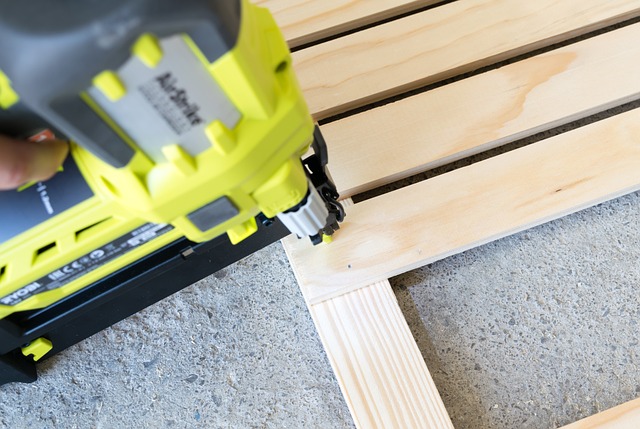
Is the DeWalt Brad Nailer Truly the Most Compact Solution for Precision Work
DeWalt’s ‘Most Compact’ Brad Nailer
DeWalt’s latest brad nailer represents a shift toward compact, precision-focused engineering in professional fastening tools. Its smaller frame and lighter weight do not compromise driving power or durability, making it particularly suited for trim carpentry and cabinetry work. The design balances ergonomics, energy efficiency, and consistent performance under demanding site conditions. In short, this model demonstrates how compactness can coexist with industrial-grade reliability.
Evaluating the Compact Design of the DeWalt Brad Nailer
Compact design in power tools has become a critical factor for professionals who prioritize maneuverability without losing output strength. DeWalt’s approach to its brad nailer emphasizes a refined balance between physical dimensions and operational capability.
Understanding the Concept of Compactness in Power Tools
Compactness directly affects how easily a tool can be controlled in tight or overhead spaces. Smaller housings reduce strain on wrists and shoulders during repetitive use, which is crucial for finish carpenters working long hours on detailed installations. A lighter tool also allows steadier alignment when driving nails near corners or moldings where precision is essential. The correlation between reduced mass and lower fatigue is well documented across many tool categories, including drills and impact drivers.
Design Features That Contribute to DeWalt’s Compact Form
The housing of the DeWalt brad nailer uses reinforced composite materials that maintain structural rigidity while shedding unnecessary weight. Internal components are arranged linearly to minimize wasted space and improve airflow around the motor assembly. Battery placement at the rear creates better balance, reducing front heaviness that often causes wrist torque during angled shots. Compared with earlier DeWalt models like the DCN680, this iteration shortens overall length by several millimeters while trimming weight by nearly 10%, reflecting incremental but meaningful dimensional refinement.
Performance Metrics in Precision Applications
Performance assessment for compact nailers goes beyond speed—it hinges on repeatable accuracy and controlled depth penetration across variable surfaces such as MDF, oak, or soft pine.
Assessing Firing Accuracy and Depth Control
DeWalt integrates micro-adjustable depth settings that allow fine-tuning between different trim densities without overdriving fasteners. The sequential trigger mechanism provides predictable response timing, reducing double fires common in high-speed framing tools. Alignment guides built into the nosepiece help maintain consistent spacing during repetitive runs of crown molding or baseboard attachment, ensuring uniform finish quality across panels.
Balancing Power Output with Tool Size
Despite its reduced body size, DeWalt maintains full driving force through an optimized motor-to-piston ratio that channels energy efficiently into each shot. In cordless variants, brushless motors deliver steady torque output comparable to pneumatic systems while conserving battery life. The trade-off comes mainly during extended continuous firing sessions where smaller thermal mass can lead to faster heat buildup—but for most finish applications, this effect remains negligible.
Ergonomics and User Experience in Professional Settings
Ergonomic design defines whether a compact tool truly performs better in real-world conditions. DeWalt’s design team clearly prioritized comfort alongside control precision.
Handling Dynamics and Weight Distribution
The grip contour follows a natural hand curvature with textured rubber overlays that prevent slippage even when hands are dusty or gloved. Balanced center-of-gravity placement keeps the tool steady whether held horizontally or vertically against trim surfaces. When compared with other professional-grade brad nailers from brands like Milwaukee or Makita, DeWalt’s model ranks among the most neutral in balance—a subtle advantage noticeable after several hours of installation work.
Vibration, Noise, and Operational Smoothness
Compact tools often amplify vibration due to limited internal damping space; however, DeWalt employs dual-spring isolation mounts around its driver mechanism to absorb recoil energy before it reaches the handle. Noise levels are moderated through redesigned exhaust ports that diffuse air evenly rather than channeling it through narrow vents. This smoother acoustic profile not only reduces operator fatigue but also improves accuracy during delicate finishing passes where vibration could misalign nail entry angles.
Technological Advancements Supporting Compact Engineering
Modern compactness owes much to component-level innovation—particularly within motor architecture and battery chemistry—which enables smaller yet stronger platforms.
Integration of Brushless Motor Technology
Brushless motors eliminate physical contact between brushes and commutators, cutting internal friction while extending service life dramatically. This configuration maintains torque consistency even as voltage drops near end-of-charge cycles. Reduced mechanical wear translates into lower maintenance frequency since there are fewer parts susceptible to carbon buildup or arcing damage—important factors for contractors managing multiple units across job sites.
Battery Innovation and Runtime Optimization (Cordless Models)
Advancements in lithium-ion cells allow higher energy density within smaller casings, directly supporting compact form factors without runtime penalties. Smart power management circuits regulate discharge rates under heavy load conditions so that driving force remains stable until nearly depleted capacity. Compatibility with existing DeWalt 20V MAX platforms adds logistical convenience: professionals can interchange batteries among drills, saws, and nailers without carrying separate chargers or packs.
Comparative Analysis Within the Professional Market Segment
In professional markets where reliability meets portability demands, benchmarking reveals how far compact nailer technology has evolved relative to peers.
Benchmarking Against Competing Compact Brad Nailers
When measured against competitors’ models of similar gauge range (typically 18-gauge), DeWalt’s unit shows one of the shortest nose-to-tail dimensions while maintaining equal magazine capacity—an indicator of efficient internal packaging. Performance-to-size ratios favor DeWalt particularly in depth consistency tests across hardwood samples where some rivals exhibit minor variation at low charge levels. Field reviews highlight its dependable cycling rate under both intermittent and continuous operation modes.
Evaluating Value Proposition for Precision Professionals
From an investment standpoint, professionals weigh cost against durability and portability benefits. The combination of rugged build quality with lightweight handling positions this brad nailer as a cost-effective choice for trim specialists who frequently move between job sites. Its adaptability across cabinetry installation, door casing work, or decorative paneling enhances return value over time since one compact unit replaces bulkier pneumatic setups requiring hoses and compressors.
FAQ
Q1: What makes the DeWalt brad nailer more compact than previous versions?
A: It uses a reconfigured motor layout and slimmer housing materials that reduce both length and weight without affecting drive strength.
Q2: Does compact size compromise driving power?
A: No, optimized piston geometry maintains full nailing force comparable to larger models even under dense material loads.
Q3: How does brushless technology improve reliability?
A: By removing friction-prone brushes, it reduces heat generation and wear inside the motor assembly for longer operational lifespan.
Q4: Are all batteries interchangeable within the same platform?
A: Yes, cordless versions operate seamlessly with any 20V MAX lithium-ion battery used across other compatible DeWalt tools.
Q5: Is this model suitable for continuous professional use?
A: Yes; while smaller thermal capacity may limit prolonged rapid firing sessions slightly, it remains fully capable for daily trim carpentry tasks requiring consistent precision.