
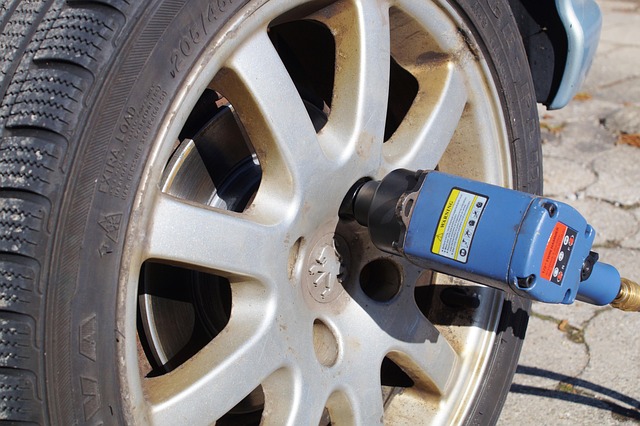
Is a 1 2 Drive Impact Wrench the Key to Precision in Bike Torque Setup
Battery Technology Advances Extend Runtime for 12V Cordless Drills
Battery innovation has transformed the 12V cordless drill from a modest household tool into a professional-grade instrument. The latest lithium-ion systems deliver longer runtime, faster charging, and improved safety compared with older chemistries. As energy density rises and smart electronics integrate with power management, these compact drills now rival their higher-voltage counterparts in torque and endurance. The conclusion is straightforward: battery technology has become the defining factor in how 12V cordless drills perform, last, and evolve.
Evolution of 12V Cordless Drills in Relation to Battery Technology
The development of the 12V cordless drill mirrors the broader evolution of portable power systems. Each generation of battery chemistry has redefined what these tools can achieve in size, weight, and runtime.
Historical Development of 12V Cordless Tools
Early models of the 12V cordless drill used nickel-cadmium (NiCd) batteries, which were heavy and prone to memory effects that limited charge capacity over time. The introduction of nickel-metal hydride (NiMH) cells improved both energy storage and environmental safety by reducing cadmium use. However, it was lithium-ion (Li-ion) technology that truly revolutionized the field. Li-ion’s higher voltage stability and lower self-discharge allowed manufacturers to produce lighter drills capable of sustained high torque output. This transition marked a decisive shift toward performance-driven design.
The Role of Battery Innovation in Redefining Tool Performance
Battery chemistry directly influences torque delivery and efficiency. As energy density increased through materials like cobalt-oxide cathodes and graphite anodes, smaller packs began delivering power comparable to older high-voltage systems. This change enabled manufacturers to focus on ergonomics and precision rather than raw size. Furthermore, integrated smart battery management systems (BMS) introduced new reliability standards by monitoring temperature, charge cycles, and load conditions in real time.
Advances in Lithium-Ion Technology for 12V Cordless Drills
Lithium-ion continues to dominate due to its adaptability across different performance tiers. For 12V cordless drills, improvements in cell design and thermal control have been particularly impactful.
High-Energy Density Cell Design
Modern 12V Li-ion packs often employ Nickel Manganese Cobalt (NMC) cathodes for high capacity without sacrificing cycle life. Optimized anode materials such as silicon-doped graphite enhance charge retention while maintaining structural integrity during repeated cycling. Enhanced separators reduce internal resistance, improving current flow under peak loads—a critical factor when drilling into dense materials like hardwood or steel.
Thermal Management Innovations
Managing heat is essential for safety and lifespan. New cooling designs use conductive housings and airflow channels to dissipate heat generated during extended use. Integrated thermal sensors communicate with the BMS to regulate current draw before cells reach critical temperatures. Some advanced packs even incorporate phase-change materials that absorb excess heat during heavy-duty operation, keeping performance consistent across long sessions.
Smart Electronics Integration in 12V Drill Batteries
As electronics become smaller and more efficient, they now play a central role in how batteries interact with tools and chargers.
Battery Management Systems (BMS) for Performance Optimization
BMS technology balances individual cell voltages within a pack to maintain uniform output. Embedded microcontrollers record usage data such as charge cycles and discharge depth, predicting potential degradation before failure occurs. Communication between the drill motor controller and battery allows adaptive power delivery—reducing current under light loads or boosting it when extra torque is required.
Intelligent Charging Technologies
Fast-charging algorithms are now standard across professional-grade chargers for 12V cordless drills. By modulating current based on temperature feedback, they shorten charging time without damaging cells. Adaptive current control prevents overcharging while maintaining optimal voltage thresholds for each chemistry type. Wireless charging platforms are emerging as well, offering convenience for technicians who rotate multiple tools throughout a workday.
Material Science Contributions to Battery Longevity and Safety
Advancements in material science underpin every improvement seen in modern tool batteries—from chemical stability to mechanical durability.
Development of Advanced Electrolytes and Binders
Solid-state electrolytes are gaining traction because they eliminate liquid leakage risks while improving ionic conductivity at lower temperatures. Polymer binders with elastic properties allow electrodes to expand slightly under stress without cracking or delaminating. Additives like lithium nitrate or ceramic nanoparticles suppress dendrite formation on anodes, reducing short-circuit risks even after hundreds of cycles.
Structural Enhancements for Durability in Professional Environments
Professional-grade tools face vibration, dust, and impact daily. Reinforced aluminum or polymer cell casings protect against shocks during accidental drops from ladders or scaffolds. Improved sealing methods block moisture ingress that can corrode internal connections over time. Modular pack architecture also simplifies maintenance—technicians can replace damaged cells or electronics without discarding the entire unit.
Impact of Battery Technology on Tool Design and User Experience
The influence of modern battery systems extends beyond technical specifications; it reshapes how professionals interact with their equipment day-to-day.
Compact Form Factors Enabled by Energy Efficiency Gains
Higher energy density permits smaller battery housings while preserving runtime and torque output. This reduction allows better weight distribution between handle and motor assembly, improving balance during overhead drilling tasks or tight-space installations. Miniaturization also supports specialized applications such as cabinetmaking or electronics assembly where precision outweighs brute force.
Extended Runtime and Productivity Benefits for Professionals
Longer-lasting batteries translate directly into fewer interruptions on job sites. Consistent voltage output maintains drilling speed even as charge levels drop—a major improvement over NiCd packs that suffered rapid voltage sag near depletion. Reduced recharge frequency not only saves time but also lowers total operating costs since fewer spare batteries are needed per shift.
Future Directions for 12V Cordless Drill Power Systems
The next wave of innovation will likely come from solid-state chemistry research combined with digital connectivity features already common in industrial IoT ecosystems.
Emerging Trends in Solid-State Batteries and Beyond-Lithium Chemistries
Silicon-anode lithium variants promise capacity gains exceeding 30% compared with conventional graphite designs by storing more lithium per unit mass. Solid-state architectures aim to pair this energy density with enhanced safety through nonflammable electrolytes. Meanwhile, sodium-ion technologies—though still early—could offer cost advantages due to abundant raw materials while maintaining similar voltage profiles suitable for compact tools.
Integration with IoT and Predictive Maintenance Ecosystems
Connectivity is becoming integral even for handheld tools like the 12V cordless drill. Smart modules transmit usage data via Bluetooth or Wi-Fi to centralized management platforms where predictive analytics identify wear patterns before failures occur. Fleet managers overseeing large-scale operations benefit from cloud-based dashboards that track battery health across dozens of devices simultaneously—turning maintenance from reactive repair into proactive planning.
FAQ
Q1: Why are lithium-ion batteries preferred for modern 12V cordless drills?
A: They provide higher energy density, lighter weight, lower self-discharge rates, and longer cycle life than older chemistries like NiCd or NiMH.
Q2: How does a BMS improve drill performance?
A: It monitors each cell’s voltage and temperature to balance output, prevent overcharging, and adjust power flow depending on tool load conditions.
Q3: What causes older NiCd batteries to lose capacity over time?
A: The “memory effect” occurs when partial discharges create crystalline formations inside cells that limit available capacity during future use.
Q4: Are solid-state batteries expected soon in commercial drills?
A: Research is promising but commercialization may take several years due to manufacturing complexity; early prototypes show strong potential for safety improvements.
Q5: How do thermal controls extend battery life?
A: By dispersing heat efficiently through sensors, conductive casings, or phase-change materials that stabilize temperature during continuous operation.