
Mini grinder tool Screwfix guide for rotary, die and compact angle grinders
What does “mini grinder tool Screwfix” usually mean?
People searching for a mini grinder tool Screwfix are usually looking for a compact grinder for cutting, grinding, deburring, sharpening, polishing or working in spaces where a full-size grinder is awkward. The phrase does not describe one fixed tool category. On Screwfix-style listings, it can refer to rotary tool accessories for detail work, die grinders for controlled metal removal, small angle grinders for cutting and grinding, air-powered mini angle grinders for confined areas, or compact chain grinders for sharpening chainsaw chains.
The right choice depends less on the word “mini” and more on the job, material, disc or collet size, power source, guard design and accessory compatibility. This guide explains the main compact grinder types, how they differ, and what to check before buying or comparing tools in a tool categories directory.
Why the search term can be confusing
“Mini grinder” is a common shopping phrase, but retailers and manufacturers do not always use it in the same way. A 125mm angle grinder may be described as a mini-grinder because it is smaller than a 230mm site grinder. A 2-inch air angle grinder may also carry the same label because the disc is small and the body is designed for access work. Users may call a rotary tool a mini grinder because it accepts small grinding stones or cutting wheels, even though retailers often list it as a rotary tool or multi-tool accessory system.
That naming gap matters. If buyers choose by the phrase alone, they may end up with a tool that spins the wrong accessory, lacks the required guard, needs an air compressor, or cannot take the intended disc bore or collet size. A safer approach is to define the job first, then match it to the correct grinder family.
Main compact grinder types compared
Public Screwfix category and product pages available in October 2026 showed several relevant product groups rather than one dedicated “mini grinder” shelf. The table below summarises the practical differences.
| Tool type | Typical use | Key compatibility checks | Best fit |
|---|---|---|---|
| Rotary tool or rotary accessories | Engraving, light sanding, polishing, small cut-off wheels and detail grinding | Accessory shank size, collet fit, material rating and speed rating | Craft, repair and small detail work |
| Die grinder | Deburring, weld cleaning, porting, shaping and polishing metal | 6mm or 8mm collet, burr type, abrasive rating, power source and speed control | Precision metalwork and workshop finishing |
| 2-inch air mini angle grinder | Small cut-off and grinding jobs in tight spaces | Compressor output, air pressure, disc diameter, bore size and guard design | Automotive and fabrication access jobs |
| 115mm or 125mm angle grinder | Cutting, grinding, tile trimming, metal prep and masonry tasks | Disc diameter, 22.23mm bore, M14 spindle, guard, handle and voltage | General DIY and trade cutting or grinding |
| Compact chain grinder | Chainsaw chain sharpening | Chain pitch compatibility, wheel size, sharpening angle and clamp design | Garden machinery maintenance |
The key point is that one compact grinder is not automatically a substitute for another. A die grinder and an angle grinder can both remove metal, but their accessories, guarding and handling are different. A chain grinder may resemble a bench-mounted workshop tool, but it is a sharpening machine for chainsaw chain, not a general-purpose grinder.
How to choose the right mini grinder for the job
For cutting metal, tile or masonry
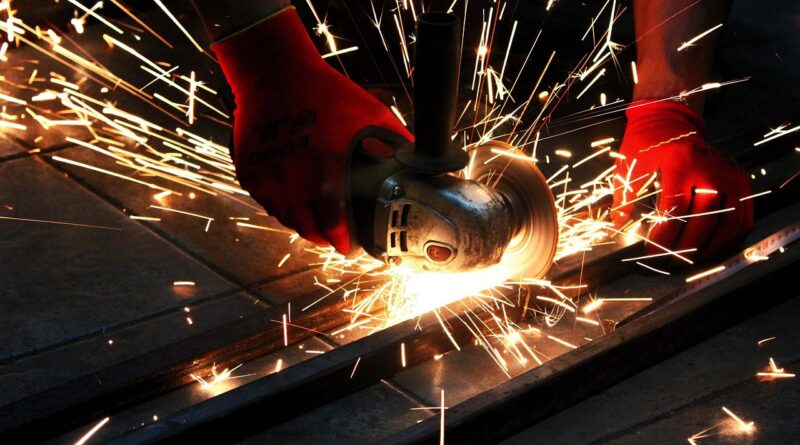
A small angle grinder is usually the most suitable option for straight cutting and heavier grinding. Common compact angle grinder formats include 115mm and 125mm discs. Some 125mm models are marketed as mini-grinders because they are lighter and easier to handle than larger 230mm machines.
When comparing models, check for an adjustable guard, side handle, suitable spindle thread, correct disc bore and a speed rating that matches the accessory. Corded tools can be useful for longer sessions. Cordless models suit work away from sockets, especially when the battery platform is already in use.
For deburring and precision shaping
A die grinder is usually a better match when the task is detailed, internal, curved or hard to reach. Die grinders commonly use burrs, mounted stones and small abrasive points rather than flat angle-grinder discs.
Screwfix-style die grinder listings often highlight collet capacity, such as 6mm or 8mm, because the collet determines which accessories can be held safely. This is one of the first specifications to check. If the accessory shank does not match the collet, improvising is not a safe solution.
For hobby, craft and fine repair work
A rotary tool is the lighter option for fine work, small parts and controlled material removal. It is not a replacement for a guarded angle grinder where the job requires larger discs or aggressive cutting. It can, however, suit engraving, polishing, light sanding, trimming plastic, cleaning small components and working around delicate shapes.
For buyers starting with accessories, check whether the set includes cutting discs, grinding stones, sanding drums, brush wheels or polishing points. Also confirm that those accessories match the tool’s collet and speed range.
For chainsaw chain sharpening
A compact chain grinder is a specialist sharpening machine. One Screwfix-listed compact chain grinder, for example, is described for sharpening common chainsaw chains and includes grinding wheels and top-plate angle settings. That type of machine is not bought for general cutting or weld grinding. It is best considered alongside file guides, replacement chains and garden tool maintenance needs.
Power source, size and accessory fit matter more than the label
Compact grinder buyers often compare headline power or price first, but fit and control usually have a bigger effect on safe, practical use. Start with the power source. Corded electric tools avoid battery downtime and are common in workshops. Cordless grinders improve mobility but may be sold as bare units, meaning the battery and charger are not included. Air grinders can be compact and fast, but they require a compressor that can supply the correct working pressure and flow rate. Buying an air tool without checking compressor output is a common mismatch. See also: Brands.
Next, check the accessory interface. Angle grinders commonly use a spindle and disc bore system. Die grinders use collets. Rotary tools use small shank accessories. Chain grinders use specific grinding wheels and chain settings. The safest accessory is not the one that “almost fits”; it is the one designed for the tool, material, maximum speed and guard arrangement.
Finally, compare ergonomics. A compact tool should feel controllable, not just small. Look for a slim body where grip matters, a side handle for two-handed control on angle grinders, accessible switches, clear guard adjustment and a weight that suits the working position. If the work is overhead, inside a vehicle body, under a bench or near finished surfaces, control can matter more than maximum removal speed.
Safety checks before using a compact grinder
Compact does not mean low risk. UK Health and Safety Executive guidance on abrasive wheels covers wheel characteristics, mounting, guards, handheld grinder precautions and personal protective equipment. Electrical Safety First also advises users to clamp work securely, keep sparks away from flammable materials, unplug tools before wheel changes or maintenance, and avoid using damaged tools or questionable second-hand grinders.
- Use the correct guard. A guard helps deflect sparks and fragments if an abrasive wheel fails.
- Match the accessory to the tool speed. Never fit a disc, stone or wheel with a maximum speed rating lower than the tool’s no-load speed.
- Inspect before use. Check discs for cracks, cables for damage, battery packs for defects, and collets or flanges for a secure fit.
- Clamp the work. A small workpiece can move suddenly when touched by a high-speed accessory.
- Control sparks and dust. Keep flammables away, use suitable extraction where needed, and wear appropriate eye, hearing and respiratory protection.
- Do not modify the tool. Avoid adapters that turn a grinder into a different tool or allow accessories the manufacturer did not intend.
For workplace use, training, risk assessment and local rules may also apply. For home use, the same basic principle remains: use the smallest tool that can do the job safely, not the smallest tool that can be forced into the job.
A practical buying checklist
Before choosing a mini grinder tool from Screwfix or any similar tool retailer, run through this checklist:
- Define the task. Cutting, grinding, deburring, polishing, sharpening and engraving often require different tools.
- Identify the material. Metal, masonry, tile, plastic and wood all need suitable accessories.
- Confirm the tool family. Choose angle grinder, die grinder, rotary tool or chain grinder before comparing models.
- Check size and fitting. Disc diameter, bore, spindle thread, shank size and collet size must match.
- Verify the power source. Cordless bare units may need separate batteries; air tools need compressor capacity; 110V tools may need a transformer.
- Look for control features. Guard adjustment, side handle, braking, anti-restart, overload protection and speed control can all improve usability.
- Read current stock details carefully. Retailer ranges, prices, bundled batteries and accessories can change quickly.
If the product page calls a tool a mini grinder, still read the specification table. The specification usually shows whether it is a general-purpose angle grinder, a precision die grinder, an air-powered access tool or a single-purpose sharpening machine.
Frequently asked questions
Is a mini grinder the same as a rotary tool?
Not always. Many users call rotary tools mini grinders because they accept small grinding stones and cutting discs, but retailers may list them separately from die grinders and angle grinders. A rotary tool is best for light, detailed work rather than heavy cutting or grinding.
Is a die grinder better than a mini angle grinder?
It depends on the job. A die grinder is better for deburring, shaping and working inside curves or tight areas. A mini angle grinder is better for larger flat cutting and grinding tasks where a guarded disc is appropriate.
Can I use angle grinder discs on a die grinder?
No, not unless the accessory is specifically designed and rated for that tool and fitting system. Die grinders use collets, while angle grinders use spindle and flange systems. Improvised adapters can create serious safety risks.
What size compact angle grinder should I consider?
For many general jobs, 115mm and 125mm angle grinders are the common compact choices. A smaller 2-inch air angle grinder is a more specialist access tool, not a direct replacement for a 115mm or 125mm grinder.
Should I buy a corded, cordless or air mini grinder?
Choose corded for steady workshop power, cordless for mobility and battery-platform convenience, and air-powered tools only when a suitable compressor is available. For occasional users, accessory compatibility and safe handling are usually more important than buying the highest-powered compact tool.