
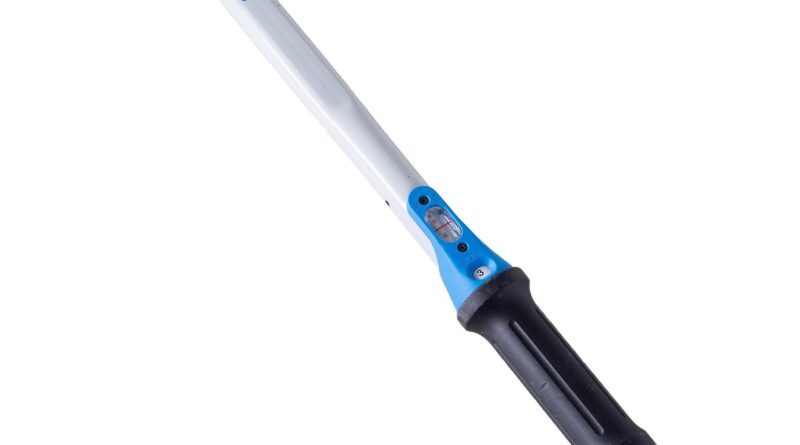
Torque wrench reviews for cars, bikes, and workshop use
Torque wrench reviews are most useful when they begin with the work being done, not with the brand name on the handle. Wheel lug nuts and many suspension fasteners usually call for a 1/2 inch click or split beam wrench that covers the vehicle manufacturer’s torque specification. Bicycles, engine covers, small motorcycles, and delicate assemblies often need a 1/4 inch drive wrench or torque screwdriver because the required torque values are much lower.
Digital models add displays, alerts, peak readings, and sometimes angle measurement, but they cost more and rely on batteries. Beam wrenches are simple and inexpensive, though slower to read. This guide does not present lab-tested rankings. It explains how to read torque wrench reviews and choose a tool that fits the job, the torque range, and the way the wrench will be used.
What a torque wrench review needs to prove
A torque wrench is not just a ratchet with a scale. It is a measuring tool used to tighten threaded fasteners to a specified torque. A useful review therefore needs to show whether the wrench suits the fastener size, torque range, working space, and the user’s need for repeatability.
Before discussing comfort or price, good torque wrench reviews should answer five questions:
- Does the torque range match the job? A wrench used near the bottom or top of its scale may be less suitable than one used in the middle of its working range.
- What supports the accuracy claim? Look for a stated tolerance, serial number, calibration certificate, test direction, and test date.
- Can the scale be read clearly? Dual ft-lb and N·m markings help only if the numbers are legible and difficult to misread.
- Does the head fit the work area? A long 1/2 inch wrench may work well on wheels but be awkward in an engine bay.
- How does the tool signal the target torque? Click, beam deflection, digital beep, vibration, and LED alerts all change how the tool feels in use.
The strongest reviews are not the longest product lists. They explain why a tool is appropriate for a specific torque range, fastener type, and working environment.
Torque wrench types compared
Most buyers are choosing among click, split beam, beam, digital, and low-range torque screwdrivers. Each type can be the right choice in the right setting, but they are not interchangeable.
| Type | Where it fits well | Main advantages | Limitations to check in reviews |
|---|---|---|---|
| Click torque wrench | Automotive repair, wheels, motorcycles, general workshop use | Familiar feel, usually affordable, fast to use once set | The click is a signal, not a brake; users can still overpull after the click |
| Split beam torque wrench | Frequent wheel, brake, and suspension work | Quick setting, strong tactile feedback, often convenient for repeated values | Usually less useful for very low torque ranges and tight spaces |
| Beam torque wrench | Occasional use, simple verification, budget tool kits | Simple construction, no spring adjustment to dial back after use | Scale reading depends on viewing angle and steady hand pressure |
| Digital torque wrench | Professional work, torque-plus-angle jobs, users who want audio or visual alerts | Easy unit switching, peak and track modes on many models, clear display | Higher price, battery dependence, electronics need protection from impact and fluids |
| Torque screwdriver or mini torque wrench | Bicycles, electronics, clamps, small covers, light mechanical assemblies | Better control at low values and smaller increments | Not suitable for lug nuts, suspension, or high-torque fasteners |
The practical lesson is straightforward: one large wrench rarely handles every job accurately and comfortably. Many home garages are better served by two tools: a 1/2 inch wrench for higher automotive torque values and a smaller 1/4 inch or 3/8 inch wrench for lower values.
Match the drive size and range to the work
Drive size is not only about socket fit. It also reflects the fastener sizes and torque range the wrench is designed to handle. Exact ranges vary by manufacturer, so the specification sheet should guide the final decision. Even so, the categories below are useful as a first filter when reading reviews.
| Drive or tool size | Common torque range category | Typical applications | Buying note |
|---|---|---|---|
| 1/4 inch drive | Low torque, often measured in in-lb or low N·m | Bicycle parts, small engine fasteners, covers, clamps, small motorcycles | Choose fine scale increments and clear low-end readability |
| 3/8 inch drive | Light to medium torque | Spark plugs, drain plugs, brake components, motorcycles, engine accessories | A useful middle-ground size, but check head access and minimum torque |
| 1/2 inch drive | Medium to high torque | Wheel lug nuts, larger suspension fasteners, trucks, heavier shop tasks | Look for a comfortable handle, clear ft-lb scale, and enough leverage |
| Torque screwdriver | Very low torque | Electronics, clamps, small screws, some bicycle cockpit parts | Better than a large wrench when the torque value is only a few N·m |
Before buying, list the lowest and highest torque specifications you actually expect to use. If most work falls between 80 and 150 ft-lb, a high-range 1/2 inch wrench is a logical choice. If most values are below 20 ft-lb, a smaller wrench will usually give better control and clearer adjustment.
Accuracy and calibration claims in plain English
Accuracy claims deserve more attention than handle color, case design, or online star ratings. Standards such as ISO 6789-1:2017 and ISO 6789-2:2017 are commonly referenced for hand torque tool design, conformance testing, calibration, and measurement uncertainty. In the United States, ASME B107.300-2021 is also relevant because it addresses performance and safety requirements for hand torque tools and torque testers. NIST guidance on measuring instruments does not set one universal recalibration interval; it leaves interval decisions to the owner’s use case, history, risk level, and quality system.
That context matters because a review that simply says a wrench is accurate is incomplete. When comparing products, look for:
- A stated tolerance and whether it applies clockwise only or in both directions.
- A serial-numbered calibration certificate, not just a generic quality statement.
- The calibration date and the conditions under which the tool was tested.
- The range over which the tolerance applies.
- Whether the wrench is intended for tightening, measuring, or both.
For occasional home use, a certificate supplied with the tool may be enough to start. For professional, fleet, aviation, industrial, or quality-controlled work, calibration records and periodic verification become more important. If a tool is dropped, overloaded, used as a breaker bar, exposed to harsh conditions, or produces suspicious results, it should be checked before critical work continues.
Use case reviews by buyer type
Automotive wheels, brakes, and suspension
For wheel lug nuts and many suspension jobs, the usual recommendation is a 1/2 inch drive click or split beam torque wrench with a range that comfortably covers the vehicle’s service specification. The key term is service specification. Lug nut torque is not universal; it depends on the vehicle, wheel, stud, nut, and manufacturer instructions.
Reviews for this use case should cover handle length, grip comfort, scale readability, and how easy the wrench is to set repeatedly. A split beam wrench can be convenient when the same torque value is used often. A click wrench is usually less expensive and familiar to most users. An impact wrench can remove fasteners quickly, but final tightening should be completed with a torque wrench set to the correct value.
Engine bays, motorcycles, and general repair
A 3/8 inch drive wrench is often the better fit for medium torque values, smaller sockets, and tighter working spaces. In this category, head size and ratchet tooth count matter because the wrench may need to swing in cramped areas. Reviews should also note whether the scale includes both ft-lb and N·m, since motorcycle and imported vehicle service data may use metric units.
For spark plugs, oil drain plugs, covers, and aluminum threads, the bigger risk is often over-tightening rather than under-tightening. A large wrench with a coarse scale can make delicate work harder. Choose a tool that lets you read and set the required value with confidence. See also: Tool Categories.
Bicycles and delicate assemblies
Bike torque values are often low, especially around stems, seatposts, disc brake parts, and carbon components. A small torque wrench or torque screwdriver is usually a better match than a large automotive wrench. Reviews should focus on low-range accuracy, small increments, included bits, grip control, and whether the tool can be used without twisting the component out of position.
For carbon parts, follow the component maker’s torque specification and assembly instructions. Torque is only one part of the joint. Grease, assembly compound, washer condition, thread quality, and clamp design can all affect the result.
Professional and documented work
Professional users should look beyond comfort and price. A digital wrench with data features may be useful if a shop needs records, peak readings, angle functions, or multiple units. A durable mechanical wrench may still be the better choice where simplicity, speed, and lower replacement cost matter more than electronic features.
For documented work, reviews should state whether the tool arrives with a traceable certificate, whether recalibration service is available, and whether the manufacturer provides clear instructions for storage and use.
What many torque wrench reviews miss
Many product roundups focus on price, packaging, and first impressions. Those details have value, but they do not tell the whole story. The points below often separate a good purchase from a frustrating one:
- One wrench rarely covers every job well. A tool that reaches 250 ft-lb is not automatically a good choice for a 7 N·m bicycle clamp.
- Thread condition changes the result. Dry, lubricated, dirty, damaged, or plated threads can produce different clamping force at the same torque reading. Follow the service manual.
- Extensions can change applied torque. A crowfoot or inline extension can alter the effective lever length. If the adapter extends the wrench in line with the handle, a correction may be needed. If it is positioned at 90 degrees, the effect is usually minimized.
- Grip position matters. Apply force at the handle area intended by the manufacturer, not at the head or far beyond the grip.
- A click is not a stop mechanism. Once a click wrench signals the set value, stop pulling smoothly.
- Storage affects mechanical tools. Many micrometer-style click wrenches should be returned to their lowest marked setting after use, unless the manual says otherwise. Do not wind them below the marked scale.
These details are why a cautious, source-aware review is more useful than a simple winner list. For more tool comparisons and buying guides, visit the Reviews section.
A practical buying checklist
- List the torque specifications you expect to use most often.
- Choose a wrench whose working range places those values away from the extreme ends of the scale.
- Select the drive size that matches the sockets and working space.
- Decide whether click, split beam, beam, digital, or torque screwdriver feedback suits the task.
- Check the units on the scale and make sure you can read them in poor lighting.
- Look for a certificate, serial number, stated tolerance, and clear calibration date.
- Read the storage instructions before assuming the tool can be left at a high setting.
- Avoid using a torque wrench as a breaker bar unless the manufacturer specifically permits it.
- Plan how the tool will be checked if it is dropped, overloaded, or used for critical work.
Source note: Standards and safety references considered for this guide include ISO 6789-1:2017, ISO 6789-2:2017, ASME B107.300-2021, NIST calibration interval guidance, and OSHA hand and power tool safety guidance. Recent editorial torque wrench roundups from established tool, automotive, and cycling publications were also reviewed to compare how reviewers discuss tool types, ranges, and use cases.
Frequently asked questions
Are digital torque wrenches always more accurate?
No. A digital display can be easier to read, and some models add useful alerts or angle measurement, but accuracy depends on the tool design, calibration, range, condition, and how it is used. A well-maintained mechanical wrench with proper documentation may be more appropriate than a cheap digital wrench with unclear calibration information.
Is a click torque wrench good enough for lug nuts?
Yes. A properly sized click torque wrench can be suitable for lug nuts if its range covers the vehicle manufacturer’s specification and the tool is in good condition. Stop pulling as soon as it clicks, and do not use an impact wrench for final torque.
How often should a torque wrench be calibrated?
There is no single interval that fits every user. The schedule depends on frequency of use, risk level, manufacturer instructions, past calibration records, and whether the work is controlled by a shop or quality system. A wrench used daily in a professional environment should be checked more formally than one used occasionally at home.
Can one torque wrench handle cars and bicycles?
Usually not well. Automotive wheel and suspension fasteners often need much higher torque than bicycle clamps and small components. A large 1/2 inch wrench may not read low values precisely or comfortably. A two-tool setup is often more practical.
What is the safest way to use a torque wrench?
Use the exact torque specification from the service manual or component maker, set the wrench carefully, pull smoothly from the correct handle position, and stop when the tool signals the target value. Store it according to the manual and have it checked if it is dropped or overloaded.