
How to choose a metal grinder tool for cutting, grinding, and finishing
What a metal grinder tool is used for
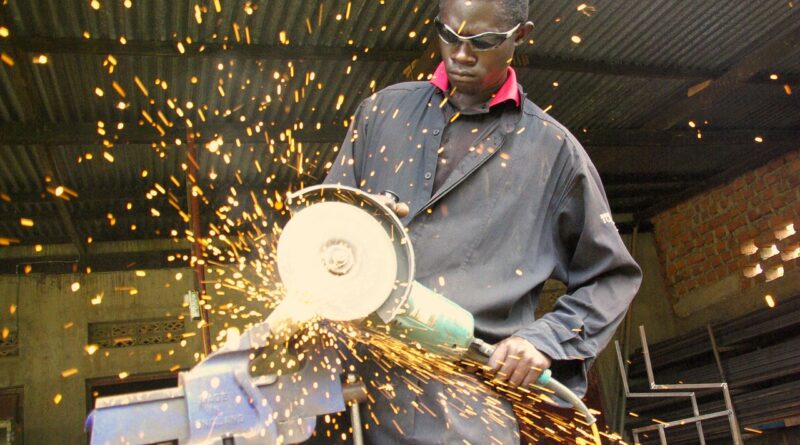
A metal grinder tool is typically a handheld angle grinder, bench grinder, die grinder, or similar abrasive-wheel tool used to cut, grind, deburr, clean, bevel, sharpen, or finish metal. Choosing one is not only a question of motor power. The right tool depends on the material, the operation, the wheel rating, the work position, and the safety controls around the tool.
For most buyers comparing metal grinder tools, the first decision is practical: a portable angle grinder for fabrication and maintenance, a bench grinder for fixed sharpening and shaping, or a die grinder for small detail work. This guide focuses on that selection process and explains why wheel compatibility, guards, personal protective equipment, and dust or spark control matter as much as price or wattage. For more tool category guides, visit the Tool Categories section.
Main types of metal grinder tools
The term metal grinder tool covers several machines that remove material with an abrasive wheel, flap disc, burr, brush, or polishing accessory. Their functions overlap, but each type fits a different work setup.
Angle grinders
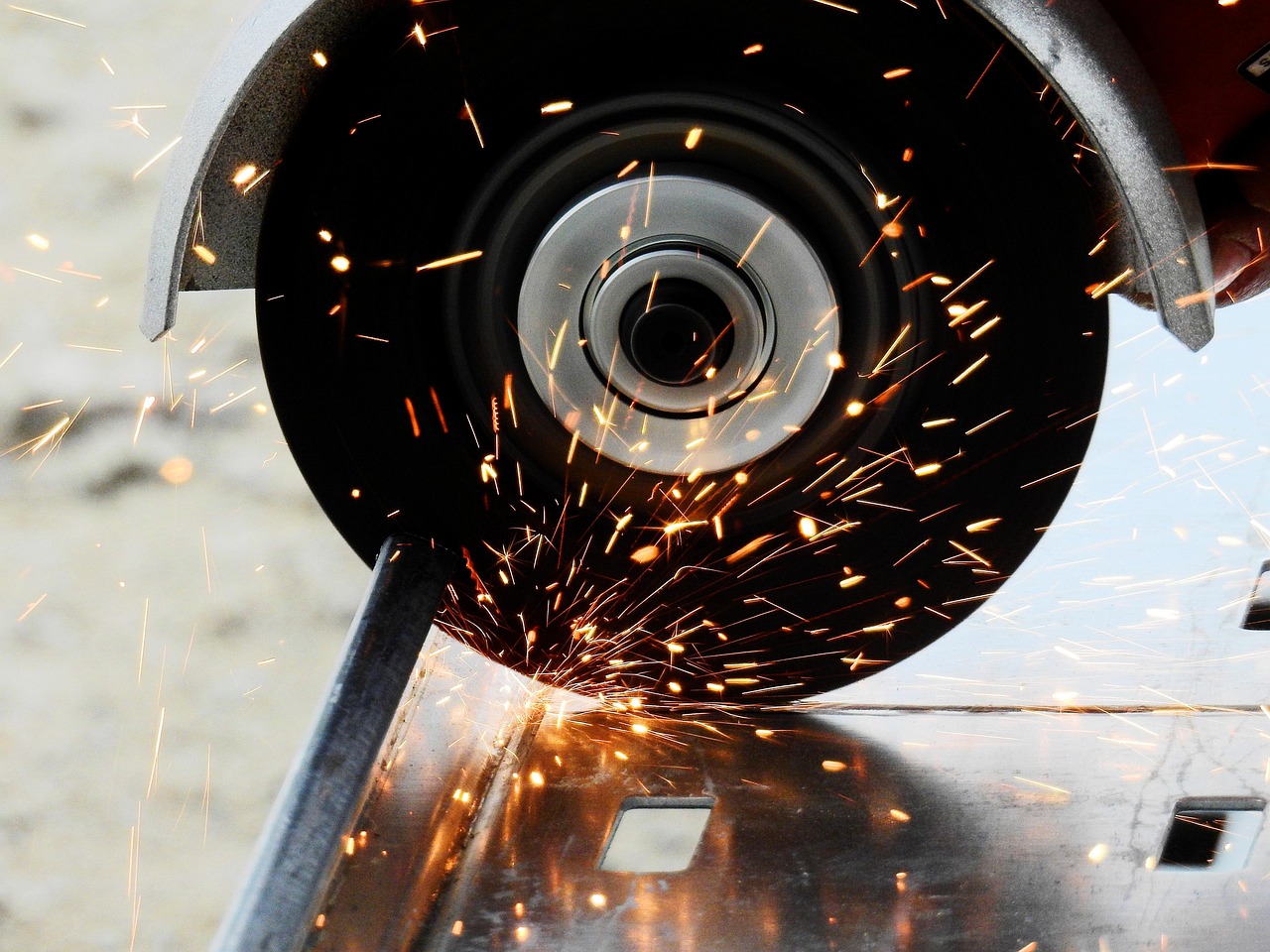
An angle grinder is the most common portable choice for metal cutting and grinding. It can run cut-off wheels, grinding wheels, flap discs, wire wheels, and surface preparation accessories. Small 4-1/2 inch and 5 inch grinders are common for general fabrication, while larger 7 inch and 9 inch models remove material faster but require more control, clearance, and operator strength.
Angle grinders are useful for cutting bolts, trimming sheet or plate, removing weld spatter, cleaning rust, beveling edges, and preparing surfaces for welding or coating. That versatility also makes them easy to misuse, especially when the wrong disc is installed or the guard is removed to reach a difficult angle.
Bench grinders
A bench grinder is fixed to a workbench or stand. It is better suited to sharpening, shaping small parts, cleaning edges, and maintaining hand tools. Because the tool stays in place, the operator brings the workpiece to the wheel. Bench grinders require careful setup of guards, tool rests, and eye shields. OSHA grinder guidance emphasizes guard and wheel-rest checks for abrasive-wheel equipment, especially in workplace environments.
Die grinders and straight grinders
Die grinders are smaller tools designed for burrs, mounted points, cartridge rolls, and tight-access finishing. They are common in metal fabrication, automotive work, mold work, and maintenance. A die grinder is not a substitute for an angle grinder when heavy cutting or broad surface grinding is required, but it is often the better tool for inside corners, slots, and detailed deburring.
Match the grinder to the metalworking task
The most reliable way to choose a metal grinder tool is to start with the job, not the tool size. A grinder that works well for cutting thin stock may be inefficient or risky for heavy weld grinding. A tool that removes material quickly may also leave a finish that needs additional sanding.
| Task | Suitable tool | Common accessory | Selection note |
|---|---|---|---|
| Cutting bolts, bar, tube, or sheet | Angle grinder | Cut-off wheel | Use a wheel rated for the grinder speed and the material being cut. |
| Grinding welds or beveling edges | Angle grinder | Grinding wheel or flap disc | Use a guard position that protects the operator while allowing stable contact. |
| Removing rust or paint from metal | Angle grinder or die grinder | Wire wheel, flap disc, or surface conditioning disc | Choose the least aggressive accessory that meets the surface requirement. |
| Sharpening tools | Bench grinder | Grinding wheel | Control heat buildup and use proper rests and eye protection. |
| Detail deburring | Die grinder | Burr, mounted point, or abrasive roll | Use light pressure and match accessory speed ratings. |
For cutting, a thin cut-off wheel removes less material and can make a faster cut, but it should not be side-loaded like a grinding wheel. For weld grinding, a thicker grinding wheel or flap disc is usually more appropriate. For finishing, a flap disc or conditioning disc may reduce the need for a separate sanding step.
Wheel and disc compatibility is the key safety issue
Abrasive wheels can fail when they are damaged, mounted incorrectly, run above their rated speed, used at the wrong angle, or forced beyond their design. The wheel is not a minor accessory; it is part of the tool system.
Before installing any wheel or disc, check four points. First, confirm that the wheel diameter matches the grinder and guard. Second, confirm the arbor size and mounting method. Third, confirm that the wheel’s maximum RPM is equal to or higher than the no-load speed of the grinder. Fourth, confirm that the accessory is intended for the material and operation.
OSHA’s abrasive-wheel rules and portable power-tool guidance highlight guards and compatible wheel speed ratings as core safety requirements. OSHA’s 29 CFR 1910.215 also incorporates ANSI B7.1-1970 by reference for abrasive-wheel guard design specifications. In shop terms, the guard, flange, spindle, wheel rating, and mounting method should be treated as one safety chain.
- Cut-off wheels are for cutting, not grinding on the side face.
- Grinding wheels are designed for heavier material removal, but they still require the correct angle and pressure.
- Flap discs can blend, deburr, and finish, often with a smoother result than a hard grinding wheel.
- Wire wheels are useful for rust and coating removal, but individual wires can eject during use, so eye and face protection matter.
- Polishing and conditioning discs are for controlled finishing, not structural material removal.
Power source, size, and controls
Once the task and wheel type are clear, compare the grinder’s power source, size, and control features. Corded grinders still make sense for long grinding sessions, heavy weld cleanup, and production environments where constant power matters. Cordless grinders are convenient for field work, repair jobs, and locations where extension cords create a trip hazard. The trade-off is runtime, battery cost, and sometimes lower sustained power under heavy load.
Size affects control. A 4-1/2 inch grinder is easier to handle in tight spaces and is often enough for cutting small stock or cleaning welds. A 5 inch grinder offers slightly more reach and disc life. Larger grinders remove material faster, but they also increase leverage, wheel energy, and operator fatigue.
Useful controls include a paddle switch, brake, soft start, restart protection, variable speed, and anti-vibration design. A brake can reduce coast-down time after the trigger is released. Restart protection helps prevent unexpected startup after a power interruption. Variable speed is valuable when using wire wheels, finishing discs, or accessories that require lower speeds, but it does not replace the need to check accessory ratings. See also: Brands.
Safe use practices that should shape every purchase
A grinder is compact, but it is not a casual tool. It creates sparks, noise, flying particles, and high-speed wheel energy. OSHA guidance for portable abrasive tools states that portable grinding tools need guards to protect workers from the moving wheel surface and from fragments if a wheel breaks. CDC and NIOSH materials also warn that grinding concrete, stone, brick, mortar, or engineered stone can create respirable crystalline silica dust; that issue becomes especially important when a grinder is used beyond metalwork.
For metal grinding, the minimum safety setup should include safety glasses plus a face shield, hearing protection, gloves suitable for the task, nonflammable clothing, and stable footing. Remove combustible materials from the spark path. Clamp the workpiece whenever possible. Keep both hands on the tool unless the tool is specifically designed for one-handed use. Let the wheel reach operating speed before contact, and avoid standing directly in the plane of wheel rotation during startup.
Workplace users should follow their employer’s safety program, OSHA requirements, and the tool and wheel manufacturers’ instructions. Home users should apply the same discipline, because many grinder injuries occur outside formal industrial settings. Peer-reviewed medical studies indexed by PubMed describe angle grinder injuries as potentially severe, especially to the hands, forearms, and head area, reinforcing the need for guards, training, and correct accessories.
Common mistakes that lead to poor results
Many grinder problems are not caused by a weak tool. They usually come from using the wrong accessory, pushing too hard, or treating the grinder like a saw, sander, or polisher without changing the setup.
- Removing the guard: This may improve access briefly, but it removes a primary barrier against sparks, debris, and wheel fragments.
- Using a cut-off wheel for side grinding: Thin wheels are not designed for heavy side pressure and can break.
- Ignoring RPM ratings: A wheel that is not rated for the grinder speed should not be mounted.
- Installing wood-cutting blades on angle grinders: Medical case reports have linked this misuse to serious hand injuries. Use tools and blades designed for wood instead.
- Overheating the workpiece: Excessive pressure can discolor metal, affect edges, and shorten accessory life.
- Grinding toward hazards: Sparks can damage glass, painted surfaces, hoses, electrical cords, and nearby flammable materials.
A better method is to let the wheel do the work. Use steady pressure, maintain the correct angle, and pause when the workpiece or accessory gets too hot. If removal is slow, change to a more suitable wheel instead of forcing the tool.
Buying checklist for a metal grinder tool
Use this checklist before choosing a grinder for a workshop, jobsite, or home garage.
- Define the primary task. Cutting, weld grinding, surface preparation, sharpening, and detail deburring may require different grinder types.
- Choose the disc size. Smaller grinders are easier to control; larger grinders provide more depth and faster removal.
- Check speed and accessory compatibility. The grinder’s no-load RPM must be compatible with the wheel or accessory rating.
- Review guard design. The guard should fit the intended wheel type and allow proper positioning without removal.
- Compare switch style. Paddle switches are often preferred where quick release is important, while slide switches may suit continuous work when allowed by the safety program.
- Consider braking and restart protection. These features can reduce risk during interruptions and after shutdown.
- Evaluate ergonomics. Handle position, vibration control, grip diameter, and tool weight matter during long sessions.
- Plan dust and spark control. Metal grinding produces sparks and debris; masonry grinding may require dust controls and respiratory protection.
- Budget for accessories and PPE. Wheels, discs, guards, batteries, hearing protection, face protection, and clamps are part of the real cost.
The best purchase is usually not the most powerful grinder on the shelf. It is the grinder that can run the correct accessory, keep the guard in place, fit the work area, and remain controllable for the person using it.
Frequently asked questions
Is an angle grinder the same as a metal grinder tool?
Often, yes. Many people use metal grinder tool to mean an angle grinder used on metal. However, bench grinders, die grinders, and straight grinders can also be metal grinder tools. The correct choice depends on whether the workpiece moves to the grinder or the grinder moves to the workpiece.
Can one grinder cut, grind, and polish metal?
One angle grinder can perform all three tasks if it accepts the proper accessories and speed range. The wheel or disc must match the operation. A cut-off wheel is for cutting, a grinding wheel or flap disc is for material removal, and a polishing or conditioning accessory is for finishing.
What size grinder is best for general metalwork?
For many maintenance and fabrication jobs, a 4-1/2 inch or 5 inch angle grinder is a practical starting point because it balances control, accessory availability, and cutting capacity. Larger grinders are useful for heavy work but require more strength, space, and caution.
Should I choose a corded or cordless grinder?
Choose corded if you need long runtime, steady power, or frequent heavy grinding. Choose cordless if mobility, quick setup, and jobsite convenience matter more. For cordless tools, compare battery platform, amp-hour capacity, braking features, and the cost of spare batteries.
What is the most important safety check before using a grinder?
The most important check is compatibility: the wheel type, diameter, arbor, guard, and maximum RPM rating must match the grinder and the job. After that, inspect the wheel, secure the workpiece, keep the guard in place, and wear eye, face, hearing, hand, and body protection appropriate for the task.