
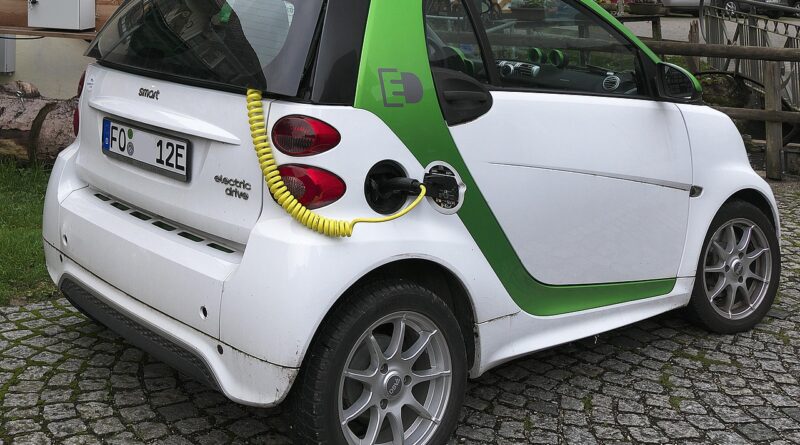
Is a Lithium Battery Electric Vehicle Really Better than a Gas Car?
Why Does a Lithium Battery Electric Vehicle Matter Now?
A lithium battery electric vehicle is now part of normal purchase talks, not just a choice for early EV users. Anyone who buys power tools will recognize the same basic points: voltage, runtime, charge heat, and pack health over time. In an EV, the pack is much larger and the safety controls are tighter, so a wrong choice costs more. For more practical battery and power-system topics, visit the Insight section.
Market Growth You Can Actually See
The International Energy Agency Global EV Outlook 2026 reports that electric car sales exceeded 20 million in 2025, growing about 20% from 2024 and reaching 25% of the global car market. This is no longer a small test market. It means one in four new cars sold worldwide was electric, including both battery electric and plug-in hybrid models.
Battery Demand Behind Every Sale
Each EV sale brings demand for cells, pack housings, cooling plates, electronics, and raw materials. The IEA reported that EV battery deployment reached 1.2 TWh in 2025, almost 30% higher than in 2024 and more than seven times the 2020 level. Light-duty vehicles still made up more than 85% of this deployment, while electric trucks also grew at a fast pace.
Why Power Tool Buyers Should Care
If you have compared a 2 Ah tool battery with a 6 Ah pack, the trade-off is easy to understand: more stored energy usually brings more weight and higher cost. EV buyers face the same issue, only at a much larger size. A long-range vehicle may carry a 90 kWh battery, while a city model may use a smaller pack. Bigger is not always the right answer, because the best choice depends on route, charging access, climate, and budget.
What Makes the Battery Different from a Fuel Tank?
A fuel tank stores liquid fuel and does little else. A lithium-ion EV battery is a working energy system. It stores energy, sends high current to the motor, accepts power during charging, recovers energy during braking, and checks temperature all the time. That is why the battery pack is often the most expensive part of the vehicle and the part with the closest control.
High Energy Density in a Compact Pack
Lithium-ion chemistry became the main EV choice because it can store useful energy in a size and weight that work for passenger cars. A gasoline car carries dense liquid fuel, but much of that energy is lost as heat. An EV carries less raw energy, but it uses that energy more efficiently. This is one reason the driving feel can be smooth and quick without wasting as much energy.
Smart Battery Management
The battery management system checks voltage, current, temperature, and cell balance. It may slow charging in cold weather, reduce output in high heat, or keep a small buffer so the pack is not pushed too hard. This is why many EVs show usable battery capacity that is a little lower than the total physical capacity.
Regenerative Braking and Daily Efficiency
The U.S. Environmental Protection Agency states that EVs use about 87% to 91% of battery and regenerative braking energy to move the vehicle, while gasoline vehicles convert about 16% to 25% of gasoline energy into movement. In stop-and-go traffic, regen braking may feel strange for the first few days. After that, many drivers like one-pedal driving for city routes because it cuts brake use and makes low-speed driving easier.
Are LFP and NMC Batteries Fighting for the Future?
Many buyers hear lithium battery and treat it like one product. In practice, EV batteries use different cathode chemistries. The two names you will see most often are LFP, short for lithium iron phosphate, and NMC, short for lithium nickel manganese cobalt oxide. They are not simply good or bad. They are built for different jobs.
LFP for Cost and Everyday Durability
IEA Global EV Outlook 2026 says LFP batteries accounted for more than 55% of global EV batteries deployed in 2025, up from nearly 50% in 2024. LFP packs were also more than 40% cheaper on average per kWh than NMC alternatives in 2025, according to IEA analysis based on Bloomberg New Energy Finance data. That price gap helps lower-priced EVs reach more buyers. It is also one reason LFP is common in practical daily-use models.
NMC for Higher Energy Density
NMC batteries are often used in vehicles where range and pack weight matter more in the buying decision. The same IEA report cites cell-level examples where recent NMC technology reaches higher energy density than LFP. This can be useful in large SUVs, premium cars, or models built for long highway trips. The cost is higher, but the vehicle maker may gain more room to design the pack and cabin layout.
Chemistry Choice Depends on the Job
A delivery van that returns to base every night does not need the same battery as a long-range family crossover. A small city car can work well with LFP, while a high-performance EV may choose NMC. The better question is not which chemistry wins forever. It is which chemistry fits the vehicle, route, charging plan, and price target.
How Long Can You Expect the Battery to Last?
Battery life is still one of the first concerns buyers raise about EVs. That concern is fair because the pack is costly. Even so, public data does not support the idea that most EV batteries fail after only a few years. Heat, charging style, mileage, pack design, and software all affect aging, but modern packs are designed for long service.
Warranties Set a Useful Baseline
The U.S. Department of Energy Alternative Fuels Data Center notes that several EV makers offer 8-year or 100,000-mile battery warranties. It also cites predictive modeling from the National Renewable Energy Laboratory indicating that today’s batteries may last 12 to 15 years in moderate climates and 8 to 12 years in extreme climates. That difference matters in real use. A desert commute and a mild coastal commute will not age a battery in the same way.
Failure Rates Are Lower than Many Assume
The EPA summarizes a study of about 15,000 EVs from early models through model year 2023. Battery replacements due to failure averaged 2.5% outside major recalls, and model year 2016 and newer vehicles showed less than a 0.5% failure rate. This does not mean battery failures never happen. It means routine early replacement is not as common as many buyers think.
Charging Habits Still Matter
You do not need to treat an EV like fragile equipment, but habits still count. Daily charging to 70% or 80% is often enough for commuting. Fast charging is useful on a trip, but it is not always the best daily routine. Cold packs charge slowly, hot packs age faster, and the vehicle’s thermal system has to manage both cases. It is similar to cordless tools left in a hot truck all summer; they may not fail at once, but the treatment is not kind to the pack. See also: Tool Categories.
What Should You Check Before Buying or Specifying One?
A good EV purchase is not only about the biggest battery or the longest range shown in the brochure. The vehicle needs to match the route, charging setup, climate, and service support. For fleet buyers, this check is even more important. One weak charging plan can slow drivers, service teams, and delivery schedules.
Real Range, Not Just Lab Range
Highway speed, winter heating, roof racks, payload, and tires can all reduce real range. If the daily drive is 40 miles, almost any modern EV can handle it. If the work route includes 180 highway miles with tools in the back, the range check needs more care. Keep a buffer, because a driver who returns home with 15% battery in mild weather may not enjoy the same route in January.
Charging Access at Home or Work
Home Level 2 charging can make EV ownership simple because the car starts each morning with enough range. Apartment living or rotating jobsites can make the plan harder. Before buying, check where the vehicle will charge three times a week, not just where a fast charger appears on a map. Public chargers matter, but the most useful charger is often the plain one you can use while sleeping.
Service Support and Pack Design
Ask about battery warranty terms, thermal management, replacement module policy, and local service coverage. Some packs can be serviced in modules, while others are handled more like full assemblies. Also check tire cost, brake service, coolant intervals, and software support. EVs often need less routine service than gas cars, but less service does not mean no service.
Is a Lithium Battery Electric Vehicle Really Greener in Daily Use?
The straight answer is usually yes, but the details still matter. Battery manufacturing creates emissions, and electricity grids are different from one region to another. A coal-heavy grid and a cleaner grid will not give the same result. Even with that, EV operating efficiency is strong, and public life-cycle models keep showing the same general direction.
Zero Tailpipe Emissions Are Only Part of It
An EV has no tailpipe emissions. That helps city air, especially on busy streets and in garages, warehouses, and school zones. A fair comparison needs to include vehicle production, fuel or electricity production, driving, and end of life. The EPA states that lifetime greenhouse gas emissions for an EV are typically lower than for an average gasoline vehicle, even when battery manufacturing is counted.
Life-Cycle Data Supports the Advantage
The U.S. Department of Energy R&D GREET 2024 model, using a 2025 simulation year, shows a representative electric SUV producing 46% fewer greenhouse gas emissions than a comparable gasoline SUV on a life-cycle basis. The model includes vehicle and battery production, end of life, fuel production, and use. This gives a more useful comparison than only looking at tailpipe emissions. It also shows why grid mix and manufacturing still need attention.
Recycling and Supply Chains Still Need Work
Battery recycling is improving, but it is not a magic fix. The DOE National Blueprint for Lithium Batteries 2021 to 2030 set a U.S. goal tied to 90% recycling of consumer content by 2030, and the DOE-backed ReCell Center continues research on recovering valuable battery materials. The practical point is simple. EVs already show a climate benefit in many cases, while recycling, cleaner factories, and better mineral sourcing can improve the next generation.
FAQ
Q1: Is a lithium battery electric vehicle safe? A: Yes. Modern EVs use battery management systems, crash protection, thermal controls, and safety testing. Like any high-energy machine, safe charging and proper service still matter.
Q2: How many years does an EV lithium battery last? A: DOE-cited modeling suggests 12 to 15 years in moderate climates and 8 to 12 years in extreme climates. Actual life depends on heat, charging habits, mileage, and vehicle design.
Q3: Is LFP better than NMC for an EV? A: LFP is often lower cost and suits many daily-use vehicles. NMC can offer higher energy density, which helps longer-range or performance models. The better choice depends on the vehicle’s job.
Q4: Should you charge an EV to 100% every day? A: Usually no, unless the owner manual says it is fine for that chemistry or you need the full range. Many drivers use 70% to 80% for daily use and charge higher before long trips.
Q5: Are EVs really cleaner than gas cars after battery manufacturing? A: In most cases, yes. EPA and DOE life-cycle sources report lower lifetime greenhouse gas emissions for EVs than comparable gasoline vehicles, even when battery production is included.