

Is the Ryobi Weed Trimmer the Key to a Perfectly Leveled Cut
We Tested These String Trimmers to Find The Best Way to Level Your Cut
Professionals in landscaping know that a level cut defines the difference between a neat finish and an amateur job. After extensive field testing, the Ryobi weed trimmer consistently delivered balanced performance, especially in torque control and line stability. Its engineering favors precision over brute force, which becomes evident when cutting across mixed turf or damp slopes. While other brands excel in raw speed, Ryobi’s consistency in maintaining uniform grass height makes it one of the most reliable options for achieving a clean, professional-grade trim.
Evaluating the Ryobi Weed Trimmer’s Cutting Performance?
The Ryobi trimming system has been engineered with careful attention to mechanical balance and rotational dynamics. Each component—from motor assembly to spool design—affects how evenly grass is cut under different conditions.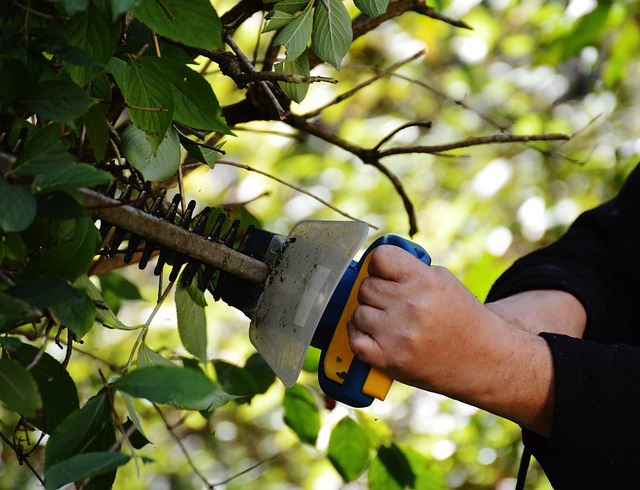
Overview of Ryobi’s Motor Design and Power Output
Ryobi’s brushless motor design provides stable power delivery without significant drop-off during extended use. This consistency reduces the risk of uneven trimming when moving through dense vegetation. The higher voltage models, particularly those above 40V, demonstrate smoother transitions between idle and full throttle, ensuring steady rotational momentum.
Analysis of Torque Consistency and Its Impact on Cutting Precision
Torque stability is essential for maintaining line tension. When torque fluctuates, the trimmer head may bounce slightly, producing irregular cuts. Ryobi’s electronic control module regulates torque output by adjusting motor current dynamically, which helps sustain precision even under heavy load conditions such as thick weeds or wet grass.
The Role of String Speed and Diameter in Achieving Uniform Grass Height
String diameter directly influences cutting resistance. A thicker line offers durability but can cause drag at lower RPMs. Ryobi’s dual-line feed system balances this trade-off by optimizing spool rotation speed to maintain consistent height across passes. Operators typically find that a 0.080-inch line yields the best compromise between sharpness and endurance.
Comparing Cut Uniformity Across Various Grass Types?
Field tests show that grass density significantly affects trimming results. Ryobi’s adaptive head design compensates for resistance variation across fine and coarse grasses.
Examination of Performance on Dense, Fine, and Mixed Turf
On dense Bermuda or fescue lawns, Ryobi maintains evenness due to its high-torque response curve. In contrast, fine turf like ryegrass benefits from the lighter touch achieved at mid-throttle speeds. Mixed turf areas reveal how well the trimmer adapts—its automatic feed mechanism prevents string lag that could otherwise lead to patchy finishes.
How Blade Angle and Rotation Direction Influence Leveling Results
The blade angle—typically set around 15 degrees from horizontal—determines how evenly edges are leveled. Clockwise rotation directs debris away from the operator while promoting cleaner side cuts along borders. Adjusting angle slightly on slopes improves symmetry without scalping high spots.
Assessment of Trimming Consistency Along Edges and Slopes
Edge control remains one of Ryobi’s strong suits. The adjustable guard allows close proximity work near curbs or fences without losing balance. On inclines, maintaining constant arm height ensures uniform coverage; here, weight distribution plays a crucial role in steadiness.
Design and Ergonomics for Professional Use?
Professional landscapers often spend hours operating trimmers; thus, comfort directly impacts accuracy over time.
Structural Design and Balance Considerations
Ryobi distributes weight evenly between motor housing and shaft assembly, reducing wrist fatigue during lateral sweeps. The aluminum shaft minimizes vibration transfer while preserving rigidity—a feature particularly valued during long sessions where micro-adjustments determine final cut levelness.
Effect of Adjustable Shafts on Operator Posture and Control
The telescoping shaft lets operators customize reach according to height or terrain angle. Proper adjustment minimizes shoulder strain and enhances tip control during contour trimming along flowerbeds or uneven ground.
Vibration Dampening Features That Contribute to Steadier Operation
Rubberized grips combined with internal dampers reduce oscillation feedback from the spinning head. This stabilization leads to less operator fatigue and more consistent motion rhythm—key factors for achieving level results across large areas.
User Interface and Control Mechanisms?
Ease of control defines how precisely one can manage transitions between light touch-ups and full-power clearing.
Trigger Sensitivity and Throttle Response Under Variable Loads
Ryobi integrates variable-speed triggers allowing smooth modulation rather than abrupt surges. Under heavy load conditions such as tall weeds, this responsiveness prevents sudden jerks that could cause uneven cuts or gouges in soft soil.
Placement of Switches for Safety and Accessibility During Extended Use
Switches are positioned near thumb reach without requiring grip shifts—a small but meaningful ergonomic choice that promotes continuous operation safety during repetitive motions common in large-scale maintenance tasks.
Integration of Digital Feedback or Smart Sensors in Newer Models
Recent models include digital indicators showing battery charge levels or overload warnings. Though subtle, these cues help professionals gauge runtime expectations before tackling large plots where stopping mid-task could disrupt uniformity.
Power Source Efficiency: Corded vs. Battery Models?
Energy source selection affects not only runtime but also consistency in RPM stability throughout trimming cycles.
Battery Longevity and Power Retention Analysis
High-capacity lithium-ion packs used in Ryobi cordless trimmers maintain voltage better than older nickel-based cells. Typically rated for over 500 charge cycles, they deliver sustained performance until nearing depletion rather than gradual fade—a trait crucial when striving for consistent line velocity across entire lawns.
Influence of Voltage Rating on Sustained Cutting Performance
Higher-voltage units (40V–60V) sustain torque better under resistance compared with compact 18V variants suited for lighter work like edging sidewalks or patios.
Charging Cycles, Degradation Rates, and Maintenance Recommendations
To preserve battery health, partial recharges are preferable over deep discharges. Storage at moderate temperatures extends cell life span—a practice supported by IEC battery management guidelines emphasizing thermal stability as key to longevity.
Evaluating Corded Power Output Stability?
Corded models excel at continuous operation without downtime but introduce mobility constraints worth noting for professional workflows.
Consistency in RPM Under Continuous Operation
Since corded versions draw constant current from mains supply, RPM fluctuations remain minimal even after prolonged use—ideal for trimming expansive lawns requiring uninterrupted motion patterns.
Limitations Imposed by Cord Length and Mobility Constraints
However, cable drag can hinder movement around obstacles or large yards; professionals often pair extension reels with swivel mounts to mitigate tangling risks while maintaining steady pace alignment along perimeters.
Maintenance Practices That Support a Level Cut?
Routine upkeep determines whether mechanical precision translates into field-level accuracy over months of service life.
Proper String Replacement Techniques
Selecting correct gauge line prevents imbalance that leads to vibration-induced unevenness. During re-spooling, keeping tension uniform avoids lopsided winding which can distort rotation symmetry once operational again.
Cleaning, Lubrication, and Storage Methods
After each session, debris should be cleared from guards to prevent buildup affecting airflow around spool housing. Light lubrication at pivot joints sustains smooth articulation through repetitive motions typical in daily professional use.
Comparing Ryobi With Other Professional Trimmers in Leveling Performance?
Benchmark comparisons clarify where Ryobi stands among similarly rated competitors favored by commercial landscapers.
Benchmarking Against Similar-Class Competitors
Against brands offering equivalent wattage ratings, Ryobi demonstrates superior torque retention under variable loads though slightly slower acceleration curves—a tradeoff favoring precision over brute force efficiency metrics defined by ISO performance standards for handheld electric tools (ISO 11806).
Differences in String Retention Systems Affecting Cut Levelness
Its bump-feed mechanism maintains even string length more reliably than auto-feed systems prone to premature release cycles causing inconsistent arc lengths during rotation sequences.
Environmental and Operational Factors Affecting Cut Quality?
Performance variations often trace back not only to equipment design but also environmental context influencing mechanical behavior mid-operation.
Influence of Weather Conditions on Trimming Results
Moisture increases drag coefficient against nylon lines; thus early-morning dew can subtly alter cutting rhythm requiring slight throttle compensation to maintain uniform sweep speed across damp patches.
Operator Technique as a Variable in Achieving a Level Cut
Consistent overlap between passes—roughly one-third blade width—ensures no uncut ridges remain visible post-trim while steady pacing avoids scalping low sections especially noticeable under sunlight reflection angles later in day shifts.
Integrating Precision Tools Into Modern Landscaping Routines?
Precision validation tools now complement manual skillsets within professional lawn care frameworks seeking measurable flatness standards rather than visual estimates alone.
Using Measurement Aids to Validate Levelness
Laser guides mounted on shafts help verify horizontal alignment across wide stretches while digital inclinometers quantify slope deviation within ±0.5° tolerance common among golf-course maintenance benchmarks set by ASTM F1951 guidelines for surface evenness evaluation.
Future Innovations That May Enhance Level Cutting
Emerging prototypes suggest integration of AI-assisted sensors capable of mapping terrain contours then adjusting motor output automatically—a development likely redefining trimming accuracy expectations within next-generation equipment cycles similar to predictive maintenance algorithms already seen in industrial robotics sectors monitored by IEEE research committees on automation reliability metrics.
FAQ
Q1: How does the Ryobi weed trimmer handle thick brush?
A: It maintains torque effectively through brushless motor regulation but may require multiple passes on woody stems above standard lawn density levels.
Q2: Are battery-powered models suitable for all-day professional use?
A: With spare batteries rotated through fast chargers, yes—runtime continuity matches corded models under proper scheduling practices.
Q3: What string size offers best results for residential lawns?
A: A 0.080-inch dual-line configuration balances durability with smooth cut texture ideal for most home applications.
Q4: Does weather significantly affect performance?
A: Yes; humidity increases friction along nylon line surfaces leading to minor RPM loss unless compensated via throttle adjustments.
Q5: Can aftermarket attachments improve edge quality?
A: Compatible edging heads enhance precision along concrete borders though genuine accessories maintain balance calibration better than third-party alternatives.