
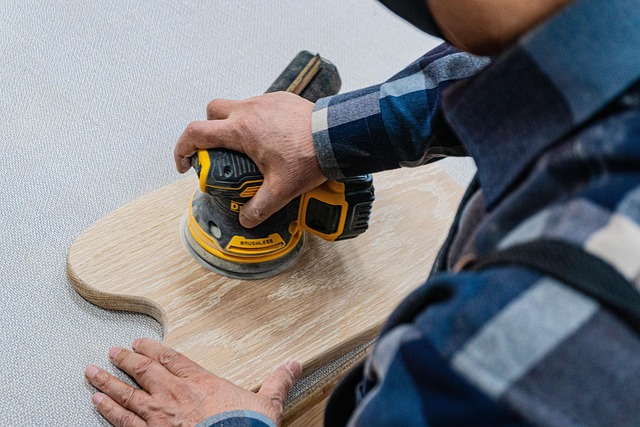
Is The Ryobi Sander Recall A Turning Point For Power Tool Safety
Ryobi Recalls 300,000 Portable Sanders
The large-scale Ryobi sander recall highlights how even established power tool manufacturers can face safety setbacks when product design and quality control misalign. The recall, affecting roughly 300,000 portable sanders, was triggered by electrical and mechanical faults that posed fire and injury risks. It underscores the growing scrutiny from regulators like the U.S. Consumer Product Safety Commission (CPSC) and raises questions about how global supply chains manage compliance. This event not only affects Ryobi’s market credibility but also serves as a case study in how modern manufacturing must integrate proactive safety engineering, data analytics, and transparent reporting to rebuild trust among professional users.
The Context Behind the Ryobi Sander Recall
The recall of Ryobi’s portable sanders did not occur in isolation; it followed months of internal review, consumer complaints, and coordination with safety authorities. Examining its context helps clarify how such large-scale actions unfold.
Overview of the Recall Announcement
The Ryobi sander recall involved specific models of hand-held finishing sanders distributed across North America through major hardware retailers. The affected units were primarily part of the 18V ONE+ cordless series produced between 2021 and 2023. The timeline began with early user reports of overheating during extended use, which prompted internal testing by Ryobi’s parent company. By mid-2024, after consultation with the CPSC, an official recall announcement was made urging consumers to stop using the product immediately. Notification channels included direct emails to registered customers, retailer advisories, and public postings on government safety websites.
Underlying Causes and Identified Risks
Investigations revealed that some sanders contained defective wiring near the motor housing that could short-circuit under load. In several cases, users reported smoke or melting plastic odors before tool failure occurred. While no fatalities were recorded, minor burn injuries were documented in multiple incidents. The design flaw originated from inconsistent insulation materials supplied by a third-party vendor. Subsequent testing confirmed non-compliance with UL electrical insulation standards for handheld tools. These findings forced a full recall rather than a limited repair program due to uncertainty about batch traceability.
Regulatory and Testing Processes That Identified Non-Compliance
The CPSC’s oversight process required Ryobi to submit detailed test data for review under federal safety regulations covering consumer electrical products. Independent laboratory testing confirmed that certain units failed thermal endurance thresholds outlined in IEC 60745 standards for hand-held motor-operated electric tools. This regulatory intervention reinforced why periodic compliance audits are essential even for established brands with robust reputations.
Evaluating Safety Standards in Power Tool Manufacturing
The Ryobi case reveals broader challenges within power tool manufacturing—balancing innovation speed with rigorous adherence to evolving safety codes.
Current Regulatory Framework for Power Tools
In the United States, power tools fall under CPSC jurisdiction which enforces labeling requirements, grounding provisions, and performance testing prior to sale. Manufacturers typically follow voluntary standards developed by ASTM International and UL certification programs that assess insulation resistance, mechanical stability, and switch reliability. Compliance documentation must be maintained throughout production cycles to demonstrate conformity during audits or recalls.
Industry-Wide Safety Certification Requirements and Testing Protocols
Certification bodies require repeated endurance tests simulating years of field use under variable loads and environmental conditions. For instance, vibration exposure is measured according to ISO 5349 guidelines to minimize long-term operator injury risk. Manufacturers interpret these frameworks differently depending on design philosophy—some exceed minimum thresholds as brand differentiators while others adhere strictly to baseline requirements.
How Manufacturers Interpret and Implement Compliance Standards
Implementation quality often depends on production geography and supply chain complexity. Brands relying heavily on outsourced components face greater variability in material consistency compared with vertically integrated producers. Therefore, compliance is not merely a documentation exercise but an ongoing engineering discipline requiring cross-functional collaboration between quality assurance teams and design engineers.
Gaps in Quality Assurance and Risk Management
Despite formal frameworks, gaps persist across testing stages that allow latent defects to reach consumers.
Common Weaknesses in Pre-Market Testing and Post-Market Surveillance
Pre-market evaluations often emphasize functionality over real-world durability scenarios such as continuous vibration exposure or dust ingress common on job sites. Post-market surveillance systems rely heavily on voluntary consumer feedback rather than automated telemetry or service center data aggregation—delaying detection of systemic issues like those seen in the Ryobi sander recall.
The Role of Third-Party Suppliers in Component Reliability
Component suppliers contribute significantly to risk profiles since small deviations in insulation grade or connector tolerances can cascade into large-scale failures once assembled at volume. Without robust incoming inspection protocols or digital traceability systems linking serial numbers to component batches, identifying root causes becomes time-consuming during crisis response.
Lessons From Previous Recalls Across Other Power Tool Brands
Other manufacturers have faced similar challenges: overheating lithium-ion batteries led to recalls across cordless drills; improper grounding caused electric shocks in circular saws from competing brands. These precedents show that even mature markets remain vulnerable when supplier oversight weakens or cost-driven engineering compromises occur.
The Broader Impact on Brand Trust and Market Perception
Recalls reshape brand narratives faster than marketing can repair them. For professional tradespeople who depend daily on their tools’ reliability, trust once lost is difficult to regain.
Consequences for Ryobi’s Brand Reputation
While Ryobi has built strong recognition among DIY users for affordability and versatility, professional contractors may interpret this recall as evidence of inconsistent quality control compared with premium competitors like DeWalt or Makita. Customer confidence tends to recover slowly unless accompanied by visible corrective measures such as extended warranties or redesigned replacements offered free of charge.
Long-Term Implications for Ryobi’s Position Within the Competitive Market
Market analysts expect short-term sales declines in affected categories but note potential rebound if transparency remains high during remediation efforts. Historically, brands demonstrating accountability through open communication often regain share within two fiscal cycles once new safety-certified models enter distribution channels.
Strategies Employed by Brands to Rebuild Credibility After Safety Failures
Effective recovery strategies include public technical briefings explaining corrective actions taken at manufacturing level; partnerships with certification agencies for revalidation; and proactive outreach programs offering trade-in incentives for recalled units—all signaling renewed commitment to user safety rather than mere damage control.
Market Reactions Across the Power Tool Industry
Competitors rarely miss opportunities created by uncertainty surrounding a rival’s product line; yet industry-wide caution often follows any major recall event.
Competitor Responses to Capitalize on Consumer Uncertainty
Rival brands accelerated marketing emphasizing superior thermal protection technologies or enhanced dust-sealed switches—features implicitly contrasting against recalled designs without naming them directly. Retail promotions highlighting “tested beyond standard” messaging gained traction among cautious buyers seeking reassurance post-recall.
Shifts in Purchasing Behavior Among Trade Professionals and DIY Users
Professionals increasingly favor brands offering telemetry-enabled tools capable of reporting usage data back to manufacturers for predictive maintenance insights—a trend accelerated by trust erosion incidents like this one. DIY consumers meanwhile exhibit shorter memory cycles but remain price-sensitive; hence loyalty shifts depend more on perceived value restoration than technical specifics alone.
Influence on Retailer Partnerships and Distribution Agreements
Large retailers temporarily paused restocking affected SKUs pending confirmation of revised production batches meeting updated compliance certifications. Such disruptions ripple through logistics networks affecting supplier forecasts months ahead—a reminder that brand reputation intertwines deeply with channel stability.
Technological Innovation as a Response to Safety Challenges
Innovation often arises from failure analysis; modern power tool engineering increasingly integrates smart monitoring systems aimed at preventing repeat scenarios similar to the Ryobi sander recall.
Advances in Design and Engineering for Safer Tools
Next-generation sanders now incorporate embedded temperature sensors shutting down motors automatically upon detecting abnormal heat rise beyond preset thresholds calibrated under IEC thermal limits. Material science advances introduce higher dielectric polymers reducing arc propagation risk while maintaining lightweight ergonomics demanded by professionals handling tools all day long.
Material Innovations Aimed at Improving Durability and User Protection
Manufacturers experiment with composite housings combining glass-fiber reinforcement for impact resistance while isolating conductive paths internally—a practical adaptation learned from prior insulation breakdown cases observed during recalls industry-wide.
Adoption of Predictive Maintenance Technologies Using IoT Connectivity
IoT-enabled platforms collect anonymized operational metrics such as runtime hours or vibration signatures transmitted via Bluetooth modules integrated into newer cordless lines; analytics then alert users when servicing is due before degradation escalates into hazard territory—a clear evolution toward preventive culture rather than reactive recalls.
Role of Data Analytics in Preventing Future Recalls
Digitalization transforms how manufacturers anticipate faults long before they manifest physically at customer sites.
Use of Real-Time Performance Data for Early Fault Detection
Continuous streaming from connected devices allows algorithms trained on historical failure datasets to flag anomalies instantly—reducing dependency on sporadic human reporting cycles typical before connected ecosystems matured within tool industries.
Predictive Modeling to Simulate Long-Term Wear Under Varied Conditions
Finite element simulations combined with machine learning models replicate years of operational stress within days enabling engineers to identify weak points pre-production instead of discovering them post-launch through warranty claims analysis—a shift saving both cost and reputation capital simultaneously.
Feedback Loops Between Users, Service Centers, and Manufacturers for Continuous Improvement
Centralized databases aggregating service center diagnostics alongside user-generated telemetry create closed-loop ecosystems where each repair feeds future design refinements—embedding experiential learning directly into R&D pipelines rather than treating field failures as isolated events.
The Future Direction of Power Tool Safety Culture
Beyond technical upgrades lies cultural transformation: embedding accountability across every node within global production networks ensures sustainable progress beyond compliance checklists alone.
Strengthening Accountability Across the Supply Chain
Manufacturers increasingly deploy blockchain-based traceability linking raw material sourcing through final assembly records accessible during audits ensuring defect origin identification within minutes instead of weeks—a step critical when recalling hundreds of thousands units globally as seen recently with Ryobi sander recall scale events.
Collaborative Safety Audits Involving Manufacturers, Regulators, and Independent Labs
Joint audit frameworks combining manufacturer self-assessment results validated externally by independent labs foster balanced oversight reducing adversarial dynamics historically slowing corrective action cycles after incident discovery phases conclude.
Importance of Transparent Reporting Mechanisms for Defect Detection
Transparency builds resilience; open-access databases logging anonymized defect statistics allow industry peers collectively learn patterns otherwise hidden behind proprietary walls thus elevating sector-wide baseline safety maturity levels over time rather than isolating lessons per brand episode only.
Shifting Toward a Proactive Safety Mindset in Product Development
Cultural change must accompany technological adaptation if future recalls are truly minimized rather than deferred temporarily through incremental fixes alone.
Embedding Risk Assessment Into Every Stage of Design Iteration
Integrating hazard analysis early—from concept sketches through prototype validation—prevents downstream redesign costs exponentially higher once tooling investments occur; this practice aligns closely with ISO 12100 principles guiding machinery risk reduction systematically throughout lifecycle phases.
Encouraging Cross-Disciplinary Collaboration Between Engineers, Ergonomists, and Safety Experts
Cross-functional teams blending mechanical engineers with human factors specialists yield safer ergonomically optimized designs mitigating fatigue-induced misuse—the root cause behind many workplace accidents statistically linked more often to operator strain than outright mechanical fault itself according occupational studies reviewed annually by industrial safety boards globally recognized under ILO frameworks.
Building a Culture That Prioritizes User Well-Being Over Production Efficiency or Cost Reduction
True transformation emerges when leadership metrics reward zero-defect performance equally alongside output targets; embedding safety KPIs into executive dashboards signals seriousness beyond slogans thereby reinforcing enduring trust among end-users skeptical after high-profile recalls shake confidence periodically across sectors including power tools today.
FAQ
Q1: Which Ryobi models were affected by the sander recall?
A: The recall covered specific 18V ONE+ cordless finishing sanders manufactured between 2021–2023 distributed widely across North America retailers.
Q2: What hazards did these recalled sanders pose?
A: Some units exhibited wiring defects causing potential short circuits leading to overheating or fire risk during prolonged operation sessions.
Q3: How did regulators respond once issues surfaced?
A: The U.S. Consumer Product Safety Commission coordinated directly with Ryobi requiring immediate cessation notices plus comprehensive replacement program implementation nationwide.
Q4: What steps can professionals take when their equipment faces recall?
A: Users should stop use immediately verify serial numbers via official channels then participate in manufacturer-provided return or exchange programs ensuring safe disposal procedures followed properly thereafter.
Q5: How might this incident influence future tool development?
A: Expect broader adoption of smart sensors predictive analytics stronger supplier audits embedding continuous monitoring preventing recurrence patterns observed previously within similar product categories industry-wide.