
How Do Different Types Of Lithium Ion Batteries Influence Knowledge Interdependencies Between Lithium And Sodium Ion Chemistries
Knowledge Interdependencies Between Lithium- and Sodium-Ion Battery Chemistries
The interplay between lithium-ion and sodium-ion battery chemistries forms a foundation for the next generation of energy storage. Although lithium systems dominate commercial markets, sodium-ion batteries are gaining traction because of their cost advantages and material abundance. The two share similar electrochemical frameworks, yet diverge in ionic size, redox potential, and structural dynamics. Insights from lithium chemistries—especially layered oxides, olivines, and spinels—directly inform sodium research. Understanding these interdependencies accelerates innovation toward safer, more sustainable alkali-ion technologies.
Overview of Lithium-Ion Battery Chemistries
Lithium-ion technology encompasses several families of materials with distinct structures and electrochemical behaviors. Each chemistry offers trade-offs between performance, safety, and cost that define its application scope.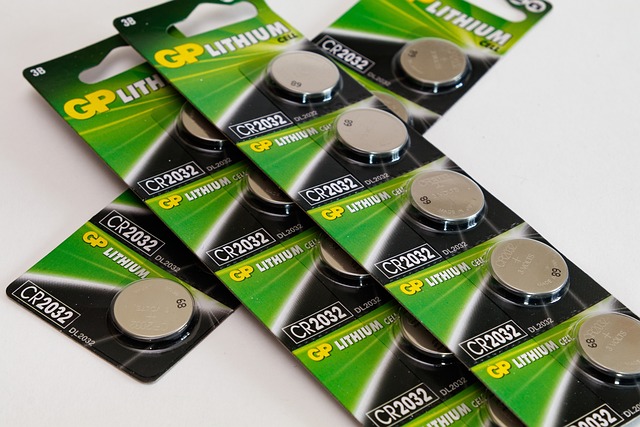
Classification of Lithium-Ion Battery Types
Among the different types of lithium ion batteries, five major chemistries dominate: lithium iron phosphate (LFP), nickel manganese cobalt oxide (NMC), nickel cobalt aluminum oxide (NCA), lithium cobalt oxide (LCO), and lithium titanate (LTO). LFP is known for thermal stability and long cycle life, making it ideal for electric buses and stationary storage. NMC and NCA provide high energy density suited to electric vehicles but rely on expensive metals like cobalt. LCO remains common in portable electronics due to its high voltage profile, while LTO’s zero-strain property grants exceptional cycle durability.
Structural and Electrochemical Distinctions Among These Chemistries
These chemistries differ fundamentally in crystal structure. LFP adopts an olivine framework that stabilizes Fe²⁺/Fe³⁺ redox reactions within PO₄ tetrahedra. Layered oxides such as NMC and NCA feature alternating metal oxide layers where Li⁺ intercalates between oxygen planes. LTO has a spinel structure with three-dimensional diffusion channels that minimize volume change during cycling. These frameworks dictate ion mobility, electronic conductivity, and overall electrochemical kinetics.
Performance Trade-Offs in Terms of Energy Density, Stability, and Cost
High-nickel layered oxides deliver superior energy density but suffer from surface instability under high voltage operation. Phosphate-based materials trade energy density for robust safety margins and lower material cost. Spinel structures like LTO offer unmatched cycle life yet operate at lower voltages, reducing specific energy. The balance among these metrics determines suitability across consumer electronics, automotive systems, or grid-scale storage.
Fundamental Electrochemical Mechanisms in Lithium-Ion Batteries
The performance of any lithium-ion cell arises from the fundamental processes governing ion transport and electron exchange within electrodes and electrolytes.
Role of Intercalation and Diffusion Processes in Lithium-Ion Transport
Lithium ions move through electrode lattices via intercalation rather than plating or alloying. This reversible insertion process maintains host structure integrity while enabling rapid charge transfer. Diffusion coefficients depend on lattice geometry; layered materials typically exhibit anisotropic pathways whereas spinels support isotropic diffusion.
Influence of Electrode Crystal Structure on Capacity and Cycling Stability
Crystal symmetry influences both theoretical capacity and mechanical resilience during cycling. In layered oxides, cation mixing can block Li⁺ channels over time, causing capacity fade. Olivine frameworks confine Li⁺ to one-dimensional tunnels but resist structural collapse even after thousands of cycles.
Relationship Between Electrolyte Composition and Interfacial Kinetics
Electrolyte formulation affects solid-electrolyte interphase (SEI) formation on anodes and cathode-electrolyte interface stability at high voltage. Solvent polarity, salt concentration, and additive chemistry control ionic conductivity as well as decomposition reactions that govern long-term efficiency.
Knowledge Interdependencies Between Lithium- and Sodium-Ion Systems
Both systems share common scientific roots yet diverge due to physical differences between Li⁺ and Na⁺ ions.
Shared Theoretical Frameworks Across Alkali-Ion Chemistries
Thermodynamic models describing open-circuit voltage derive from similar Nernstian relationships across both systems. Kinetic treatments such as Butler–Volmer equations apply identically to charge-transfer processes at electrode surfaces. Computational methods including density functional theory (DFT) predict ion migration barriers in both lithium- and sodium-based hosts with comparable accuracy.
Similarities in Ion Transport Mechanisms Through Solid-State Matrices
Li⁺ and Na⁺ migrate through interstitial sites governed by defect chemistry principles common to all alkali metals. In both cases, migration energy correlates with bottleneck size between adjacent sites within the lattice network.
Cross-Applicability of Computational Modeling Techniques for Material Prediction
Machine learning models trained on extensive lithium datasets increasingly guide sodium material discovery by identifying patterns linking atomic descriptors to diffusion barriers or voltage profiles. These shared computational infrastructures accelerate cross-chemistry innovation.
Divergent Material Behaviors Between Lithium and Sodium Systems
Despite conceptual parallels, sodium-ion systems exhibit unique challenges driven by larger ionic radius and distinct redox energetics.
Comparison of Ionic Radii Effects on Structural Stability and Diffusion Pathways
Na⁺’s larger radius (~1.02 Å vs 0.76 Å for Li⁺) expands host lattices during insertion, often destabilizing layered or spinel frameworks optimized for lithium transport. This geometric mismatch limits available host structures capable of reversible Na⁺ cycling without phase separation.
Differences in Redox Potentials Influencing Voltage Profiles and Energy Densities
Lithium’s higher standard reduction potential yields higher cell voltages—typically 3–4 V compared to 2–3 V for sodium analogues—resulting in lower specific energy for Na-ion cells even when capacities are similar.
Challenges in Replicating Lithium-Based Performance Metrics in Sodium Analogues
Efforts to mimic high-energy layered oxides face issues such as sluggish Na⁺ diffusion kinetics, unstable electrolyte compatibility at elevated voltages, and pronounced structural distortion upon deep cycling—all limiting parity with mature Li-ion technology.
Influence of Specific Lithium-Ion Chemistries on Sodium-Ion Research Directions
Insights from commercial lithium chemistries serve as blueprints guiding sodium material design strategies across multiple structural families.
Impact of Layered Oxide (NMC/NCA) Insights on Sodium Transition Metal Oxides
Research on cation ordering within LiNiₓMnᵧCo_zO₂ compositions informs tuning strategies for NaMO₂ analogues where transition-metal distribution controls phase stability during cycling. Oxygen redox activity observed in high-capacity Li-rich oxides inspires exploration of similar mechanisms in P2-type Na-layered compounds to enhance capacity without compromising safety.
Role of Cation Ordering and Oxygen Redox Activity in Optimizing Performance
Controlled disorder among transition metals mitigates irreversible phase transitions during repeated intercalation cycles. Meanwhile oxygen participation extends capacity beyond conventional cationic limits though requires careful management to prevent gas evolution or surface reconstruction.
Lessons Learned From Surface Reconstruction Phenomena Under Cycling Conditions
In both chemistries, repeated cycling triggers surface reconstruction from layered to rock-salt phases that impede ion transport. Protective coatings developed for NMC cathodes now inform stabilization methods for analogous sodium-layered oxides operating under similar electrochemical stresses.
Contributions of Olivine (LFP) Chemistry to Polyanionic Sodium Systems
The olivine family provides another critical bridge connecting lithium experience with sodium innovation through shared polyanionic frameworks.
Structural Parallels Between LiFePO₄ and NaFePO₄ Frameworks
Both compounds adopt orthorhombic olivine symmetry where FeO₆ octahedra connect via PO₄ tetrahedra forming robust three-dimensional networks resistant to volume change upon cycling.
Influence of Phosphate Group Stability on Voltage Tuning Strategies
Phosphate groups stabilize Fe–O bonds leading to moderate operating voltages (~3.4 V vs Li/Li⁺). Substituting different anions like SO₄²⁻ or AsO₄³⁻ tunes redox potential while retaining structural rigidity—a principle extended directly into Na-based polyanionic cathodes seeking higher voltage operation.
Understanding Ion Mobility Constraints Through Comparative Analysis
LiFePO₄ exhibits one-dimensional diffusion channels; similarly constrained pathways limit NaFePO₄ rate performance but can be improved via carbon coating or particle downsizing techniques derived from decades of Li research practice.
Relevance of Spinel (LTO) Structures to Sodium-Titanate Analogues
Spinel-type frameworks illustrate how zero-strain behavior translates imperfectly when scaled up to accommodate larger ions like Na⁺.
Comparative Evaluation of Zero-Strain Behavior During Charge/Discharge Cycles
While LTO maintains nearly constant lattice parameters during lithiation/delithiation due to symmetric TiO₆ connectivity, equivalent sodium titanates often undergo anisotropic expansion compromising mechanical durability after multiple cycles.
Insights Into Electrode/Electrolyte Interface Stability Mechanisms
SEI formation on titanate surfaces remains thinner than graphite-based anodes due to higher operating potentials (~1.55 V vs Li/Li⁺). Similar behavior benefits Na-titanate analogues by minimizing dendrite risk though electrolyte compatibility remains a limiting factor at low temperatures.
Adaptation Challenges Due to Larger Sodium Ion Dimensions Within Spinel Lattices
Expanding spinel channels sufficiently for Na⁺ insertion without collapsing framework symmetry poses synthesis challenges requiring dopant engineering or novel defect chemistry approaches not necessary in the smaller-lithium case.
Cross-Chemistry Learning Pathways Enabled by Experimental Techniques
Experimental advances enable direct comparison between alkali systems through synchronized characterization protocols revealing shared reaction dynamics at atomic scales.
Advanced Characterization Tools Bridging Lithium and Sodium Research
Operando X-ray diffraction tracks phase evolution during cycling while transmission electron microscopy visualizes nanoscale crack propagation across both chemistries under identical conditions. X-ray photoelectron spectroscopy further clarifies oxidation-state shifts linked with oxygen participation across charge states.
Comparative Spectroscopic Studies Revealing Ion Insertion Dynamics
Time-resolved spectroscopy captures transient states during intercalation highlighting kinetic differences attributable solely to ionic size rather than fundamental mechanism changes—an insight critical for refining computational models predicting rate capability limits.
Data-Driven Correlations Between Phase Transitions in Both Systems
Large datasets collected from synchrotron studies now correlate transition thresholds between polymorphs across lithium-oxide families with analogous transformations observed in sodium counterparts providing predictive value for new composition screening efforts.
Computational Modeling as a Conduit for Knowledge Transfer
Digital simulation bridges experimental gaps allowing theoretical extrapolation from well-characterized lithium materials toward less explored sodium candidates using shared parameter spaces validated by empirical data sets maintained by institutions such as IEA Energy Storage Database or IEEE Materials Repository standards.
Application of DFT and Molecular Dynamics Simulations Across Chemistries
Density functional theory quantifies migration barriers while molecular dynamics tracks temperature-dependent diffusivity offering atomistic clarity unattainable experimentally particularly useful when comparing structurally homologous compounds like LiCoO₂ vs NaCoO₂ under identical constraints defined by ISO 18332 protocols for battery testing environments set forth by IEC committees ensuring reproducibility benchmarks recognized globally by industry stakeholders following IRENA guidelines promoting sustainable material sourcing frameworks adopted throughout EU initiatives supporting circular-economy integration into battery manufacturing chains monitored via BloombergNEF market analytics aligning technical feasibility assessments alongside economic projections relevant within Reuters commodity reporting indices establishing transparency benchmarks vital across global supply networks sustaining long-term research collaboration continuity encouraged under IEEE open-data directives enhancing algorithmic cross-validation reliability metrics underpinning machine-learning model training pipelines instrumental toward predictive discovery acceleration cycles unifying alkali-ion research trajectories worldwide.
Strategic Implications for Future Alkali-Ion Battery Development
The convergence between lithium- and sodium-based science sets the stage for unified design logic guiding future storage technologies beyond current market segmentation boundaries driven primarily by raw-material availability constraints rather than intrinsic electrochemical limitations alone shaping policy directions influencing R&D prioritization globally across academia-industry consortia networks emerging rapidly since 2022 amid growing decarbonization imperatives underscored repeatedly throughout IEA annual outlook reports emphasizing diversification necessity within stationary-storage deployment scenarios projected through 2030 timelines reflecting evolving supply-chain resilience strategies endorsed internationally under ISO sustainability frameworks harmonizing cross-regional standards compliance requirements facilitating interoperability benchmarks critical toward scaling next-generation cell production ecosystems sustainably over coming decade horizons anticipated widely among sector analysts monitoring ongoing pilot demonstrations transitioning lab-scale prototypes into commercial viability phases progressively accelerating technological maturity curves observable already within select demonstration projects funded jointly under EU Horizon programs corroborated independently via BloombergNEF quarterly insights tracking venture-capital inflows across early-stage solid-state ventures integrating hybrid alkali architectures simultaneously leveraging cumulative expertise accumulated historically throughout three decades intensive lithium research endeavors globally acknowledged benchmark reference baseline informing all subsequent alternative-ion development trajectories currently underway worldwide.
FAQ
Q1: What are the main differences between lithium-ion and sodium-ion batteries?
A: The primary distinctions lie in ionic size, redox potential, voltage range, energy density, and structural compatibility with host lattices; sodium offers cost benefits but lower specific energy compared with lithium systems.
Q2: Why is knowledge transfer important between these two chemistries?
A: Shared thermodynamic models allow researchers to reuse validated theories from mature lithium studies when designing new sodium materials saving time while improving predictive accuracy across experiments.
Q3: Which experimental tools best reveal similarities between the two systems?
A: Operando XRD combined with TEM imaging provides real-time insight into phase transitions enabling direct comparison under identical cycling conditions revealing parallel reaction pathways despite different ions involved.
Q4: How do computational methods accelerate cross-chemistry learning?
A: DFT simulations calibrated using extensive lithium databases help forecast stable configurations for sodium hosts significantly reducing trial-and-error synthesis efforts especially when coupled with machine-learning screening algorithms trained on historical data trends maintained within international repositories such as IEC or IEEE archives ensuring standardized validation protocols globally recognized across academia-industry collaborations fostering reproducibility culture essential toward scalable innovation cycles worldwide today.
Q5: What strategic role will these interdependencies play moving forward?
A: They will underpin unified material discovery frameworks guiding hybrid designs combining strengths from both chemistries ultimately broadening sustainable storage options supporting renewable integration targets outlined consistently throughout IEA scenario analyses extending beyond 2030 deployment goals shaping global electrification pathways ahead.