

Beyond Lithium Ion: Can Molecular Solar Storage Redefine Energy Systems
Beyond Lithium-Ion? Scientists Unveil Molecular Solar Energy Storage Breakthrough
A new generation of energy storage is emerging beyond lithium-ion. Scientists are developing molecular solar thermal (MOST) systems that can capture and store sunlight in chemical bonds for months or even years. Unlike batteries, these molecular systems convert solar radiation directly into storable chemical energy, offering a safer, more sustainable, and potentially cheaper alternative for long-term renewable storage. The breakthrough points toward a future where solar energy can be bottled like fuel, reshaping how grids balance intermittent sources such as wind and sunlight.
The Shift Beyond Lithium-Ion Technologies
The transition beyond lithium-ion is not just about finding a substitute but rethinking what energy storage means in a renewable-driven world. As global power systems move toward decarbonization, the limitations of current lithium-ion technology have become increasingly evident.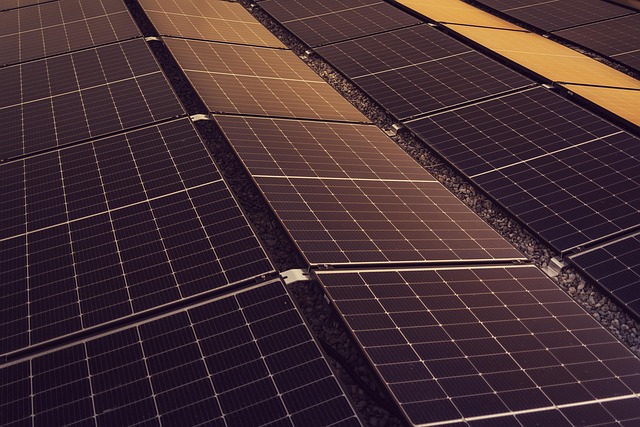
Limitations of Current Lithium-Ion Systems
Lithium-ion batteries remain the backbone of portable electronics and electric vehicles, yet their scalability faces physical and economic limits. Energy density is capped by electrochemical constraints, while the scarcity of lithium, cobalt, and nickel increases supply risk. Safety concerns also persist; thermal runaway incidents in large battery arrays highlight flammability issues that complicate grid-scale deployment. Recycling adds another layer of complexity—recovering metals from spent cells consumes high energy and generates hazardous waste, undermining sustainability goals.
Drivers for Next-Generation Energy Storage Research
The shift to renewables demands storage that lasts beyond a few hours. Wind and solar variability require multi-day or seasonal buffering to maintain grid stability. This need drives research into chemistries capable of storing larger quantities of energy with minimal degradation. International decarbonization targets under agreements like the Paris Accord further push innovation toward materials with lower carbon footprints. Integration with distributed solar systems also calls for flexible storage technologies adaptable to both residential and industrial use.
Molecular Solar Thermal Energy Storage: A New Frontier
Researchers are exploring molecular solar thermal systems as an entirely different path beyond lithium-ion chemistry. Instead of relying on ions moving through electrolytes, these systems trap sunlight in reversible chemical reactions.
The Concept of Molecular Solar Thermal (MOST) Systems
MOST systems store solar energy within molecules through photoisomerization—a process where light changes the structure of a molecule into a higher-energy form. The stored energy can later be released as heat or electricity when the molecule returns to its original state. Unlike photovoltaics that produce immediate power or batteries that lose charge over time, MOST materials can retain energy for months without significant loss, making them suitable for seasonal storage.
Key Molecular Mechanisms Enabling Storage and Release
At the heart of MOST research are photo-switchable molecules such as norbornadiene–quadricyclane pairs. When exposed to sunlight, norbornadiene absorbs photons and rearranges its bonds into quadricyclane, locking in solar energy within strained chemical bonds. Later, with heat or catalytic activation, it reverts to norbornadiene and releases the stored energy as controlled heat output. This reversible process allows repeated cycling without material degradation if properly engineered.
Material Innovations Driving Molecular Solar Storage
Developing practical MOST materials requires fine-tuning molecular structures to maximize both stability and efficiency. Chemists are combining synthetic design with computational modeling to predict performance before synthesis.
Design Principles for High-Energy-Density Molecules
High-performing molecules must absorb sunlight efficiently across visible wavelengths while maintaining stable high-energy states. Researchers optimize molecular backbones by adjusting conjugation lengths or substituting functional groups that enhance light absorption without compromising reversibility. Balancing stability and reactivity ensures stored energy does not leak prematurely yet remains accessible on demand.
Advances in Molecular Engineering and Synthesis Techniques
Recent advances focus on incorporating heteroatoms like nitrogen or sulfur to modulate electronic properties and improve photostability under repeated cycles. Scalable synthesis routes using bio-derived feedstocks reduce environmental impact compared with petroleum-based precursors. Hybrid materials—embedding photo-switchable molecules into polymers or porous solids—offer improved durability and easier integration into real devices such as coatings or thin films.
Integration of Molecular Solar Storage into Energy Systems
Translating MOST technology from laboratory prototypes to functional infrastructure requires system-level design thinking that bridges chemistry with engineering applications.
Coupling MOST Systems with Photovoltaic and Thermal Infrastructures
Hybrid configurations could combine photovoltaic panels for electricity generation with MOST modules capturing excess thermal radiation for later use. Such integration enables dual harvesting—electricity by day and heat on demand at night or during winter months. District heating networks could benefit by embedding MOST fluids within circulation loops to smooth temperature fluctuations without burning fuel.
Challenges in Scaling from Laboratory to Grid Applications
Scaling remains a major obstacle. Maintaining molecular stability over thousands of charge–release cycles is essential for commercial viability. Additionally, real-world conditions vary: sunlight intensity changes throughout the day, requiring optical optimization for consistent photon capture across angles and spectra. Economic competitiveness will depend on reducing synthesis costs through mass production while ensuring safe handling during operation.
Environmental and Economic Implications of Moving Beyond Lithium-Ion
As industries seek alternatives beyond lithium-ion, assessing environmental trade-offs becomes critical to avoid repeating past mistakes associated with metal-intensive technologies.
Sustainability Assessment of Molecular Solar Storage Materials
Lifecycle analyses suggest that molecular systems could significantly cut resource dependence because they use abundant elements rather than critical metals like cobalt or nickel. Their recyclability through reversible reactions offers potential closed-loop operation—molecules can be regenerated rather than discarded after each cycle—reducing waste streams compared with traditional batteries.
Economic Viability in Renewable Energy Markets
Cost projections remain uncertain but promising if manufacturing scales efficiently. Because MOST devices store heat directly rather than electricity, they may serve specialized markets such as off-grid facilities or remote regions where maintenance simplicity outweighs power density concerns. Policy incentives tied to carbon pricing could accelerate adoption by valuing clean long-duration storage alongside hydrogen or flow batteries.
Future Directions in Molecular Solar Energy Research
The next phase will merge experimental precision with computational intelligence to accelerate discovery cycles from concept to prototype.
Emerging Experimental Techniques and Computational Models
Ultrafast spectroscopy now tracks photoisomerization events at femtosecond resolution, revealing how electrons reorganize during photon absorption—data crucial for refining theoretical models. Machine learning tools trained on molecular datasets predict which structural motifs yield optimal storage capacity or release temperatures before synthesis begins. Quantum chemical simulations continue guiding rational design toward compounds balancing high energy density with long-term stability.
Collaborative Pathways Toward Commercial Deployment
Real progress depends on cooperation across disciplines: photochemists developing molecules must coordinate with materials scientists designing carriers and engineers integrating them into devices. Pilot projects in varied climates—from Nordic countries testing winter retention to equatorial sites examining high-radiation durability—will provide operational data essential for scaling standards under organizations like IEC or ISO that govern safety certification frameworks worldwide.
FAQ
Q1: What makes molecular solar thermal systems different from lithium-ion batteries?
A: They store sunlight directly in chemical bonds instead of electrical potential between electrodes, allowing long-term retention without self-discharge risks typical of lithium-ion cells.
Q2: How long can these molecules hold solar energy?
A: Depending on composition, some experimental compounds have retained stored energy for several months under ambient conditions before controlled release through catalysts or heating.
Q3: Are MOST materials safe compared to conventional batteries?
A: Yes, they eliminate flammable electrolytes common in lithium-ion designs since their operation relies on stable organic compounds rather than reactive metal oxides.
Q4: Could this technology replace all battery applications?
A: Not immediately; it suits thermal management or seasonal storage better than rapid discharge uses like electric vehicles due to slower conversion rates between heat and electricity.
Q5: What are researchers focusing on next?
A: Current efforts aim at improving photon absorption efficiency, enhancing molecular durability under repeated cycling, and developing scalable manufacturing methods compatible with existing renewable infrastructures.