Could Battery Technology To Replace Lithium Ion Make Sodium The Next Big Shift
Could Sodium Replace Lithium as the Dominant Ingredient in Batteries?
The global race for better, cheaper, and cleaner energy storage is reshaping the battery industry. While lithium-ion batteries remain the cornerstone of modern electrification, sodium-ion technology is quickly emerging as a credible alternative. Sodium’s abundance, lower cost, and safety advantages make it a strong candidate to complement or even replace lithium in certain markets. The transition will not be immediate, but technical progress and industrial momentum suggest that sodium-ion batteries could soon take a significant share of applications where cost and sustainability outweigh absolute energy density.
The Shifting Landscape of Battery Technology
The battery sector is evolving under the dual pressures of performance demand and resource scarcity. Lithium-ion systems dominate today’s market, yet their limitations are becoming increasingly visible.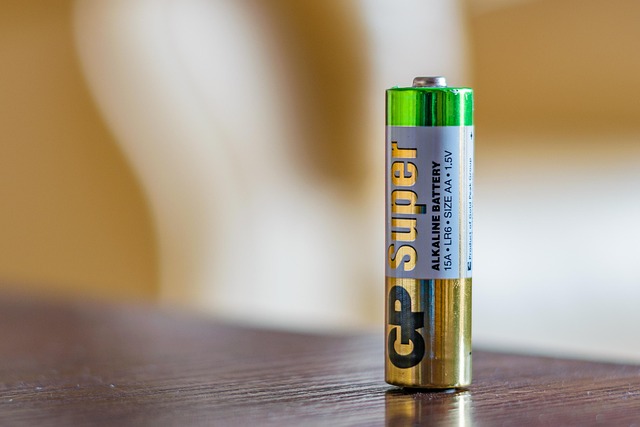
The Current Dominance of Lithium-Ion Batteries
Lithium-ion batteries rely on reversible intercalation reactions between lithium ions and layered electrode materials. Their high energy density—typically 150–250 Wh/kg—and long cycle life have made them indispensable for electric vehicles (EVs), portable electronics, and grid storage. Manufacturing costs have dropped below $100 per kWh in recent years, driven by economies of scale and material optimization. However, this dominance comes at a price: the extraction of lithium, cobalt, and nickel involves complex supply chains and environmental challenges. Scaling production further risks intensifying these issues as demand accelerates.
Emerging Pressures Driving the Search for Alternatives
The electrification of transport and renewable integration are pushing global battery demand to unprecedented levels. According to IEA data, EV-related battery consumption could increase more than tenfold by 2030. This surge exposes vulnerabilities in lithium supply chains concentrated in a few regions such as South America and Australia. Geopolitical tensions and raw material volatility add uncertainty to pricing and availability. At the same time, environmental regulations are tightening, prompting manufacturers to explore chemistries based on more abundant elements like sodium or iron that promise lower ecological impact.
Sodium-Ion Batteries as a Viable Alternative
Interest in sodium-ion systems has grown rapidly as researchers seek sustainable pathways beyond lithium. Although their theoretical energy density is lower, recent material advances have narrowed the gap significantly.
Fundamental Electrochemistry of Sodium-Ion Systems
Sodium-ion batteries operate through similar redox mechanisms as lithium-ion cells but substitute Na⁺ for Li⁺. Because sodium ions are larger (ionic radius ≈ 1.02 Å vs 0.76 Å for Li⁺), they diffuse more slowly within host lattices, influencing rate capability and structural stability. This difference necessitates tailored electrode materials with larger interlayer spacing or open frameworks that can accommodate ion movement efficiently.
Advances in Sodium-Based Cathode and Anode Materials
Progress in electrode design has been key to improving sodium-ion performance.
Cathode Innovations
Layered oxides such as NaNi₀․₅Mn₀․₅O₂ offer high capacities but can suffer from phase transitions at high voltages. Polyanionic compounds like Na₃V₂(PO₄)₃ deliver excellent thermal stability though at slightly lower voltage windows. Prussian blue analogs stand out for low cost and fast kinetics due to their open framework structure; however, controlling water content during synthesis remains critical to long-term stability.
Anode Developments
Hard carbon has become the standard anode choice because it can reversibly store sodium through adsorption in nanopores and intercalation between graphene layers. Alloying-type anodes based on tin or phosphorus provide higher capacities but experience severe volume expansion during cycling, leading to mechanical degradation unless buffered by nanostructuring or composite design.
Electrolyte Optimization
Liquid electrolytes typically use carbonate solvents with sodium salts such as NaPF₆ or NaClO₄ to balance ionic conductivity and electrochemical stability. Researchers are also developing solid-state electrolytes—both sulfide- and oxide-based—to enhance safety by eliminating flammable liquids while maintaining sufficient ion mobility at room temperature.
Performance Metrics: Comparing Sodium-Ion to Lithium-Ion Technologies
Evaluating whether sodium can replace lithium requires direct comparison across key performance indicators: energy density, cycle life, safety, and cost.
Energy Density and Power Characteristics
Current commercial-grade sodium-ion cells achieve around 120–160 Wh/kg gravimetric energy density versus 180–260 Wh/kg for typical lithium-ion counterparts. This difference affects vehicle range but may be acceptable for short-range EVs or stationary storage where size constraints are less critical. Power output remains competitive due to improved electrode kinetics enabled by optimized particle morphology.
Cycle Life, Safety, and Thermal Stability
Sodium-ion batteries exhibit superior thermal stability because their cathode materials generally release less oxygen under abuse conditions than nickel-rich lithium compounds. They also show reduced risk of dendrite formation on anodes when compared with metallic lithium systems. However, capacity fading still occurs due to electrolyte decomposition or structural distortion after thousands of cycles—a focus area for ongoing research into coatings and electrolyte additives.
Cost Efficiency and Material Availability
Sodium is one of Earth’s most abundant elements found widely in seawater and mineral deposits. Its extraction does not face the same geopolitical bottlenecks as lithium mining does. Consequently, projected material costs per kWh could be 30–40% lower once mass production scales up using existing infrastructure adapted from lithium-ion manufacturing lines.
Industrial Development and Commercialization Trends
The commercialization race for sodium-ion technology is accelerating across Asia and Europe as companies seek diversification beyond lithium supply chains.
Key Players in Sodium-Ion Research and Production
Several major battery manufacturers have announced pilot-scale production lines focusing on sodium chemistry for stationary storage or budget EVs. Collaborations between universities, research institutes, and government agencies are fostering rapid progress in materials science, safety testing, and recycling processes aligned with international standards such as IEC 62619 for secondary cells used in industrial applications.
Scaling Challenges in Manufacturing Sodium-Ion Cells
Transitioning from lab prototypes to gigawatt-hour production requires adapting existing equipment originally designed for lithium cells—coating machines, formation protocols, quality control systems—to accommodate different voltage profiles and electrode compositions. Standardization remains limited; efforts are underway within IEEE committees to define testing procedures ensuring consistent performance evaluation across suppliers.
Application Potential Across Sectors
Sodium-ion batteries may not dethrone lithium everywhere but could dominate specific niches where cost resilience matters more than compactness or ultra-high range.
Stationary Energy Storage Systems (ESS)
For grid-scale applications balancing intermittent solar or wind power, sodium-ion offers compelling economics thanks to low raw material costs and wide operating temperature tolerance from −20 °C to +60 °C without active cooling systems. These attributes simplify deployment in remote or harsh environments while maintaining stable capacity retention over thousands of cycles.
Electric Mobility Solutions
In electric mobility, sodium technology fits best with entry-level vehicles or two-wheelers targeting urban commuting markets where affordability outweighs maximum range concerns. Several demonstration fleets already use sodium packs delivering ranges around 150 km per charge—adequate for city driving patterns common in emerging economies seeking low-cost electrification pathways.
Consumer Electronics and Niche Applications
For devices like power tools or backup systems where moderate energy density suffices but price sensitivity is high, sodium-based cells could gain traction once supply chains mature further. Manufacturers appreciate their intrinsic safety profile that reduces requirements for complex thermal management designs.
Future Outlook for Post-Lithium Battery Ecosystems
As global decarbonization intensifies, diversification beyond lithium will shape next-generation storage ecosystems integrating multiple chemistries optimized for distinct roles.
Integration with Other Emerging Technologies
Hybrid configurations combining sodium-ion modules with supercapacitors can deliver both high power bursts and steady energy output suited for smart grids or regenerative braking systems. Artificial intelligence tools now assist researchers by screening vast chemical databases to predict promising electrode combinations faster than traditional trial-and-error methods—a shift accelerating discovery cycles across electrochemical domains.
Strategic Considerations for Global Energy Transition
Wider adoption of sodium-based batteries would redistribute resource dependencies away from current lithium-dominant regions toward countries rich in common minerals like salt deposits or aluminosilicates. Policymakers therefore view this diversification as essential insurance against future supply disruptions while advancing circular economy goals through recyclable cell components compliant with ISO 14001 environmental management standards.
FAQ
Q1: Why are scientists exploring battery technology to replace lithium ion?
A: Rising costs, limited reserves of critical metals like cobalt and nickel, plus sustainability concerns drive interest toward alternatives such as sodium that offer similar functionality at lower environmental impact.
Q2: Are sodium-ion batteries already available commercially?
A: Yes, several manufacturers have launched early commercial products primarily targeting stationary storage markets; broader automotive adoption is expected within a few years once large-scale plants ramp up production.
Q3: How do sodium-ion batteries perform in cold climates?
A: Their electrolyte formulations can be tuned for wide temperature operation; some prototypes retain over 80% capacity even at −20 °C making them suitable for outdoor grid installations.
Q4: Can existing lithium-ion factories produce sodium cells?
A: Most production lines require only minor modifications since both chemistries share similar fabrication steps like slurry coating and cell assembly though voltage calibration differs slightly.
Q5: Will sodium completely replace lithium?
A: Unlikely across all sectors; instead both will coexist—lithium dominating high-performance EVs while sodium captures cost-driven segments such as grid storage or entry-level mobility solutions.